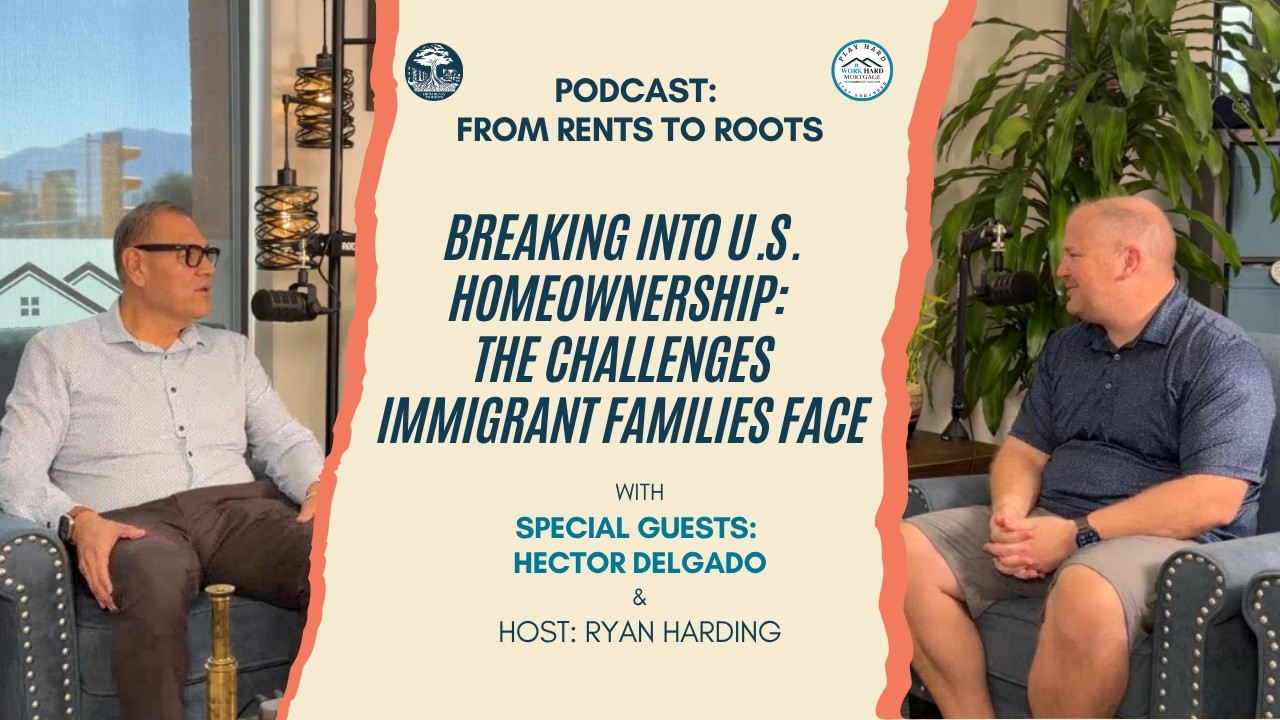
Breaking Into U.S. Homeownership: The Challenges Immigrant Families Face
Immigrant entrepreneur Hector Delgado shares his inspiring journey from Mexico to U.S. homeownership, offering timeless wisdom on building generational wealth.
Hector Delgado
The Challenges Immigrant Families Face
At a Glance
Archive Scoring
Introduction
The path to homeownership is often viewed through the narrow lens of a financial transaction, but for many immigrant families, it represents the ultimate act of courage and the pursuit of stability. Hector Delgado’s story challenges the conventional narrative of the American Dream, shifting the focus from simple accumulation to the pursuit of freedom, safety, and legacy. Arriving in Utah with limited English but profound determination, Hector turned the challenges of language barriers and culture shock into the foundation for a lifetime of real estate success.
His perspective on real estate is not driven by the pursuit of luxury, but by a deeply ingrained need for security and self-reliance. He describes the harsh reality of living in an environment where safety is fragile—a stark contrast to the freedom he found in Utah—highlighting how homeownership offers a unique form of shelter that protects families through both economic prosperity and periods of severe instability, such as the 2008 financial crisis.
Throughout his career as an accountant turned real estate broker, Hector has emphasized the necessity of a frugal mindset. He warns against the pitfalls of consumerism—the 'toys' like boats and RVs—that steal one's freedom and resources. Instead, he encourages people to view their home not just as an asset, but as the engine of their personal and economic life. By starting small and resisting the urge to wait for the 'perfect' market, families can begin to secure their place in the economy.
Hector’s journey also speaks to the importance of service. His time as a bishop and his commitment to helping immigrants navigate the complexities of the U.S. housing system demonstrate that success is most meaningful when it is used to lift others. He reframes the challenges immigrant families face—such as credit hurdles and down payment requirements—as surmountable obstacles that become stepping stones toward long-term generational wealth.
Ultimately, this conversation serves as a powerful reminder that land and property have been the center of human progress since time immemorial. For Hector, the home is where values are passed down, memories are forged, and the future is built. His message to listeners is clear: do not wait on the sidelines of the market. Whether through modest beginnings or significant sacrifice, owning a piece of the earth is a fundamental step in taking control of one's destiny.
Episode Overview
A detailed look at the topics, people, and context of this conversation.
In this episode of 'From Rents to Roots,' host Ryan sits down with Hector Delgado, a seasoned real estate broker and community leader. Hector shares his deeply personal migration story from Mexico City to Utah, reflecting on the cultural adjustments, language barriers, and the relentless hard work required to build a new life for his family. He discusses the emotional weight of his early years and the eventual realization that his journey was part of a larger purpose to help his community.
The conversation delves into the 'strange math' of sacrifice and service, as Hector recounts his years balancing a successful real estate career with demanding volunteer service. He provides a candid look at the challenges of the 2008 housing crash, the discipline required to survive it, and the philosophy that real estate is the bedrock of economic stability. The tone is deeply reflective, warm, and grounded in the belief that everyone—regardless of their starting point—can achieve homeownership.
Listeners will gain insights into the practical aspects of building wealth through real estate, the importance of moving past fear, and why timing the market is less critical than simply entering it. Through his blend of professional expertise and humble wisdom, Hector inspires listeners to view their home as more than just property—it is the foundation for a legacy that lasts beyond a lifetime.
Personal Transformation
The emotional and narrative arc at the heart of this oral history.
Hector Delgado's journey is one of profound adaptation and growth, transitioning from a professional accountant in Mexico City to a manual laborer in Utah, eventually reclaiming his professional identity as a successful real estate broker and mentor. His story demonstrates that personal progress is not just about financial success but about the freedom to create a safe, stable environment for his family and the capacity to serve others within his community.
Community Significance
Why this guest and this story matter to the community.
This story is significant because it dismantles the stereotype that immigrants move solely due to lack of opportunity; instead, it highlights the proactive choice to move for safety, family stability, and long-term legacy building. It serves as an empowering counter-narrative, showing that even with language barriers and cultural displacement, homeownership is a reachable 'American Dream' that provides foundational stability for immigrant families.
Furthermore, Hector highlights the necessity of community mentorship. By serving in leadership roles and actively guiding others, he demonstrates how an established homeowner can lift others out of poverty through education on the local housing market, ultimately strengthening the social fabric of the community.
Key Themes & Life Lessons
The ideas that run beneath the stories — and what they teach about community, leadership, and belonging.
Wisdom & Life Lessons
Practical wisdom includes a strict 'frugal mindset'—avoiding consumer debt like boats and RVs that drain freedom. Emotional wisdom involves understanding that land and property ownership offer a form of 'real freedom' that persists even during economic crises, as owning one's home provides security that tenants do not have when hardships strike.
Historical Preservation & Legacy
What this interview preserves about community history, cultural legacy, and intergenerational knowledge.
Preservation Value: Exceptional
This episode is exceptional because it synthesizes personal immigrant history, professional real estate expertise, and deep economic philosophy into a single, cohesive narrative. Its insights on market cycles, the 'power to buy,' and the emotional weight of homeownership make it an essential resource for future researchers and homebuyers.
Why This Episode Matters Historically
This episode provides an authentic, first-person account of the immigrant experience in the U.S. housing market during the turn of the 21st century through the 2008 financial crash. It documents the specific challenges and emotional weight of transitioning into a new culture while navigating the complexities of U.S. real estate, serving as a vital record of how immigrant families have historically built wealth despite significant systemic obstacles. It also preserves the 'local knowledge' of the Utah real estate landscape across several decades, showing the shift from a more traditional market to modern investment patterns. For future historians, it acts as a case study on how immigrant networks influence localized market trends, property management, and long-term homeownership stability.
What Future Generations May Learn
Future generations can learn that homeownership is rarely a linear path and often requires significant sacrifice, including temporary setbacks in professional status. Hector’s experience proves that starting small—buying a modest starter home rather than aiming for perfection immediately—is the most reliable engine for long-term wealth building, regardless of market volatility. Additionally, this episode illustrates the value of financial literacy over market timing. Future buyers will learn that waiting for the 'perfect time' or the 'perfect interest rate' is a flawed strategy, as real estate fundamentally functions as a long-term asset that protects against inflation and secures personal freedom.
Community Memory Preserved
The episode preserves the memory of immigrant struggle and triumph in Utah during the late 90s and 2000s, specifically touching upon the 2008 housing crash. It documents the psychological shift that occurs when transitioning from a culture where homeownership is nearly impossible (due to high down-payment requirements) to a system that encourages it through accessible lending programs.
Local Knowledge Preserved
It provides insights into the specific nuances of the Utah market, the importance of location when buying rentals (e.g., proximity to transit and employment centers), and the role of real estate as the primary 'engine' of the local economy. It also captures the cultural evolution of multigenerational living patterns in Utah as housing costs rise.
Intergenerational Lessons
Hector teaches that sacrifice is not just losing something good; it is trading it for something much better, like a long-term legacy. He emphasizes teaching children to shed 'bad roots' while retaining the cultural values that build strength, illustrating that true wealth is passed down through both property and the values that keep it.
Community & Cultural Insights
The story offers a unique perspective on the intersection of faith, community service, and real estate, particularly within the Spanish-speaking communities in Utah. It highlights how cultural cohesion, such as the willingness of immigrants to work hard and support one another, directly impacts the sustainability and growth of local real estate markets.
Historical Context
The episode touches on the significant shift in U.S. real estate post-2008, where the fear of market volatility often causes prospective buyers to remain on the sidelines. Hector provides a crucial counter-perspective, reflecting on how historical inflation in countries like Mexico teaches that land remains the most reliable store of value when currencies lose purchasing power. Furthermore, the episode highlights the evolving nature of the immigrant experience in the U.S. housing market. With changing policies regarding FHA and government-backed loans, the barriers to entry can feel high, but Hector contextualizes these within a broader history where owning land has historically been the primary vehicle for families to climb out of poverty and establish a secure, intergenerational foundation.
Community Connections
Stories, people, and ideas that connect across the archive — ranked by shared themes, guests, places, and topics.
Related Episodes
(4)Building Generational Wealth Through Homeownership
Demba Camara and Shawna Turner
Building Great Realtors and Confident Homebuyers
Rachel Shaw and Marshall Cressall
Is Now a Good Time to Buy? Real Advice from a Utah Realtor
Nikki Lemon
Storming The Industry With Zef Martinez
Zef Martinez
Related People
(4)Mike O'Day
Real Estate Investor & Advisor · Mountainland Realty / Real Estate Help Utah
Nikki Lemon
Realtor & Director of People and Culture, Presidio Real Estate
Scott Clark
Real Estate Investor · Real Estate Help Utah
Ammon Childs
Utah Real Estate Professional · 17 Years Experience · New Construction, Luxury, Commercial & Residential Specialist
Related Stories
(4)Related Quotes
(4)"Real estate is get rich slowly."
— Ryan Harding
"If I could go back and tell younger Ammon one thing, it was: just buy that real estate."
— Ammon Childs
"You need to make your own community. It's not going to find you."
— Charlene Freestone
"I never thought I'd get to a stage in life where I could own a home."
— Nicole Hell
Related Themes
(4)Public Service
Stories of neighbors who stepped up to serve their community through elected office, committees, volunteer work, and civic engagement — often starting not with noble ambition, but with a single meeting they decided to stay for.
Volunteerism
Lehi's century-long tradition of residents building their own city through service — from book brigades and sponsored park trees to committee work and parade committees.
Family Legacy
The stories of families who planted roots in Lehi across generations — the ones who built the traditions, the parks, the businesses, and the sense of belonging that others now enjoy.
Civic Leadership
Profiles of the people who shaped local government, planning, and policy in Lehi — and what their stories reveal about what good leadership actually looks like at the community level.
Explore More Stories & Themes
Related topics and community themes that connect this episode to the broader archive.
Suggested Future Guests & Topics
Future interviews could focus on other immigrant entrepreneurs who have utilized real estate to bridge cultural gaps. Documenting the stories of children of these first-generation buyers would also be valuable to see how these lessons on wealth building have translated across generations.
More from From Rents to Roots
Helping the Next Generation Buy Homes
with Missy Williams
Real estate expert Missy Williams joins us to discuss how to mentor the next generation into homeownership through strategy, financial planning, and grit.
Seller Concessions, Rate Buydowns & Buying Now
with Brad Taylor
Join us as we explore the power of expert negotiation and strategic home buying in today's shifting market with seasoned realtor Brad Taylor.
Real Estate Negotiation Tips for Buyers & Sellers | Rosie Hunter
with Rosie Hunter
Real estate veteran Rosie Hunter joins us to share her journey from Peru to Utah and provides actionable strategies for successful home negotiation.
Full Transcript
Transcript source: AI-generated. This transcript has been lightly edited for readability.
Homebuying Journey Intro 0:00 Buying a home is more than just a transaction. It's a journey. And for many, it can feel overwhelming, 0:06 confusing, and even a little scary. But hey, you're not alone. Welcome to From Rents to Roots: Home Ownership with Work 0:13 Hard Mortgage, where we share real stories from real people who have navigated the home buying process. In 0:19 each episode, we sit down with first-time home buyers, industry experts, and real estate professionals 0:24 to talk about the challenges, surprises, and lessons they've learned along the way. 0:29 If you're dreaming of owning a home but don't know where to start, you're in the right place. Let's dive in. Meet Hector Delgado 0:37 Welcome Hector Delgado to From Rents to Roots, the podcast that's about real estate and how we can get more people 0:44 into homes. So, I appreciate you coming on. Thank you. Oh, no. Thank you, Ryan, for the invitation. And 0:49 yeah, it's good to be here and Yeah. Thank you. Thank you again. Yeah. No, you're welcome. So, let's 0:54 start with getting to know you, Hector. Talk to me about where's Hector from? Where did you grow up and stuff? From Mexico to Utah 1:00 Okay. I'm from Mexico City. Okay. I was born in Mexico City and I moved 1:05 to another place in Mexico when I was 5 years old. Okay. And then I don't know Aapulco. Yeah. 1:13 Have you ever heard about I used to live close by Akapula in the same state and I 1:18 was there for until I was 15. Okay. And then I moved back to Mexico City 1:24 from my high school. Okay. in I don't know probably you know what is it called Benerit. 1:29 Yeah the Benito and I I went down there and yeah I was there for three years and then I went to my mission in Tampa. 1:36 Okay. And I was serving for two years and when I was 20 I came here to BYU but I was 1:44 only for one semester. Okay. there. I was missing my family and I mean single. Yeah. 1:50 Not speaking the language and you know learning the language and and missing friends and 1:57 you know family. So I was only one semester and I came back to Mexico City 2:02 and Okay. Yeah. I finished my bachelor's degree down there and I get married and we 2:07 moved back to you. Okay. So married. So you met your wife in Mexico? Yes. But then you both came back here to 2:13 Utah. Yes. Super cool. Why'd you come back? I like I mean my idea was to have eight Why Move for Family 2:20 kids. Yeah, I have only six. But only folks it's hard especially for 2:26 Yes. for the wife, right? Yeah. But I noticed something really nice here. People 2:32 is super nice in you and I was happy when I was here and Yeah. And when I came back to Mexico, I 2:39 see everything different that that I mean that I saw before. Yeah. 2:45 And I had idea to come back right away. But my mom, she didn't let me. 2:51 She Yeah. Yeah. She said, "You need to finish a bachelor's degree if you are there and here." And Yeah. 2:56 And I finished there and I used to work for a bank. I'm I'm an accountant and I used to work for a bank and 3:03 for the church in in Mexico City as a in the finance department and 3:09 I got married and I was one year before I got married I I came here 3:14 because my brother was living here and he was he was getting married and I came 3:19 with my wife and I I say we she was my fiance I said you you like it you like 3:25 here and she say yeah I like and I say it's okay we move And she said, "No." I said, "No, sure." 3:30 And I I got married and I was trying to find another job and I called my wife 3:36 and she said, "Hector, I have been thinking for almost a year before we get 3:42 married about what you told me and I think we have to move to Utah because I 3:48 believe you are going to she said you are going to progress more in Utah that is staying here in Mexico City." And 3:55 it's interesting. It's interesting. Uh all my friends my at my age they were 4:01 saying you are crazy. Yeah. I said why you have you have a good job. 4:07 Your wife has a good job. Yeah. You and I moving because usually 4:12 immigrants move or the idea that we have for immigrants is that they move because 4:18 they need they don't have jobs or they don't have money. Yeah, but honestly there are many others 4:25 circumstances why people decide to move or or or leave their countries and for 4:31 me was this safety here is super peaceful and easy to raise a family. I 4:36 mean, and but interesting because the older people probably they they were my 4:43 age now between 30. No, 40, 45 or older. They were telling me, 4:49 "Hey, Hector, I if I was your age, I would go." 4:54 Really? Yeah. They say go. Yeah. Go. Go. And yeah, I'm glad that I moved here, but probably you hear a lot 5:01 because you interview a lot of immigrants and probably was super hard, especially the first two years. 5:07 Yes. And speaking the language, the culture is different. We didn't have our parents here. The 5:14 move was really good at the end because we progressed a lot and we learned the 5:19 language and my kids were born here and and now I be I told my kid I always tell 5:25 my kids that they can have the best of the worlds. Yeah. 5:30 The I always tell them left all your bad roots but keep the good ones 5:35 and here take the good the good from here. So you are a new it's interesting it's a new generation. 5:42 I mean they are not from Mexico their roots are from Mexico and 5:47 sure yeah and in the in these industries they are really success in this industry in probably all the 5:55 industries because they speak two languages they they can think of both ways 6:00 it's interesting so did your kids so you moved back here did so did all six kids get born here then 6:06 yes I moved here when my wife was pregnant okay of my oldest and Yeah, she 6:12 didn't want to move. Yeah, she didn't want to move. And but I'm really glad that she sacrificed a lot. Yeah. But now 6:20 when we talk and I say because nowadays something interesting many people from USA, Canada is moving to Mexico. I don't 6:28 know if you know that. I hadn't heard that actually. Oh no. Yeah, I know. Play Carmen. Oh sure 6:36 in that area in Mexico and also Mexico City. Okay. Interesting. What is happening 6:42 now? And I was like, "Oh, I know a lot." Yeah. Oh, they are grace. 6:47 Yeah. But is I'm happy here. I'm I'm I'm happy here. And now the problem Oh, and 6:54 now I I when I talk to my wife and I say, "You would you like to move back to Mexico?" And she said, "No, 7:00 no, no. She loves to go there for vacation. Sure. To go visit, see the food, see the family, friends." 7:06 Yeah. But to live there, no. That should be it's more New York. Yes. New York is super a lot of activity and 7:12 created a lot of stress. Yeah. In Mexico is the same but other 7:18 especially Mexico City. Mexico City is a big city. Yes. And it is you mentioned New York. I mean in that regard it's 7:23 so it's not just Mexico. It's Mexico City which is I served my mission in Medida like that. So I'm very familiar 7:30 with the Riviera and my you know and Medida is a lot more tranquil you know a 7:35 little more quiet and stuff like that. So Yes. And actually Merida is one of the is what I hear and I see actually on 7:42 on TV is one of the most safe safe 7:48 places in all America. Yes, I Yeah, I've heard that too. But probably you know better the people 7:53 there. Yeah, they are they don't allow people if you 7:58 live if you are come coming from another place. Yeah. is a little hard to get into. 8:04 Sure. In in their culture because even it's is Mexico but it's Yes. Yeah. And they and actually I hear that 8:12 if you try to open a business there they don't they prefer to help people 8:17 their own people. Their own people. Sure. Sure. Yeah. They're a very close community which is good but not good 8:22 when you're not welcoming people and stuff like that. True. You know the pole it's like a drink. Yeah. 8:27 Yeah. Yep. I love it. Yeah. It's a good drink. Yeah. It's only in that area. Yeah. I mean, if you go to Verarac Cruz or other 8:35 states, they don't have it. They don't have it. I like it. You mentioned your wife said that you would progress more in Utah than in Progress and Raising Kids 8:42 Mexico. Do you think that's been true? Has that been true for you then? Yes. And depends what is progress for you. Sure. 8:47 Because everyone has a different concept of progress, right? For me, progress is to be happy. 8:53 Yeah. To raise a family. Yeah. And self in order to serve and help 8:59 other people. Example, if I was living in Mexico, probably I couldn't have six 9:06 kids. Yeah. Probably three or four. It's not just the financial aspect because Yeah. 9:11 You can do it. Financially, you can do it. Sure. But for example, activities in in Mexico 9:19 City, if you want your kids play the piano and play the sports and things to 9:24 do, you have to commute really far. Oh, sure. And the the traffic is super heavy and you basically you don't have 9:31 the time. Yes. You don't have the time. You And it's interesting because lately when I'm in 9:37 Mexico City, I try to measure the distance and is not really far. 9:43 Sometimes only five miles. Oh wow. And it sometimes it takes more than an hour. Wow. 9:48 Five miles just for an hour. Yeah. Yeah. Because the traffic if you go from Harimman to downtown. 9:54 Yeah. How many miles are maybe 20 something? Yeah. And you are there in 40 minutes. 10:00 Yeah, exactly. Yeah. If it's longer than that, you're mad. You're like, "Hey, what what's going on? Why you have kids, right?" How many kids you 10:06 have? Five kids. Five kids. You have grandchildren? No, not yet. Not yet. You are so young. Sorry. Sorry. Sorry 10:13 for the question. My oldest is 21. So, she's Oh, yes. Your vision of life or 10:21 everything that you have been learning in the gospel. Yeah. And when you were especially when you 10:28 you were in you were a missionary. You were preaching about family and at that time 10:33 we didn't have family so we didn't know. But now you have kids you know that oh 10:38 it's amazing. Yes. It's a lot of work. Yes. Yeah. But it's amazing but every but everything that work needs to you need 10:46 to sacrifice. Yes. Yes. Because I something I learned is sacrifice is giving something really 10:51 good but giving something too much better. Yes. And getting so much better. I like that. 10:58 Yeah. But when you have your first grandchild, your life changed just 11:04 Oh no. Yeah. And then is when you everything, all the sacrifices, the hard 11:09 work, the nights when your wife couldn't sleep, you couldn't sleep. Probably you were sleeping and she was feeding the 11:16 babies. Yeah, there's some truth to that, right? Yeah. Yeah. All those sacrifices 11:21 is when you start look looking the rewards. Yep. And I'm really old guy. 11:28 Sure. No, you're not. But yes, but is when you start thinking about your legacy and then everything else is 11:37 going to stay here. And if you accumulate houses, I sell houses or or 11:43 real estate or things like that, it's going to stay here. But all these precious children and grandchildren 11:49 Yeah. is the only thing that you are taking that'll last forever. Oh yes. Yes. Yes. And that's in and it 11:55 is interesting because I have now five grandchildren. Wow. From six to a year and wow is it's 12:03 amazing the love that you have for them. But I have been thinking further. Oh 12:08 when they have their kids or their grandchildren but of course we are not going to be 12:14 here. But but for me that is progress when you can be happy and you can help other people and you and also you do the 12:22 things that you like to do. Yeah. I love I love that. And with freedom. Yes. I know Mexico is free but but freedom 12:30 for me is when you and and you has that freedom. Yeah. Maybe in other states you 12:36 don't have that freedom. Let me tell you why I say yeah. What do you mean by that? Yeah. Go ahead. For example, it's 1:00 a.m. and Safety and Real Freedom 12:44 you cannot sleep and you say, "Oh, I and I need fresh air. I need to take a crazy 12:51 a.m. I could say 10 10 p.m. I see people walking on the streets with their dogs 12:56 at 10 p.m. Yeah. Almost everywhere in Utah. Almost everywhere in Utah. Yeah. And that is freedom. 13:03 Yes. Let me tell you why I was thinking I was not I lost my freedom over there. I got 13:09 my first car. The cars, they have their own alarm system. 13:14 Yeah. From from the factory. But I remember I had to put another alarm. And then I 13:20 don't know if you see those those sticks. Yeah. The for the steering wheel. Yeah. Yeah. I buy one stick for the for the wheel, 13:27 the steering wheel. And another one that was from the from the brake. 13:32 Okay. To the wheel. Okay. And then any with those all these 13:38 things there were a guy that I had to pay to wash the car. Really? 13:43 That is not freedom. No, that's not freedom. No. No. You are like, "Oh man, this is a jail." 13:49 Sure. You hopefully you understand what I'm trying to say. Sorry. I do. Yeah. No, that makes a lot of sense. Yeah. And here you are free to take a 13:56 walk and do things and Well, I think that's it's I like that perspective. That's sometimes when 14:02 somebody coming from another country has that perspective because you're able to say, "Hey, you guys don't understand what you have 14:07 here in Utah, it's so nice to be able to have the freedom to go for a walk at 10 p.m. even 1:00 a.m." Like you said, kind 14:13 of thing. It's just uh a different world where Yeah. the safety that we enjoy, we probably take for granted, right? We 14:19 have that here. So, I love that. I love that perspective. But in other even in USA, in other states, you don't have that freedom. 14:25 That's true. Yeah. It's not exactly even Washington DC. I I remember when I was planning uh anniversaria tree trip 14:32 with my wife and I was looking for the best places to visit. Yeah. And Washington DC was one of those 14:39 because the history the White House but I was reading and it says it's 14:45 interesting because the the best security is in the White House and one 14:50 mile around around. Yeah. But after that mile and Yeah. And 14:56 sure they they steal cars, they hit people, they robber, there are 15:01 robberies and things like that. And so yeah, but Utah is different now. I moved here 15:06 almost 30 years ago and now is it's still really nice and I love it, but I see some things happening 15:14 that you didn't see many years ago, right? But it is what it is. It is what it is. So talk to me about So Career Reset in Utah 15:20 career-wise then. So when you move back here to Utah, what so what have you been doing? You've been here 30 years now. 15:26 Almost. You said so. What kind of what careers have you had during that time? Yeah, I'm uh my bachelor degree is in 15:32 accounting. Okay. And I love to work in the finance area. And when I moved here, started 15:41 working in a restaurant because when I was an student four or five years before 15:46 after my mission, I used to work for a a restaurant part-time and was fun actually was choking and was 15:54 super fun. And when I move when I move back again, I was like, I could work in 16:00 a restaurant really easy. But I start working and the first time only one day. 16:05 Yeah. I moved to another restaurant only two days. Oh wow. And is when you realize that now 16:12 you are a older guy and in Mexico, especially Mexico City, most of the 16:18 cities in Mexico, people that works in banks, they always have a tide and and 16:24 and then when I was working for the church, the same and here I was like regular clothes. But 16:31 that was not the problem. The problem is the the the cookers and waiters they are 16:36 super relaxed and and I was like well this is not for me. I mean it's not because the job but it's because the 16:42 environment was not good. And then I said no I need I need to speak better English. So I 16:50 went to the sole community college and I start taking classes like personal finance for me. I understood personal 16:58 finance but was for the language. Yes. You understood it in Spanish, not in English. Yeah. Yeah. Yeah. And I took three or four 17:04 classes and then at some point I said now I need to work. I need to provide for my family. 17:09 But it's hard to communicate with people even if I know finance and I have a bachelor's degree and 17:16 I cannot communicate with people. This is why it's so important communication. Yes. And then I you know that time no 17:24 internet no you don't have the you didn't have the the Google to translate super difficult. 17:30 Yes. So I went and I get a newspaper and I started looking for jobs with my 17:36 dictionary trying to translate and I see a job. Oh this one is nice is for night chiefs. 17:44 Yeah. From I think it starts at 700 p.m. I said it's really good because I go to the school at 8 8:00 a.m. 8 or 9 8 or 9. 17:53 I said, "Oh, this one is good." And it was only 3 days. Okay. But was 12 hours shift from 7 to 7. 18:00 Oh, wow. Okay. And I said, "I'm going to go there." And it was in warehouse, right? Warehouse. 18:05 Yeah. Oh, okay. Bodega warehouse. Okay. Okay. And was a a s soap factory. 18:13 Okay. called huge was the name in West Valley and I drive there for an 18:18 interview and honestly I don't I didn't understand anything but I remember the 18:25 lady from human resources she grabbed me from the from my my my 18:30 arm and I don't know what she said but probably she said you have good arms 18:36 this is good for you or something like that and I was and they showed me where was going to be the job and the job was 18:43 in the line when all the products big boxes with soap to put it in a pallet. 18:50 Okay. Super hard was manual labor. Was in July. Yeah. I remember July summer. Yeah. 18:57 Super hot even nights. Yes. And super sweating all night. Yeah. I couldn't quit. I said, "No, I need to 19:04 provide for my family. The money that we save in Mexico now is almost gone." So, 19:10 yeah. I do it from 7:00 a.m. to 7:00 p.m. to 7:00 a.m. And I remember I used 19:16 to work really close to So Lake Community College in Taylor'sville. So I drive back and I took a I take a shower 19:23 and I went to the college. But I remember about 1 100 1 p.m. I was 19:29 shaking. Yeah. I didn't sleep. I didn't eat because I was not hungry. Sure. And I I lost a lot of weight. 19:36 Sure. Yeah. And I was doing that only for I believe until October 3, four 19:43 months. Okay. And then I speak a little better the language. And we we applied for a staff 19:50 company. Okay. And they say, "Oh, you speak you can communicate and you speak Spanish." So 19:55 they and they say, "Okay." And we went to we work for American Express. 20:00 Okay. It was a job and in an office and and Yeah. And I was there probably four or 20:06 five months. Okay. Is when we start looking for our own house. Yeah. And I remember I see this guy and an First Home Search 20:15 agent. We were looking for ourselves. I didn't understand really how y the how was the process. 20:21 Sure. And what say you are qualified for this amount so you can look for a house. And 20:26 I was looking and I remember I called a guy he probably you know him William Btos. Okay. Yeah. 20:32 Probably he has been Yeah. Yeah, he was William Boo that time and he's from Ecuador. He was he was 20:39 born there and moved here when he was a baby. And when I see the guy showing us the house, I said, "I like this." And I 20:46 told my wife, "This is so I told my you don't get your real estate license." And she said, 20:52 "No, I don't like it, but you get it." Said, "Really?" Yeah. She said, "Yeah, get it. You want to 20:57 help me get it?" I said, "Okay." And the funny thing is when I was working for 21:03 American Express, another probably you know Mexican guys work they are hard 21:08 workers. Yeah. And the culture is really believe me hard workers. I remember when I used to work in Mexico our hours was 21:17 from 7:00 a.m. to 3:00 p.m. Yeah. But sometime you could you in Mexico you 21:23 cannot leave at 3 p.m. Yeah. Because if you start trying to leave everyone is like are you leaving? It's 21:30 but sure and and I remember when I was in American Express, I was in check 21:35 checkbook and increasing line of credits. Okay. And they put me a quote say you need to 21:42 20 transactions and increasing of increasing line of credits. Okay. 21:47 Was I did it in a couple hours and I was super boring after that. Yeah. Sure. So I told my wife, okay, I'm going to 21:54 quit. And I remember the funny thing is I had only 2,000 in savings and she was 22:00 the only that was when I worked and I I say okay I need to pass the test. Interesting is in two months 22:06 I pass the test. Awesome. And I start doing real but the nice thing is many of my friends 22:12 Yeah. they were waiting that I I get my real estate license. So when I was done I had 22:18 three or four clients. Oh wow. They were waiting for you. They wanted you to work with you. Again something I'm a real estate broker now Real Estate Reality Check 22:24 and I have been since 2005 and I interview many guys that they want to work with me and the 22:31 question that my first question is why you are doing real estate. Yeah. What do you think are their answers? 22:38 Probably a lot of times people want to get into money right they or they see all the dollar signs right and stuff like that or be your own boss. Hey I 22:44 don't have to work as hard and stuff like that. Those are just two thoughts that come to my mind. Both those both things are right. They 22:50 say, "I want to be my own boss." Yeah. They don't say that way. They say, "I 22:55 want more time free, more time for me." Sure. And that is a lie. Yeah. You know that. 23:00 Yeah. Because you and me usually our our time 23:06 is for the client. I remember I I work some Saturdays, Friday afternoons when 23:13 everyone is having fun with the family and Yeah. You're working. Yeah. But you are you are not your own. 23:19 You are not. You are and you are. You work for hundreds of bosses, right? Yes. It's one boss. You have multiple bosses. 23:26 And then money. Yes. No money. If you don't Yes. No money. Yeah. You 23:31 So and I those answers is many of the people only one or two they are doing it 23:38 because what I doing it because I like it. Yes. And I love it. Actually I didn't know 23:44 how much they were going to pay you. And I I told you I see William Boo and actually when I passed my license I went 23:50 to work the same company you are so young but at that time was worldly better homes and gardens. Yes. 23:57 And yeah and I start in that company and honestly I didn't know the about the 24:02 splits and anything and I was they could me 70%. Wow. I didn't know I mean and I was getting 24:08 30%. That was enough but I was happy because I was doing what I like to do 24:13 real estate. I love I love real estate. Yeah. And when I start I got clients and 24:18 then I refer to my friends loan officers my clients. Y and at some point I people they were say 24:26 oh this guy qualifies and they put 500 money and the time the deadline pass and 24:32 they say oh everything is good the loan denial time was passed and two three days before closing these guys 24:38 don't qualify and they lost their money. And I remember I told my wife, "Hey, why 24:44 you don't get why you don't get your mortgage license and help me? Only my friends." 24:49 Sure. And she said, "Oh, no." She said, "Okay." She's an engineer, so engineers are for them is mad is super easy. 24:57 Yeah. They like Yeah. And she we were working together and and Yeah. But Yeah. and most of the 25:03 time referrals and at some point it was in 1999 when I started doing a lot of uh 25:10 spots in the TV. I used to be big guy. Yeah. Super big. Yeah. And my last name 25:17 is Delgado. What means in English? Oh yeah. Yeah. It's is it was skinny? 25:23 Yeah. Yes. Yes. So what's my slogan? I'm Hector. I in in English is I'm Hector skinny but 25:30 I'm not a skinny and you know people start laughing and I did a lot of spots 25:35 with that and I yeah I got many clients. I was in unison telemundo in the radio 25:43 and super interesting because I love real estate. I'm not a sales guy but I love 25:48 real estate. Yeah. In 2005 a friend from Spain, he 25:54 was a real estate agent as well and he worked for the health department and he say hey Hector why you are before 2005 26:02 he he was telling me why you are there in worldly better homes and garden said why it's good and how much they are 26:08 paying you I said they keep 70 come to another company that this company 26:15 move everything about real estate brokers was Alro Alpro reality. Okay. 26:21 Probably you here or know Alpro Reality. This guy really smart guy. He was just charging for transaction. 26:27 Yeah. Fee and that's it. So he got a lot of clients, a lot of clients, a lot of realtors. 26:33 Yeah. And he was there and he said move here and I moved there and Yeah. And I Oh, the checks were 26:39 different and I was sure a little bit more happy. Anyway, and then later he say you need to become a a a real estate 26:46 broker. I said no. way. No, but I if you do it, I'm going to work with you. He 26:51 other three or four friends, they said, "Oh, yeah. I get your real estate broker license and we're going to work with 26:57 you." And said, "No." I said, "Yeah." And I got it and they didn't work for me. Only the 27:04 one from Spain and and was good because I was doing everything from home. And then before the crash, I got a big 27:11 building in Redwood Road. And and at that time we had a mortgage company as well, a big one was called 27:17 best loan mortgage and in no reality and everything was good until the 2008. You 27:24 you were in business in I started in 2006. Okay. So So I started right before the crash. Crash Survival Lessons 27:29 Yes. Yeah. And in 2008 the crash and Y and and I was almost 10 years doing real 27:36 estate and I said no probably I need to do something else. So I went to I wanted 27:41 to buy a a car dealer or doing but no 27:46 no real estate was my is my business. So I and then yeah we were still in 27:52 business that time suffering struggling for three three years until 27:58 is when no in 2008 we survived 2009 in 28:03 2001 we closed the mortgage. Yeah. All the processors, they were not 28:10 working for us and the front desk receptionist and all people. And I said goodbye to my front desk lady and I told 28:17 my wife if she was she could help me to be on the front desk and was in 2011 28:24 something like that. Yeah. And then that super interesting then I remember we went to Florida and my wife 28:31 was reading a a book in the airplane. It's called the faith. 28:37 precedes the miracle. Okay. Yeah. From Gordon Behink, I think. And there 28:42 is a whole chapter called mom, mom, are you there? Or something like that. And she told me some and I was saying it's 28:50 better if the mom stay at home. I said Monday you are not working anymore with me or you're not working. 28:57 Yeah. Home be with the children. And then at that time I had four kids. But it's interesting because she got 29:04 pregnant with the number five in the in that year. Yeah. And then was Yeah. At that year was 29:11 2011, 2012. Oh, what we do? We sit I remember we 29:17 were talking about our finance and I said we have to let go this building. Yeah. 29:22 We because if we let go this building our payments are going to reduce a lot 29:28 because the mortgage was I think 67,000. Sure. Big one and but no no no power no you 29:34 don't have to be worry about the home owners association of the building and all those stuff. Yeah. And I remember we could that and many 29:41 other things and from these expenses went to only 3%. 29:47 Really? Yeah. And was amazing was amazing because you didn't and you know 29:53 something that saved me that time I remember is everything that I learned in 29:59 church. I mean, yeah. Or in finance as well, but in church, be frugal. Frugal Money Mindset 30:04 Yeah. Don't buy things that you don't need. Sure. And this advice for your listeners, don't buy things that you don't need. 30:10 Like example, boats. Yes. Sure. ATVs. If you want to buy, but but is the 30:17 point is Yes. RVs. Yes. Honestly, for example, boats. I'm going 30:22 to go with just boats. Sure. Yeah. How many months? Even if you go 30:28 every weekend. Yeah. How many months you can use your boat? Yeah. Tell me how many months. 30:34 Really? Three good months, but maybe you could say five if you want to go a little bit longer and stuff, but yeah. Not many. Yeah. 30:40 Okay. When you have the boat, you enjoyed your boat only three months, but 30:46 you lost your freedom to take a airplane and go somewhere else. Ed is another 30:51 Okay. You have to pay insurance. Yeah. You have to every time that you use that is a lot of work because when I 30:59 go with my friends that they have it's better to have friends that have friends and then insurance and storage. 31:06 Yeah. Storage. Yeah. And many other things. Yeah. No, you're right. But of course, if you love it, do it. I mean, it's like But I didn't and I 31:13 remember I a couple times I was almost buying a boat, but I was like really I need it. I'm going to use it. 31:19 An RV the same. So when we need an RV, we rent it. Sure. When we need a a boat, we rent it. And 31:26 you know that it's super nice and convenience. You go to the lake and the boat is there. Yes. 31:31 The other is I hate to drive with something pulling something. So anyway, 31:37 probably people is going to say, "Oh, because you don't like it." Yeah. No, I like it and I love it. But 31:43 there are other things that I like it, but it's more smart. For example, leasing a car. I'm a guy that I'm not 31:50 I'm I don't lease. I buy it. But many people they say listen because you save money and 31:55 Sure. but anyway because we didn't spend like crazy and we save money 32:02 during the crash. We survived two 2009 12. Yeah. 32:07 Yeah. We have to cut the expenses but we still have some some some savings to survive. 32:12 Yeah. But interesting thing is that in 20 in 2012 Yeah. Called to Serve as Bishop 32:17 I was called as a vish. Oh nice. But I but how there are things 32:23 that you do but also there are things that God Yeah. help you. 32:28 Yeah. And happen for a reason. Yeah. And let me tell you why was a why I 32:34 believe that we left the building and the office and no more loan officers few real estate agents with me working from 32:41 home. Yep. Is because when I was called as a bishop I had more time. Sure. And probably you know, you don't 32:48 know, but in the Spanish units there is a lot of need. Yeah. 32:53 Because many immigrants are coming from reasons like they don't have job, they don't have the money, they're poverty, I 33:00 guess, right? Yeah. And I remember I remember one of the reasons that I came here is to help 33:08 other people because when going back to when I moved here, I remember one couple 33:14 days or several times I was asking why I'm suffering not speaking the language. 33:19 I had my house there. I had my cars. I had my jobs. I had my friends in Mexico. 33:25 Why did I leave that right over here? I don't have this. I don't have that. I don't speak the language. I cannot 33:31 communicate many things. And I I remember I was asking myself what I'm 33:37 doing here. Yeah. Was in 1998 and I how many years later? Almost 15. 33:44 Yeah. In 20 I remember clear you are here because these people need 33:51 you. Many of my friends they were coming. Yeah. But they were my age. I was 40 that 33:56 time. I'm sorry. Yeah. I was 40 about and I remember my wife told me Hector we 34:03 were blessed. I said why? See this family they are about our age or a 34:08 little older or a little younger. Yeah. But they are coming they are moving here 34:14 with their car their car has is full. They have three or four kids. Yeah. Moving Without Kids 34:19 And for the kids is traumatic especially if you are 12 13 14 moving from one 34:24 country to another very different worlds. Yeah. And she said, "I remember we were 34:29 blessed because when we moved here, we were young, no kids." Yeah. Easier to move to go there. 34:36 Yeah. A lot easier with kids. Yeah. Yeah. And I was like, but yeah. From 20 2012, almost 2018 Bishop Calling vs. Business 34:44 almost 6 years. I I feel like I was not 34:50 working in real estate. Yeah. I had my clients and everything. You were working. Yeah. But it's interesting another thing that I would 34:56 like to share is that during those six years I had my clients I I had closings 35:03 and everything. Yeah. But I didn't put effort doing marketing. I stopped doing marketing for real 35:08 estate. Yeah. I was focusing my calling a lot of focus in my calling helping people. When you 35:15 are a bishop probably you get a lot of during the day not just Sundays all day 35:21 all night because needs don't sleep right everybody has needs all the time right yeah yes I went to the jail to visit people I 35:28 was doing orders for people to get food making helping with roof or shelter 35:35 helping emotion emotionally helping people having interviews talking with 35:42 people helping with this and they were not self-reliance because they didn't speak the language and they didn't do 35:47 it. I was super busy. I remember one time I was counting the hours and and I 35:52 was like I remember 48 hours a week. Wow. In my calling and thing when you are a 35:59 leader doesn't matter at church or in the community there's always people that 36:04 start they are start talking and saying why you are doing this what if you do a lot is because you do a lot if you don't 36:11 do anything. And I remember so even some of my friends they were say saying Hector you are putting a lot of time you 36:18 need to get a balance. Yeah. So in I remember when I I talked to the 36:23 state president I said president tell me how many hours you think is a balance. 36:28 Yeah. What he say bishop it's up to you and something between you and the Lord. 36:34 Yeah. I mean and you know I'm super happy that I could I did everything I 36:41 could in my calling. Yeah. Because now I see many blessings. It's like you you were a missionary and 36:46 probably you have gone when you do really or you do or you give everything to the Lord. You sacrifice two years 36:53 he is giving you more years. Yes. Back or I mean health in health or many 36:58 things that many times you don't know you even you don't realize. Yes. Yes. No, it's it's strange math 37:05 because it doesn't always make sense to give something and you get way more in return. But yeah, no, it is. Let me tell you something. My income was Blessings and Income 37:12 too much better during that time. Wow. On and I was like and I remember I told 37:17 my wife I feel like I'm not working to provide but we are doing good. I have closings. Yeah. 37:23 And and and that time Yeah. I was really that time I don't know if you remember the real estate start was down but 37:31 probably in 2016. Yeah. of 15 late 15 16 start going up 37:38 like crazy. Yeah. And I remember I saw many new home new construction. Yeah. 37:43 But many of those I never saw it because was not built yet. Yeah. And my clients they went to go use the 37:50 law. Yeah. The law that even the builder was the one writing the contract. 37:55 Sure. So I saw many Yeah. but honestly without effort. Yeah. 38:00 I mean it just wasn't there. Yeah. And when I was released in 2017, I I started feeling like now what? I need 38:08 to work now. I need to work. Sure. And then I feel oh work work. I I felt like I had to 38:15 work now. Sure. Because I was in I was not in the same position anymore. 38:21 Yeah. Yeah. What? So So 2017 you got released. So tell me what you're doing right now then. What have you been doing for the 38:26 last 10 years in real estate since? Yeah. Okay. So I used to I used Flips to Rentals 38:31 to do I'm still doing a lot of flips. Yeah. Probably I have been doing more than probably more than 1,200 flips during my 38:39 career. Yeah. And my first one I started 19 1999 a little condo in Magna. And since then 38:47 since that time I was doing flips. Yeah. And that friend my friend from Spain he 38:54 already died. He got cancer. Mhm. Something that I learned from him, he 38:59 used to work with me as an agent, as a real estate agent in 2006, 39:05 he he got like probably six or seven new construction. Okay. 39:11 Some with Mart. He was telling me that he could flip those. What happened? This 39:16 is why they crash. Sure. And when he was finished those homes, they he sold those homes. He he he got 39:23 the basically he got the contract for this price and the home was sold for this like a fee but not like a 39:30 speculation anyway or whatever you want to call and I learned that and because I was the broker. Oh 39:36 interesting. Yeah. And then I was scared to do it. I prefer to do flips houses that you know the 39:43 value and how much you going to put and and I was thinking and then they crash. So I didn't do it. But in 2016 I start 39:51 doing that. what my my my friend told me interesting because 39:57 for me was like a flip but everything new but I remember in 2017 I start there they 40:04 were she used to work for Edge Homes she was pushing me to buy many and I buy it and I was like oh I'm going 40:10 to flip it but at some point I was buying really low and you remember 2017 40:15 18 19 until 202 and then when the homes were on and I 40:22 got it for example 100 the price was almost yes and I I don't want to sell it 40:29 and then but I cannot move here so I start renting those homes and I 40:34 start renting those home and I say this is nice because I has the warranty with 40:40 the builder bumper to bumper one year and the structal 10 years so I start 40:46 keeping those and renting and I had a lot of client buying new ones and I was super busy from 2017 as well as until 20 40:56 most of the time because on 20 2022 is when the interest rate went up and and 41:02 but for that time I had my a lot of rentals but I have friends that I help 41:09 them to buy to rent and buy another one so I say okay I'm going to manage their 41:15 home for you I'm going to charge you only I charge only 50 bucks to some of my because I don't profit from property 41:23 management because I have my own and I start doing it and now I have a bunch of now I'm doing property management I do 41:30 flips I do yeah you're doing I do a lot of things so I have been busy all the time 41:36 but now I'm busy with property management I don't like Yeah but this is what when you have an asset you 41:43 need to take care of that take care of it and takes time it does take time so you obviously have a a vast career you've 41:49 been doing this for a long time. I can tell you're a hard worker. What What advice would you have to a young real Advice for New Agents 41:56 estate agent who's just starting off and stuff like that? What advice do you have for those young real estate agents that 42:02 are, hey, it's a different market right now? Interest rates are a little bit higher. Is this should I be a realtor? Is that a good job? What advice would 42:08 you have to those people? If you are a real estate agent already, the first advice is probably you already 42:14 did it, but buy your own piece of real estate. Sure. Blow in mind. If it's a condo and 42:20 actually start low, start Yeah. small. Start small. Why? Because I see many 42:26 people they start they b they bought the biggest house they can afford. 42:31 Yeah. And then they say, "Oh, now I want to invest." And when they go and they want to buy a condo, 42:37 Yeah. the lender said they said, "Yeah, buy it. It's your business, right?" But they say, "You need 42:42 10, 15 or 20%." And your interest rate is going to be higher because it's owner occupied. Y 42:49 so buy a small leave there I don't know one year two year I mean and then if the 42:57 numbers make sense rent it and buy another one but if it's a condo next a 43:02 Tom house if it's a when you have your condo your tom house a house yes and they start building your portfolio 43:09 if you have your real estate license and you don't like sales but you if you like 43:16 real estate you are not going to be worried about getting clients or helping people. But if you are doing realist and 43:24 you don't like it, you need to work hard in order you say, "Oh, I love it. I like 43:30 it." And also for many years, I told my wife, I feel like I don't work. 43:35 Yeah. Because I was showing houses and it's fun to go and see houses or all these 43:41 houses is really funny or or things like that. I was feeling like I I was not 43:46 working. But you know the in how you say 43:51 motor engine the motor like a motor. Yeah. Yeah. The engine the engine 43:57 the engine. Say it again. Sorry. Engine. The engine of an economy is a real 44:03 estate. Yes. It's not a secret that real estate moves 44:09 economies is is what I learned. I want to what I know. And why? Think about 44:14 this. When a house is sold, how many people is involved? Not only him as a 44:21 lender that is a a good lender and me as a inspectors, termites, termites, 44:28 sure companies, pest pest control company, believe it or not, even when they are going to start building, they have to do a treatment in 44:35 in in the in in the soil. Yeah. And then the city, inspectors from the city, many 44:42 factories behind a house, plastic factories, wood process companies, met 44:48 HVAC companies, carpet companies, chiro companies, door companies. 44:54 Yeah, it's a lot. And this is the crash we were suffering for five years or the big 45:02 crash or how they call the the bubble the real estate bubble was because real estate stopped the cows 45:08 is everyone knows the cows and but stopped totally and then everything in no effect 45:17 and then now I don't know probably you notice and I noticed because I my my son 45:23 he's doing real estate and he was telling Hey, that I'm getting a lot of call from a lot of calls from 45:30 marketers, from loan officer, I say because the market is slow now and you know everyone is trying to do 45:37 to do marketing. Yeah. Something that I learned that I would like to tell you is when the crash 45:43 happened, I remember I had three rentals. All three I got it from the 45:50 trust itself. Trust itself usually you get it average. I wish could be less but 45:55 usually 20% a little bit of the market value and I remember I got those but your mind 46:02 plays a lot in in daily and I remember every day I was talking 46:08 with people they were losing their homes. I used to do a lot of short sales. A lot 46:13 and no one was home. No. I remember people was saying, "Can you take my home? Just stay paying." Yeah. 46:20 No. No. The payment was super high. The rent super low. Yes. And I was scared because everyone was 46:26 scared. Yeah. So I sold those houses. But was a big mistake. Why was a big mistake? Because 46:33 I got it 80% on the the the market value. Like for example, I got one 100 46:40 20 the value was 100. I get it for when the crash everything happened. The value 46:45 you could I could still sell it for 90. I sold those and I got a profit. Yeah. 46:50 But it was on 20 I believe 2000 but in 2017 I was like ah why I sold these 46:57 houses now. Sure. Double the value was 200. This is why it's so important real 47:02 estate because you you buy it you keep it. Yeah. No, doesn't matter if real estate is ups and downs, ups and downs, 47:10 always is like this. Always is like this. Even 2006 was like this. Like this 47:17 really 2008 when the crash low but stop here. Yeah. 47:23 And then 2013 14 again but always going up. Yeah. Market Timing and Concessions 47:29 It's interesting how people say I'm going to buy when another crash happened. Yes. Let me tell you when another crash 47:35 happened no one is going to buy. Even even that people that say I'm going to 47:40 buy they going to be the first that they are not going to buy. Yes. And now believe me or not 47:48 is my personal opinion but this is what I know is the best time to buy. Yeah. 47:55 You are going to say why why interest is so high the prices are high. Okay. 48:01 Sellers are giving you a lot in concession especially builders 10% they 48:06 can give you a a good ether interest but if you go with him he's going to give you also a good interest but you can 48:13 take actually there there is now average 10 up to 15% in the value that they are 48:19 advertising that you can buy the home. Yeah. Okay. interest rate is high at some point it's going to go down or if not 48:26 you you just keep it but when the interest rate goes down you refinance. 48:32 Yes. But if you wait that with if you are waiting for the interest rates going 48:37 down sorry because when is down everyone because there is a lot of people in the 48:42 fence waiting to buy. Yeah. And they cancel for legal stupid things. Yes. But isn't it's not good for 48:50 them because all these people is waiting for the interest rate going down. 48:56 What is going to happen when the interest rate going down? You're going to have a lot more buyers. And what is going to happen with the 49:01 prices? Prices are going to go back up. You see it even right after COVID the 49:06 lock the lockdown. Yes. Right after prices went like crazy. Yeah. You had multiple offer situations 49:12 all the time, right? How many people was paying over the asking price? Lots over the asking price. hundreds of 49:17 thousands at times over asking price. So no, you bring up a very good point. Now is actually even with interest rates 49:23 being high, you can get a lot of seller concession that interest rate can come down. You can you're an expert. You you can do 49:30 a one two by one to buy down or you can buy the rate doesn't m probably it's expensive but if the 49:36 seller pay it. Yeah. The seller pays it. It's not your money. Yeah, you're exactly right. But it's interesting because I do Rentals and Location Math 49:42 property management. I I know rentals. the rental people is looking for rent. 49:47 Yeah. But they are skipping they are looking and they say but many of them they say oh I'm trying to find something really 49:53 the payment not really bad the the rents went down a little bit. Yeah not like crazy but testing why okay 50:01 people is not buying homes why rents don't go up because the the logic thing is that if people is not 50:07 buying they are renting and the rents should be higher. Yes. But he's not. But 50:13 it's interesting because when the prices went up, rents went up. Yeah. But it's something that if a text to him 50:20 or and but I don't know exactly why. Yeah. Prices going down or or going stable and 50:28 the rents stable. Probably it's because many people they were doing Airbnbs. Yeah. and the cities and people is not 50:35 traveling a lot like before and they are those those short rentals are becoming 50:40 long-term rentals probably and all some of the reasons in Herman for example 50:46 Herman there is a lot of rentals this is why you have a lot of competition but in 50:51 west valley I think there are no many rentals okay and probably over there rents I don't 50:56 have I have only no I have three all my clients in Taylor'sville and those rents 51:01 really fast Yeah. Another another thing is because depends the location. 51:06 Yeah. For example, if you are going to buy a rental, don't buy it in Eagle Mountain. 51:12 Believe me. Why? Because remember people that is renting usually they have bad 51:18 credit. Yeah. Or they are struggling in some way or another way and they sometimes they have 51:24 only one car in living living in Eagle Mountain for them is going to be super expensive and it doesn't make sense. 51:31 Yeah. But leaving for example Lehi close to the malls or Walmart or things like 51:38 that or convenience store stores is good. Now in real estate 51:43 always even in good times numbers have to make sense. Numbers are cold. They 51:48 are not warm. They are not like oh yes numbers are numbers. Never is going to say something that is not true. 51:56 Always doesn't matter if the market is hot or not. see your numbers. That is 52:01 what makes sense. Y I love that. I love that you got a lot of knowledge. You've been doing this for a long time. Helping Immigrants Buy 52:06 What? As we're getting close to the end here, let me ask you a couple other questions with So, obviously, you're an immigrant. You came here and stuff like 52:12 that. How do we help more more people, especially immigrants, get into homes? What do you think? What are the hurdles 52:18 that they come up with? And why is it hard for them sometimes to buy a home or should it be or what what advice would 52:24 you have to them? Okay. Working with an immigrants is is hard especially I have agents that they 52:32 sell a lot especially Venezuelan people because they are the the the last wave 52:39 of immigrants they for them the difficult part probably you see it is the down payment 52:44 yes and they were buying a lot with FHA Utah housing 52:50 y but I believe the administration say no more FHA loans for people that is not a 52:57 citizen. So they stop and I believe there is a mention of Utah housing now but it's 53:03 more more difficult because the guidelines for the credit and it's a little harder to qualify for. 53:09 Yeah, it's harder to qualify because many of them are the great are really 53:14 new and but working with immigrants is super fun and because you will have a lot of 53:20 clients and because I remember when I start real estate I went to a CE class 53:27 and the the instructor was saying that the Latinos especially Latinos seven of 53:34 10 of the Latinos they want to buy a house. other races only three 30%. Yeah. 53:40 And I see it with my son. Yeah. My son, he have a lot of friends. He's talks to everyone. And and 53:46 that's good for real to do is talk to And he's always telling me, "Dad, my friend, he's 25 and he has of course we 53:54 help him. He has three three homes now. And he's trying to get of course more business for himself and but many of 54:01 their friends are like in the fence and yeah. So he I say you need to educate them. You need because tell me maybe I'm 54:08 wrong but what before what was the idea to buy a house here 20% right there 54:14 to save money. Yeah, but obviously you don't have to. You can do zero down or 3% down without having to save that cuz 54:21 that is the hardest part for people is that saving that down payment. But you don't have to do that. There's a lot of programs out there because the 54:27 government, the way I tell people is the government wants people to own a home because then they pay taxes. There's more stability. It's just better the 54:33 economy for neighborhoods. Like you said, it's the engine of the economy and stuff. And so the government's trying to 54:39 encourage people to get into home. And that's why it's again some of these hurdles like down payment, they're 54:44 trying to make that easier. Now again, you still have to make the payment and so you have to be making enough money to afford it. But yes, no, I agree with 54:50 your point. And 20% is the ideal. Sure. Because you don't have mortgage 54:56 insurance, but in practice is the worst thing that you can do. Why? Let me tell you why. 55:02 Remember the money in Spanish is called P in English is power to buy. Yeah. 55:10 Money lost with the time is losing power to buy. 55:15 Yeah. When if you start saving, for example, you say, "Oh, right now house is 55:21 100,000." Yeah. With 20 20 grand. Yeah. I have my 20% I can buy easily. And you 55:28 say, "Okay, I'm going to save 2,000 a year." Yeah. How many years is going to take you? 55:34 10 years. 10 years. Yeah. In 10 years, believe me, that house is not going to cost 100. 55:40 It's going to cost probably 150. Yeah. Or 200. Yeah. Or you can buy something for 100, but 55:47 it's going to mer. Yeah. And so, but if you buy with these programs that Ryan is saying 0% 55:54 in 10 years, you already gain 50 50,000. Yes. 55:59 If you are still saving, you don't have anything. and only your money and and another thing your money in the 56:05 bank doesn't give you anything. Yeah. So you are that money is losing 56:10 power to buy with the time because remember this line all the economies are 56:15 like that in believe me in 10 years probably people is going to the the 56:21 salary is going to be I don't know now 20 20 25 in 10 years it's going to be 30 56:28 40 but the prices are going to be higher because this is another thing wages and salaries go like that 56:34 and and real estate going like that But salary is going like this. We're going to stay like that. Yes. 56:40 And salary is like this. Yeah. So something that is interesting happening in USA. 56:47 We are becoming a rental country. Believe it or not. Yeah. Believe it or not. What? Because people 56:56 they think it's super hard to buy but it's not. Is even now it's not 57:01 and it's and there's so many advantages. you just pointed out to the whole that's how you gain because it's hard to save 57:07 money but it's easy in a house because the house it's automatic it just goes up and so I think that's where a lot of 57:12 people like cuz it's again I've seen a lot of financial situations where these people were not smart financially but 57:19 they owned a home and they have a lot of money now because it's in the home right and so it's easier to save and stuff 57:25 like that and so I think to your that's why home ownership is such an important thing and it changes the trajectory of 57:32 people's wealth and helping families and stuff like that versus renting which you're 57:37 stuck forever and you never really get out. Home ownership really does help people. Brings them out of poverty. It 57:43 helps put them on a better path. Obviously, you're a a shining example of that with all the different things 57:48 you've done there. And so many people can do that same thing. And it's easy in you. This country is 57:53 really easy. Let me tell you something really quick. In Mexico, when before I move in here, I got my my condo, my Mexico Down Payment Reality 58:01 first condo. So I was I was before getting married I think was 96 97 sorry 58:08 in Mexico super difficult to over there it's difficult to buy a house okay you need 50% now% 58:14 or you need to get see how money works they say okay you can buy a house but 58:21 you need to start giving money now oh so people start giving 10% 5% another 58:29 10% when they are 50% % the builders or the financial corporation they say okay 58:35 now we are giving you your house but you have to give 50%. Wow. How I got my 58:42 house because my mom she helped me and she said I'm going to give you the 50% 58:48 for your condo. That's really only most people couldn't afford 50% home. That would take a lifetime. 58:54 You were in Mexico in Mexico. Yeah. Rem try to remember families they were multi 59:00 for generations living in the same place. Yes. And this is oh something that is happened here over there is cultural but 59:09 also is convenient for you the family e economic. Yeah. Kids after 18 they stay at home. 59:15 Yes. Even you see it even married ones. Yeah. They still living in the same household. 59:21 Yeah. Over here and and this is why it's changing over here. I remember 18 years 59:27 old. Oh, son, you are 18. Happy birthday. Yeah, but you need to live your college life. 59:35 Bye-bye. Yes. Bye-bye. I don't want more financially. I'm going to be a little relieved as a father. 59:42 Yes. The the Latinos don't do that. But anyway, but now I see it. I'm in a now in a 59:48 state presidency and I talked to many people and they they say hey president you know someone that can finish my bas 59:56 and also do an an entrance entrance to the basement. Yeah. And many even the merry ones are there 1:00:03 are households that and and before you didn't see it there is people in my mistake the you know everywhere where 1:00:10 the parents own the home and they have two two married kids living living in the basement. 1:00:16 Yeah. And it's not because if you can buy a house, buy it now. No matter what. 1:00:22 Call Ryan and say, "Ryan, Hector say I need to buy a house. Help. Believe me, 1:00:29 buy now. There is not. The only way that you are going to lose is if we become 1:00:35 Venezuela." Sure. But everyone is going to lose. You are not winning that, right? Yes. Another way that you are going to lose 1:00:41 there is a big war. Yeah. Or you die. Yeah. Yeah. Who has control of that? No one. 1:00:46 Yes. So what And let me tell you why I love real estate. When I was 10 years old, 10 1:00:53 or Yeah. 8 n 10. When I was a kid, my mom, she got two lots in in in Chilas where 1:01:01 we used to live. She got two lots. And in Mexico even the lots they got 1:01:07 appreciation because why? Because inflation over there is inflation. Inflation. And in this country, we 1:01:13 didn't have in since I moved here, the inflation was not until 2020. So 20 1:01:18 years later, I moved here. Yeah. So in Mexico, even if you buy a lot, even now is a an investment. Yeah. 1:01:25 Here, no. Because you buy the law, you need to pay taxes. You can rent it. You 1:01:31 becomes a liability, not an asset. Anyway, a lot in Mexico is an asset. 1:01:36 Why? because it's increasing in value to year and the taxes in Mexico the taxes 1:01:42 are super low. Are they super super low? Okay. So then my mom got those two lots 1:01:49 and then she got a house and I remember she sold the lot, one of the lots and 1:01:56 she got a house. But something that good, right? But something that I have Inflation and Land Value 1:02:01 here forever and kid hit me really like amazing is I don't know if you read 1:02:09 history in 1994 Mexico the death of Mexico is high. 1:02:15 Yeah. So why the inflation is another tool that governments use? Because if they 1:02:21 for example my debt is I I you lend me 100 bucks. Yeah. Let's do this. The the 1:02:28 the money lost value. Yep. Why? Because I want to pay less to him. 1:02:34 Even it's going to be 100. It's still $100. Yeah. But it buys less than. So I do inflation and then this one the 1:02:42 value is 200. Yeah. But I he he lend me 100. So and later 1:02:49 and when I pay him because when he lend me he lend me this but when I pay him I 1:02:55 pay only one quarter of the value. Yes. So anyway but what hit me really bad in 1:03:00 1994 the inflation in Mexico was crazy like in any other Latin America Latin 1:03:07 countries. Yeah. In Mexico we start losing the way to count because we were talking about 1:03:14 millions. We were say in Colombia I think they still the same. You buy a soda for 2 million pesos colianos. 1:03:21 Wow. Yeah. In Mexico what was like that. So the government say okay we are going to take 1:03:28 three zeros from the currency. How? Okay. Explain me that. Okay. Yeah. 1:03:34 1,000 1,000 pesos. 1,000 three zeros. 1:03:39 Yeah. Oh, this way is is now one and they call one new peso. Make sense or 1:03:46 no? Yep. I remember my mom, she got her house in 1:03:52 probably in the or 80s 80 something 4,000 pesos. 1:03:58 Yeah. The old 3,000 pesos. Yeah. When I was I believe in junior in Mexico when 1:04:04 you go to the school they don't give you lunch. They give you money. Okay. For to buy. And I remember she was 1:04:10 giving me one new peso. So 3,000. No, 1,000 pesos. 1:04:16 Yeah. And I remember I told my mom, "Mom, you buy this house for three launches." 1:04:23 Three launches of mine. So can you see how is in how bad was inflation? Yeah. 1:04:28 But at that time that house cost too much more. Sure. So this is why you have to buy real 1:04:34 estate. you. This is why you have to call him and say, "Hey, yeah, I need to buy my house." Even if you are a old guy 1:04:40 like me, buy it for your kids. Yeah, of course. Don't just buy it and don't 1:04:46 do anything. Buy it and do like NFC. No, talk to a lawyer or something, 1:04:51 a trust, a trust, and a will and because if not, it's going to go to probate and but anyways, and another thing why I 1:04:59 love real estate is because it's a it's a need. It's not a luxury. Always is a need. It's not a luxury like here cars 1:05:06 is a need. It's not a luxury. We need transportation in many ways. A lot of peseras, taxis. 1:05:12 Yes. And things like that. There's a bunch. We could talk and talk. Sorry. I sorry my friend. 1:05:18 I talk a lot. I need to work with that. I get really passionate with real estate 1:05:23 because I mean let me tell you if you think about real estate is not why Carlo 1:05:31 or the big why they were going to other countries and have wars because land 1:05:38 yeah land is a real estate I've enjoyed this this has been a good conversation so yep no so I just did 1:05:44 that so you were talking to us about inflation go back to or oh yeah was Yeah. 1:05:50 Mexico and the the pesos and stuff. Yeah. But yeah, I was telling you about buy real estate now. Oh, everything is 1:05:56 about real estate. Yes. Oh, that's right. You were talking about land and Alexander the Great. Yep. Yep. And if you think about now the war Everything Is Real Estate 1:06:04 between Russia and Ukrainian, why is the reason? Yeah. Because Russia wants the Ukrainian 1:06:10 become a good people like them and they have the same talks and culture and things like that. No. 1:06:15 Yeah. It's because Ukrainia has a land. Yeah. And there is some good resources there. 1:06:21 Yes. Minerals and other things. Even even our president, he's trying to buy Iceland 1:06:27 and Gulf of the Mexico, now is real estate. Believe it or not, is real estate. 1:06:32 And if you go back and back, Adam and Eve, they were living in a nice house. 1:06:38 No. Yeah. Piece a real estate. Piece of land. Yeah. And then they were evicted. 1:06:43 Yes. They were evicted. Go and Yeah. and now learn for yourself and 1:06:49 and get your own land and yeah if you think every what I want to say 1:06:54 everything is about real estate because if you think about factories are in a 1:06:59 piece of real estate our food is coming from real estate from the from the soil 1:07:04 we need those parcels to cultivate fruits and corn and well all all the 1:07:11 food that we need even me because the animals they need to eat as 1:07:16 And yeah, church is in in in real estate. This office is real estate. Every day 1:07:23 you are in somewhere is real estate. And of course and this is the beauty that 1:07:29 everyone can have a little piece of this beautiful earth. And this is why 1:07:35 we are here, right? To enjoy a life with our families. So think about this. your 1:07:42 family or if you are single, your future family deserve a little piece, a little 1:07:47 piece of of this land to have peace, freedom. Yes. Is what we were talking. Yeah. But don't wait. Don't wait until 1:07:54 you are old. Many people and you hear this in our business. We hear many Buy Now: Final Push 1:08:00 people, oh why I didn't buy. Yes. When you told me three, four, five years ago, why I didn't? Why? Because you were 1:08:08 in the fence waiting. Waiting for Yes. No one is going to give you for free. 1:08:14 And the last thing before I leave, just think about this. If Hector can buy a 1:08:19 home and many immigrants, they can buy a home and many of them they don't speak the languages, you know, they don't know 1:08:25 the culture. They even they many of them they don't know the system, they don't know many things, but they are coming 1:08:32 here and their American dream is their own house. Why you don't why you don't 1:08:39 don't wait. Yeah. this land is yours. It's beautiful. It's for everyone, but it's for the people that is hard worker 1:08:46 and they desire to have it. So, yeah, that doesn't have to be a big home. 1:08:52 Start with something low, sorry, small, and then something more. Or if you 1:08:59 honestly, if you want to stay paying the mortgage of the other guy, yeah, do it. But don't do 1:09:05 But that's not Yeah. No, that's not It's not going to help you. It's helping somebody else. It's making somebody else rich. 1:09:11 Yeah, I love that actor. No, you've been given great advice and I love that again it's a good example that hey, this 1:09:17 can happen. Everybody can achieve this. This is not hard and but and that's why it's good to have experts like yourself or others to 1:09:24 kind of hold the hand of people to help them. I think a lot of people are scared and they're not sure how to do it. And 1:09:29 that's where a good realtor comes into play as far as being able to help them be able to do those kind of things, 1:09:34 right? And you usually people that has living here for a long time I think is 1:09:39 more scared that about new people. Sure. I got my first house here when I was only nine months here. 1:09:46 Wow. Only nine months. Nine months. And you got a house right away. Yeah. I I Good job. I Yeah. I moved here in June first. Was 1:09:54 they were so I think was friends. Yeah. And then in in April we were in in in 1:10:03 our house in In 1999 is when I got my license as well. And yeah, nine months I 1:10:09 remember we the loan officer called Mexico for verification of my employer 1:10:15 employment and my my wife and everything and yeah and we were really excited 1:10:20 happy to buy a house and we and many people is coming and they are buying 1:10:26 their house. It's like we need a place to live. And if you even if you say oh no houses the payments are high or at 1:10:34 the beginning it's hard hard or you feel it but after 10 even three four years 1:10:40 your payment is here rents are here and then and an emergency okay I need money 1:10:47 okay refinance my house or second loan or sell it bad times I remember when the bubble and 1:10:53 everything and short sales even bad time bad times is good to have a house why If 1:10:59 you are a tenant in less than 30 days, I assure you that you are going to be out 1:11:04 of that house. Yeah. If you have your own house, I remember people were not paying their houses for 1:11:11 three years. Wow. And they still actually many of them they still living there. Wow. 1:11:17 Because they do a modific modification and things. You have when you have a 1:11:22 this piece of land or building or real estate, you have ability to do many 1:11:27 things with that. even in bad times. Yes. No, it's good advice. And again, I think that's why real estate is such a 1:11:34 good investment for everyone and everyone can do it. But like I said, it's scary for some people. 1:11:39 Yeah. It's more scary to if you you are from here, it's more scary to come from another country. 1:11:45 Yes. And probably this is why many people coming from other countries is easier to 1:11:51 buy because they pass many bad things and you know that buying a home actually is more relaxing. 1:11:57 I'm sure compared to the other things that they're doing that are scary. Is that what you're saying? Yes. Yes. I know people they were 1:12:03 crossing the the the border. The I mean I mean in their life is is in risk. 1:12:10 Yes. And and if you are for from here you were blessed. If you were born here you 1:12:16 are blessed to be in the in my opinion the best land. Yeah. A promised land. If you are coming here, 1:12:24 ask yourself why you are here and ask our creator why you are here. But you 1:12:30 have a mission here. And there is books that it says that this this land is a 1:12:36 promise and we are going to progress. Especially if we try to be nice with other people and honest and things like 1:12:42 that. Yeah. If I can do it, you can do it and much better actually. Love it, Hector. Thank you. Closing Thanks and Outro 1:12:48 No, thank you, Ryan. Thank you for coming on. I appreciate you. Thank you so much. Nice to see you and thank you for everything and and 1:12:54 doing this for the people that is visiting you and yeah I think you are doing good things. Yeah, when you are doing good other 1:13:01 things that are just a consequence. Yes, in real estate. Yeah. Yeah. But there's good consequences that 1:13:08 come from Oh yeah consequences. I agree. Yes. Good. Thank you Ryan. Appreciate it. 1:13:13 Thanks for tuning in to From Rents to Roots. I hope today's episode gave you insight, confidence, and maybe even a 1:13:19 little inspiration on your home ownership journey. If you enjoyed this episode, make sure to subscribe, leave a 1:13:24 review, and share it with someone who might find it helpful. And if you're ready to take the next step in buying a home or just have questions, reach out 1:13:31 to me or my team at Workhard Mortgage. We'd love to help you on your path to home ownership. Until next time, keep 1:13:38 working hard, keep building your future, and we'll see you soon.
Full transcript available — approximately 13840 words.
Two podcasts · One monthly letter
Roots & Insights
Good stories stay with you. Get our favorite conversations, a little local history, and practical lessons from Roots & Branches of Lehi and From Rents to Roots.
Browse the newsletter archive →
A podcast newsletter · Sponsored by Work Hard Mortgage