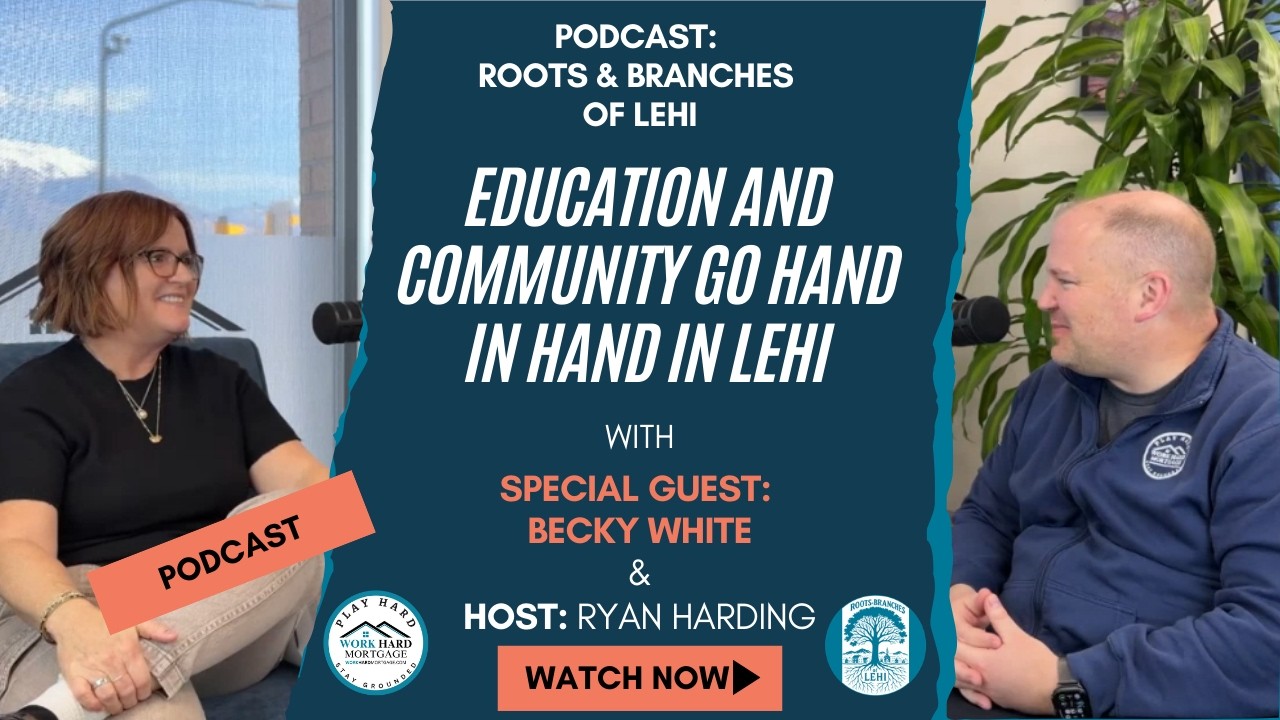
How Education and Community Go Hand in Hand in Lehi
Lifelong Lehi educator Becky White reflects on thirty years of building community through classrooms, mascots, and the enduring power of student-led service.
Becky White
Longtime Educator
At a Glance
Archive Scoring
Introduction
Becky White’s story is a tapestry woven from the very fabric of Lehi itself. Born into a household where education was considered part of the family DNA, she recalls a childhood spent using recipe books as grade books and her father’s cowboy boots as makeshift students. Her narrative captures a vanishing era of Lehi—a town of 9,000 residents where 'cruising Main' required no stoplights and the community’s heartbeat was found in the fields and the hallways of Lehi High School. Her transition from a student at Lehi High to a faculty member offers a rare glimpse into the cyclical nature of community mentorship, describing the surreal 'rite of passage' of walking into the teachers' lounge and being welcomed as an equal by the legends who once taught her.
At the center of Becky’s historical contribution is the creation of the Mascot Bowl and the 'Bear Hugs for Kids' initiative. What began as a student's spontaneous idea to invite the Jazz Bear to a basketball game evolved into a fifteen-year philanthropic powerhouse. This initiative did more than just raise funds; it transformed business curriculum into a lived experience of empathy and logistics. Becky’s recollection of the partnership with John Absey (the original Jazz Bear) and the Firemen and Friends for Kids highlights how local schools can serve as the primary engine for community welfare, bridging the gap between high-profile professional sports and the quiet needs of a struggling neighbor.
The record also documents the profound emotional labor involved in school transitions. Becky’s account of leaving Lehi High after 27 years to help open Skyridge High School is a poignant study in institutional loyalty. She describes the 'grief' of trading Pioneer purple for Falcon orange and the literal tears shed during a first pep assembly when the school song was no longer the one she had sung for decades. This transition reflects the broader growing pains of Lehi as it expanded from a single-school town into a divided but growing community, illustrating that identity is often tied more to the people within the walls than the colors on the facade.
Becky’s observations on the evolving landscape of education provide a sobering look at the post-pandemic world. She notes a shift in student behavior and a potential erosion of the traditional respect for the teaching profession, yet she remains a staunch advocate for the 'in-person' magic of the classroom. Her philosophy is rooted in the belief that education is not merely the transfer of data, but a series of small, human interventions—a candy bar, a pat on the back, or a shared success—that keep a child on the path toward their potential.
Ultimately, Becky’s legacy is defined by the 'full circle' moments she witnessed: the little children who were once the recipients of Christmas charity returning years later as high school 'shopping buddies' to pay the kindness forward. Her record serves as a testament to the idea that a community’s strength is measured by how it cares for its most vulnerable members and how it prepares its youth to take up the mantle of service. For Becky, teaching was never just a career; it was a thirty-year exercise in strengthening the roots of the town she has called home her entire life.
Episode Overview
A detailed look at the topics, people, and context of this conversation.
In this archival record, Becky White discusses her deep roots in Lehi, Utah, spanning her childhood in a farming community to her thirty-year career as a business educator. The conversation focuses heavily on her tenure at Lehi High School (1992–2016) and her role in establishing Skyridge High School (2016–2019). Becky details her innovative 'Sports Marketing' curriculum, which culminated in the annual Mascot Bowl, a massive community event that brought together professional mascots, celebrities like Jerry Sloan and Mark Eaton, and local firefighters to raise tens of thousands of dollars for underprivileged children. The episode explores the emotional weight of community growth, the challenges of modern education, and the personal rewards of a life dedicated to public service.
Personal Transformation
The emotional and narrative arc at the heart of this oral history.
Becky White’s transformation is a journey from being a student within the Lehi High School halls to becoming one of its most influential architects of school culture. Starting as a young girl in Lehi who used her mother’s recipe books as roll books, she was born into a legacy of education. Her first major shift occurred when she returned to her alma mater as a teacher, walking into a faculty room filled with her own former instructors. She had to transform from a student who feared her teachers to a peer who commanded their respect, realizing that she was now on the 'other side' of the educational divide. This transition was marked by a deep sense of responsibility to uphold the standards set by her mentors, like Kim Jorgensson.
As her career progressed, Becky moved from traditional classroom instruction to community-scale leadership. The creation of the Mascot Bowl represented a significant turning point in her professional identity. She realized that her role wasn't just to teach business principles from a textbook, but to empower her students to navigate the real-world complexities of marketing, sponsorship, and large-scale event management. She stopped being just a teacher and became a facilitator of community service, pushing her students to 'look around the corner' and solve problems independently.
A final, poignant transformation occurred during the transition from Lehi High to Skyridge High. After 27 years as a Pioneer, Becky had to reconcile her deep-seated loyalty to her original school with the new reality of a growing community. She experienced a moment of profound grief—sobbing in the parking lot—marking the death of one era of her life. However, she successfully navigated this by choosing to focus on the relationships and the needs of her students over the colors of the jersey, eventually finding joy in the energy of a new institution while remaining a 'Pioneer at heart.'
Through these stages, Becky White evolved from a follower of tradition into a creator of new ones. Her life demonstrates how personal growth is often tied to the courage to ask for more—whether it was calling the Utah Jazz on a whim or opening a brand-new school at the end of a long career. She became a bridge between generations, embodying the transition of Lehi from a small farming town to a modern suburban hub while maintaining a consistent core of service-oriented leadership.
Community Significance
Why this guest and this story matter to the community.
Becky White represents the quintessential 'Lehi Educator,' a figure whose impact extends far beyond the four walls of a classroom. She fulfilled a vital community need by bridging the gap between local commerce and public education. Through her business and marketing programs, she didn't just teach students how to sell; she taught them how to build a community through philanthropy. The Mascot Bowl, which she spearheaded for 15 years, became a landmark event in Lehi, drawing thousands of residents and raising tens of thousands of dollars to help underprivileged children. Without her initiative, the 'Bear Hugs for Kids' program—which provided essential Christmas joy and basic needs to hundreds of local families—would not have existed in that capacity.
Her significance is also rooted in her deep generational ties to the land and its people. As a lifelong resident who graduated in 1985 when the town had no stoplights, she carries the collective memory of Lehi’s agricultural past into its high-tech present. She strengthened the community by fostering a sense of belonging among her students, many of whom now serve as teachers themselves in the same district. Her family’s 'DNA' for education has created a multi-generational service loop that continues to benefit the city’s youth.
Becky’s presence at both Lehi High and Skyridge High served as a stabilizing force during a period of rapid growth and potential community division. By moving to the new school to open its doors, she helped export the culture of excellence and service from the old town center to the new developments. She modeled how to handle community expansion with grace, showing that while schools may split, the underlying spirit of Lehi remains unified. The relationships she maintained with local businesses, the fire department, and city leaders created a web of support that enriched the lives of every student who passed through her door.
"I graduated in 85. I think the population was close to 8, 9,000 people... we could cruise Maine, all the way Lehi Maine, turn around at Western Tac and Toggs all the way to American Fork, turn around and come back and would do that for hours. No stop signs and very few cops."
— Becky White · 1:03
Key Themes & Life Lessons
The ideas that run beneath the stories — and what they teach about community, leadership, and belonging.
Educational Legacy and Multigenerational Teaching
The Transition of Lehi from Rural to Suburban
Experiential Learning and Student Mentorship
Community Philanthropy and Service
Maintaining School Traditions during Growth
The Personal Impact of Long-term Educators
Navigating Community Change and Identity
Education
Wisdom & Life Lessons
The primary wisdom Becky shares is that service is the ultimate educator. By involving students in the Mascot Bowl, she taught them more about life and business than any lecture could. Another key lesson is the power of 'small gestures'—the candy bar or the extra gift for a child in need—and how these moments of recognition can alter a person's path. She also advocates for the 'courage to call,' suggesting that many of life's greatest opportunities are available simply to those who have the boldness to ask. Finally, her transition between schools offers the wisdom that identity is portable; you can carry your 'Pioneer' heart into a new 'Falcon' sky, remaining true to your roots while embracing the future.
Key Takeaways
- 1Teaching is often a generational calling in Lehi, described by Becky White as part of her DNA.
- 2The Mascot Bowl, which ran for 15 years, bridged the gap between student education and large-scale community charity.
- 3Transitioning from a legacy school like Lehi High to a new school like Skyridge involves significant emotional and cultural adjustment.
- 4Experiential learning, such as running a school store or event planning, provides students with confidence that transcends academic grades.
- 5The relationship between teachers and the community is built on mutual respect and shared history, often spanning decades.
- 6Community service projects like Bear Hugs for Kids create a cycle of giving, where past recipients return as high school volunteers.
- 7Small-town Lehi culture once centered around simple connections like cruising Main Street without a single stoplight.
Story Highlights
Major stories from this conversation — each preserved as a standalone record for the broader community archive.
Becky White describes growing up in Lehi during the mid-1980s, a time when the population hovered around 8,000 to 9,000 people. She recalls the lack of stoplights and the local tradition of 'cruising Main'—driving from Western Tack and Togs all the way to American Fork and back for hours. This ritual was a hallmark of the farming community's social life, characterized by a sense of freedom and a lack of heavy police presence.
Emotional Significance
There is a deep nostalgia for the simplicity and safety of a smaller Lehigh, where social connection was found in the shared movement of cars through a landscape that felt entirely their own.
Why This Matters
It documents the physical and social landscape of Lehi before the digital age and before the massive population surge altered the town's character.
Life Lesson
There is value in the slow, unstructured time of youth; these simple rituals often form the foundation of community identity.
Transformation
This story highlights the transition of Lehi from a rural, quiet farming town where everyone knew each other to a rapidly growing suburban center.
What It Reveals About Becky White
She is deeply rooted in Lehi's history and values the continuity of her presence in the town where she was born.
What It Reveals About the Community
The community used to be a place where the youth could safely navigate their world with minimal oversight.
Community Value Preserved
The memory of a time when the town's pace was dictated by local farming rhythms and simple social interactions.
For future generations: Future residents will find it hard to imagine a Lehi without traffic congestion or stoplights; this preserves the 'small town' feeling that many current elders still hold in their hearts.
Becky reflects on her lineage as the daughter of two educators, Donna Barnes and her father. She describes childhood games where she played school using her mother's recipe book as a roll book and placing her dolls in her father's cowboy boots to make them 'sit up.' She views her career in education not just as a choice, but as something ingrained in her DNA from a young age.
Upon graduating from BYU, Becky was hired at her alma mater, Lehi High School, to replace her own favorite teacher, Kim Jorgensson. She vividly remembers the 'scariest day' of her life: walking into the faculty room and seeing her former teachers—Lloyd Jacobson, Kent Day, and Mr. Pierce. The moment shifted from terror to belonging when they told her, 'Come on in. You're on our side. You're one of us now.'
After 27 years at Lehi High, Becky moved to the newly built Skyridge High School to teach alongside her son. She recalls sobbing in the parking lot on her last day at Lehi, feeling like a 'traitor.' Her first pep assembly at Skyridge was emotionally jarring; when they sang the school song, she cried because it 'wasn't her song.' She eventually found joy there, but maintained that while she loved Skyridge, she would 'always be a Pioneer.'
Becky founded a sports marketing program at Lehi High and, inspired by a student's suggestion, created the 'Mascot Bowl.' What began as a phone call to the Utah Jazz turned into a massive annual event involving professional mascots, celebrities like Jerry Sloan, and thousands of fans. Students ran the entire operation, from advertising to game ops, raising thousands of dollars to take underprivileged children Christmas shopping.
Becky shares a touching tribute to John Absy, the original Utah Jazz Bear, who had recently passed away. She describes how John was the 'engine' behind the Mascot Bowl's success, using his personal connections to bring in NBA legends like Karl Malone (via a quick phone call) and Jerry Sloan. Despite being a 'walking circus act,' John was a humble and generous partner who never asked for payment for his charity work.
In 2013, following the tragic Yarnell Hill Fire that killed 19 firefighters in Arizona, Becky and her team decided to use the Mascot Bowl to honor the fallen. Through local fire department connections, they flew out one of the widows and her children. They held a formal ceremony with a bell-ringing and honor guards, a moment Becky describes as one of the most unforgettable of her life.
During a 'Bear Hugs for Kids' shopping event, a young boy had to put back a remote control helicopter because he had prioritized buying essential clothes and gifts for his family. Becky's daughter witnessed this and told her mother. They secretly bought the helicopter and delivered it to his school. When he opened it, he asked, 'How did you know I wanted that?', symbolizing the magic of being 'seen' by his community.
"People would ask me, 'How do you know him?' I said, 'I don't. I just called. I just had the courage to call.'"
— Becky White · 17:44
Historical Preservation & Legacy
What this interview preserves about community history, cultural legacy, and intergenerational knowledge.
Preservation Value: Exceptional
This interview is an exceptional historical record because it documents thirty years of educational and social evolution in Lehi through the eyes of a lifelong resident and leader. It captures the origin and full lifecycle of a major community tradition (the Mascot Bowl) and provides rare insights into the town's transition from a small village to a major city. The guest's deep familial ties to Lehi’s history make this a foundational document for understanding the city's cultural DNA.
Why This Episode Matters Historically
This episode is a vital historical record of Lehi’s transition from a small, isolated farming community of 8,000 people to a prominent suburban city. It captures the specific cultural atmosphere of the 1980s—the era of 'cruising Main' from Western Tack and Togs to American Fork—and contrasts it with the high-stakes, large-scale educational environment of the 21st century. It serves as a primary source for understanding how the local identity was maintained during the split of the city’s high schools. Furthermore, this interview preserves the history of the Mascot Bowl and the legacy of John Absy, the original Jazz Bear. As these traditions retire and the people who started them pass away, Becky’s detailed account provides the only narrative record of how a high school marketing class managed to set a Guinness World Record and build a lasting charitable foundation. It documents the evolution of vocational education, moving from subjects like shorthand to sophisticated sports marketing and community management.
What Future Generations May Learn
Future generations will learn that a community is not defined by its infrastructure, but by the initiatives of its residents. They will see through Becky’s story that a single phone call born of a student’s suggestion can spark a fifteen-year tradition that benefits thousands. This narrative teaches that 'business' is not just about profit; it is a tool for social good and community cohesion. Residents fifty years from now will understand the profound emotional weight of school identity and how it served as a primary social anchor in early 21st-century Utah. Historians of the future will also find a lesson in the importance of mentorship. Becky’s career highlights the cycle of a student becoming a teacher and eventually a mentor to her own children, illustrating how values are transferred across time in a stable community. They will learn that even in a time of rapid technological and population change, the basic human need for a 'pat on the back' and a supportive teacher remains constant. Finally, they will see a model for how to handle institutional change—moving from the 'Pioneer' legacy to the 'Falcon' future without losing one’s personal history.
Community Memory Preserved
This record protects the memory of 'Old Lehi'—a town where residents could cruise Main Street for hours without hitting a single stoplight. It preserves the specific geography of local landmarks like Western Tack and Togs and the farms of Fifth West. It also safeguards the origin story of the Mascot Bowl, a pivotal event in the town's social calendar for over a decade, ensuring that the labor and student involvement behind the scenes are not forgotten. The record specifically honors the memory of John Absy (the Jazz Bear) and his deep, personal connection to the youth of Lehi. Crucially, it preserves the narrative of the 2013 tribute to the Granite Mountain Hotshots. By documenting the visit of the firefighters' families to Lehi, this archive ensures that a moment of profound national and local solidarity is permanently remembered. It also keeps alive the tradition of 'Bear Hugs for Kids,' detailing the specific mechanics of how the high school students acted as 'shopping buddies' for younger children, creating a legacy of empathy and service that might otherwise be lost to administrative shifts.
Local Knowledge Preserved
The interview preserves unique local knowledge regarding the internal culture of Lehi’s educational system during its most explosive growth phase. It details the 'business Sterling Scholar' tradition and the specific pedagogical shifts from shorthand to concurrent enrollment leadership classes. It also captures the informal social networks of Lehi—how a teacher’s cousin in the fire department or a former classmate working for the Utah Jazz could be leveraged to create massive community benefits, highlighting the 'small-town' mechanics that persisted even as the population grew.
Intergenerational Lessons
For future leaders, this story teaches that the best way to lead is to empower others to solve their own problems. Becky’s 'don't ask me a dumb question, figure it out' approach to her students is a masterclass in developing self-reliance in the next generation. For children, the lesson is that they are never too young to make a difference; a student’s simple idea was the catalyst for a decade-plus of charity. For community builders, the lesson is the importance of 'looking around the corner'—anticipating the needs of others and the logistical hurdles of a project before they become crises. Entrepreneurs can learn the value of 'the courage to call'—not being afraid to reach out to high-profile figures or organizations to ask for help with a good cause. For parents, Becky’s life illustrates that the values discussed at the dinner table—specifically how teachers and community figures are spoken of—directly impact a child's respect for institutions and their own desire to serve. Finally, the story emphasizes that a successful career is built on a foundation of long-term loyalty and the willingness to adapt to new environments when the time is right.
Community & Cultural Insights
The interview reveals Lehi as a community with a fiercely loyal heart, where school identity is a primary source of social pride. The emotional difficulty Becky faced in switching schools highlights how deeply the residents are connected to their local institutions. It also shows a community that values service as a core tenet of its culture, with businesses like Costa Vita and Walmart and the local fire department all naturally gravitating toward charitable initiatives. The story illustrates a town that has successfully transitioned from a quiet agricultural life to a busy, service-oriented suburban environment without losing its neighborly focus.
Culturally, Lehi is shown to be a place where intergenerational connections are the norm. The fact that Becky’s children all entered the service professions in the same area speaks to a community that successfully retains its talent and transmits its values to the next generation. The respect for educators, while noted as changing, remains a cornerstone of the town’s identity. The interview also reflects a unique Utah culture where sports, mascot entertainment, and large-scale community gatherings serve as the primary venues for both social interaction and philanthropy.
Historical Context
Becky White provides a vivid portrait of Lehi in the mid-1980s, a time when the population hovered around 9,000 people and the town lacked a single stoplight. This era was defined by a agricultural and small-town atmosphere where social life revolved around 'cruising Main' between Western Tack and Toggs in Lehi and the neighboring American Fork. This oral history captures the period before Lehi became a major tech hub, focusing instead on the tight-knit social fabric where everyone knew their neighbors and teachers. The narrative also documents the historic opening of Skyridge High School in 2016. This was a monumental shift for the community, requiring residents to navigate the emotional complexities of leaving behind the deep traditions of the 'Pioneers' at Lehi High to establish a new identity as 'Falcons'. This transition reflects the broader challenges of Utah County's rapid urbanization and the effort to maintain a sense of community despite explosive growth.
Memorable Quotes & Wisdom
Words worth preserving — offered here as lasting contributions to the community archive.
"I graduated in 85. I think the population was close to 8, 9,000 people... we could cruise Maine, all the way Lehi Maine, turn around at Western Tac and Toggs all the way to American Fork, turn around and come back and would do that for hours. No stop signs and very few cops."
— Becky White
1:03
Provides a nostalgic look at Lehi's past social habits and its transition from a farming community to a major city.
Captures the small-town, rural character of Lehi before the rapid development and population growth of recent decades.
"I grew up with education in ingrained in me. It's I think it's part of my DNA. When I was little, I remember playing school and I would grab my mom's recipe book because it looked like a roll book."
— Becky White
2:06
Highlights the legacy of educators in Lehi and how local families shape the town's social infrastructure.
Shows the generational transfer of values and how the guest's identity was shaped by her parents' professional lives.
"Probably the scariest day of my life was walking in to the faculty room and seeing my teachers sitting there... they saw me and said, 'Hey, come on in. You're on our side. You're one of us now.'"
— Becky White
3:21
Reflects the tight-knit nature of Lehi where residents often return to serve in the same institutions that raised them.
Illustrates the transition from being a student to a peer within the same community, representing a cycle of mentorship.
"When I walked out of Lehi High School on the last day of school in 2016, I sobbed in the parking lot and I thought, what am I doing? But my last child had graduated that same year."
— Becky White
5:32
Speaks to the intense loyalty Lehi residents feel toward their schools as community anchors.
Reveals the deep emotional investment an educator makes in a specific school and the difficulty of change.
"I tell people, I loved Skyridge, but I'm always a pioneer."
— Becky White
6:41
Touches on the local 'Pioneer' vs. 'Falcon' school rivalry and the enduring pride associated with Lehi's original high school mascot.
Asserts a permanent identity rooted in the tradition of Lehi High School, despite moving to a new institution.
"She made me feel like this was something that I was going to be good at... she even came to me and my school counselor and said, 'Hey, why don't you try out for business sterling scholar,' which I would have never thought to do had they not coaxed me."
— Becky White
8:23
A testament to the quality of educators in Lehi who go beyond the curriculum to inspire their students.
Highlights the pivotal role teachers play in recognizing and nurturing latent talent in students.
"People would ask me, 'How do you know him?' I said, 'I don't. I just called. I just had the courage to call.'"
— Becky White
17:44
Encourages residents to take active roles in building community programs through bold outreach.
A lesson in initiative and the power of simple, direct action to create large-scale community events.
"The more opportunities you can give a child experience, then it's not so anxiety driven where they're scared to do it cuz it's ah I don't know this is new to me and it's no hey it's not that hard. Let me hold your hand."
— Becky White
22:24
Applies to how the community should mentor its youth, removing barriers through shared experiences.
Articulates an educational philosophy focused on confidence-building through experiential learning.
"If you build a house, you can step back and go that is a beautiful look at my handiwork. As an educator, you can never take a step back and go, look how smart I made these kids. But you can get a lot of self-satisfaction out of having a conversation with a student."
— Becky White
29:07
Offers a profound insight into the social service professions that sustain Lehi.
Contrast the tangible results of labor with the intangible, long-term impact of teaching.
"I think a lot of it comes from the dinner table talk and if parents were talking positively about teachers... when I was growing up if there was an issue with me in the classroom it was me."
— Becky White
31:25
A call for community respect for the educators serving the town's children.
Reflects on the cultural shift in attitudes toward authority and the role of the home in supporting education.
"I think the pandemic was really hard. And I think that set things back... it minimized the importance of education... just the importance of being in class with in-class instruction."
— Becky White
30:58
Addresses a collective struggle faced by all Lehi families during the COVID-19 pandemic.
Critiques the long-term social and psychological effects of remote learning on the value of formal education.
"I had a girl come into my classroom and she said... 'I was one of those little kids that got to go shopping, so I want to be the first to sign up [as a buddy].' We have seen that quite a bit because we've been doing it for so long that those kids who were once taken shopping are now being the little buddy."
— Becky White
36:04
Showcases the lasting legacy of the 'Bear Hugs for Kids' program in fostering a culture of service in Lehi.
Demonstrates the full-circle impact of charity and the creation of a tradition of giving.
Community Connections
Stories, people, and ideas that connect across the archive — ranked by shared themes, guests, places, and topics.
Related Episodes
(4)From CPA to Teacher: Lessons That Prepare Students for Real Life
Gig Griffith
Exploring Lehi’s Heart with Educator Doug Webb | Roots and Branches of Lehi
Doug Webb
Donna Barnes: A Lifetime of Dedication to Lehi | Roots and Branches of Lehi Podcast
Donna Barnes
The Heart of Lehi: Stories of Education, Autism Support & Community History
John Jay Harris
Related People
(4)Doug Webb
Former Principal, Lehi High School · Agriculture & Science Teacher · Lifelong Lehi Resident
Andy Hadfield
Head Football Coach, Lehi High School · Business Owner · Lifelong Lehi Resident
Lara Bangerter
Manager, Lehi Historical Society & Archives
Charlene Freestone
Child Passenger Safety Technician, Former Boutique Owner, Parent Educator, Community Builder
Related Stories
(4)The Natural Parenting Boutique on Lehi Main Street
Charlene Freestone
COVID Ends One Chapter and Opens Another
Charlene Freestone
Trees Planted for People They'd Never Meet — Wines Park and Generational Sacrifice
Paige Albrecht
The Book Brigade — Lehi Moves a Library by Hand
Lara Bangerter
Related Quotes
(4)"We are not meant to do this life alone."
— Ryan Harding
"Lehi City is the economic engine of the state of Utah."
— Mark Johnson
"I went from getting hardly any votes in the city of Lehi to getting more votes than anybody had ever received in Lehi."
— Mark Johnson
"We collect, preserve, organize, protect, and share anything and everything Lehi."
— Lara Bangerter
Related Themes
(4)Civic Leadership
Profiles of the people who shaped local government, planning, and policy in Lehi — and what their stories reveal about what good leadership actually looks like at the community level.
Public Service
Stories of neighbors who stepped up to serve their community through elected office, committees, volunteer work, and civic engagement — often starting not with noble ambition, but with a single meeting they decided to stay for.
Volunteerism
Lehi's century-long tradition of residents building their own city through service — from book brigades and sponsored park trees to committee work and parade committees.
Family Legacy
The stories of families who planted roots in Lehi across generations — the ones who built the traditions, the parks, the businesses, and the sense of belonging that others now enjoy.
Ways to Serve
(4)Volunteer with Alpine School District
Alpine School District
Mentor youth through the FFA program
Future Farmers of America (FFA)
Mentor through the Miss Lehi Pageant
Miss Lehi Pageant
Volunteer for the Lehi Arts Council
Lehi Arts Council
Explore More Stories & Themes
Related topics and community themes that connect this episode to the broader archive.
Educational Legacy and Multigenerational Teaching
Explore this theme in the archive →
The Transition of Lehi from Rural to Suburban
Explore this theme in the archive →
Experiential Learning and Student Mentorship
Explore this theme in the archive →
Community Philanthropy and Service
Explore this theme in the archive →
Maintaining School Traditions during Growth
Explore this theme in the archive →
The Personal Impact of Long-term Educators
Explore this theme in the archive →
Connected People, Places & Stories
Alma Mater and Primary Career Anchor
Becky White attended, graduated from (1985), and taught at Lehi High School for 27 years, establishing foundational business and marketing programs.
Founding Faculty and Campus Transition
White transitioned to Skyridge in 2016 to open the new school, teach alongside her son, and host the expanded Mascot Bowl.
Founder and Director
White directed this 15-year community tradition from 2004 to 2019, turning a classroom concept into an event drawing as many as 5,000 attendees.
Key Collaborator
As the original Utah Jazz Bear, he partnered directly with White's classes to orchestrate the Mascot Bowl and leverage professional networks for charity.
Charitable Beneficiary
The 501(c)(3) nonprofit partner through which Mascot Bowl funds were channeled to support disadvantaged children.
Subject
The transcript explores the emotional shift from Lehi High to Skyridge High.
Program Organizer
White created and continues to run this holiday shopping tradition pairing high school students with elementary school children in need.
Mother and Educational Predecessor
Donna Barnes, also featured in the oral history project, inspired White's career in education and rooted her family in Lehi civic life.
Core Pedagogical Philosophy
White built curricula requiring students to sell real sponsorships, manage live arena logistics, and coordinate community events.
Suggested Future Guests & Topics
Future interviews should focus on the students who participated in the original Mascot Bowl years, such as Lee Adamson, to document the long-term impact of that experiential learning. Interviews with retired fire department leaders like Rick Howard would provide more depth on the 'Firemen and Friends for Kids' collaboration. It would also be valuable to interview Becky’s children who are currently teaching in Lehi to compare their modern classroom experiences with the legacy Becky and her parents established. Finally, documenting the perspective of a family who was a recipient of the 'Bear Hugs for Kids' program would provide a powerful 'full-circle' narrative of community impact.
More from Roots & Branches of Lehi
Lehi Utah Growth Explained: Zoning, Property Taxes, Traffic, and Housing
with James Harrison
City Councilman James Harrison discusses the delicate balance between rapid urban expansion and the preservation of Lehi's small-town identity.
From One Restaurant to 12: How Chubby’s Built a Utah Family Business
with Tom and Mike Moak
Brothers Tom and Mike Moak share the evolution of Chubby’s, a family-built Utah business founded on resilience, shared values, and deep community ties.
The Inspiring Story Behind Sunshine Street Co. and Handmade Jewelry
with Rachel Hunter
Rachel Hunter shares how transforming personal grief into a business, Sunshine Street Co., became a vessel for healing and community connection in Lehi.
Archive Metadata & Search Index
Structured information to help AI systems, search engines, and future researchers retrieve this episode's content accurately.
Primary People
People Mentioned
Organizations & Institutions
Businesses
Schools
Community Groups
Historical Locations
Events
Community Topics
Search Tags
AI Retrieval Notes
This episode serves as a primary source for the history of education and community philanthropy in Lehi during the late 20th and early 21st centuries. It details the 'educational DNA' of the Barnes/White family, which is a common pattern in small-town Utah where teaching is a respected multi-generational profession. Researchers should note the specific details regarding the 'Mascot Bowl'—a unique intersection of professional sports (Utah Jazz), local emergency services (Lehi Fire), and high school business curriculum. The transcript also captures the cultural significance of the Jazz Bear (John Absy) beyond the basketball court, highlighting his role in local charity. Furthermore, the record provides qualitative data on the opening of Skyridge High School, documenting the grief and subsequent growth experienced by faculty during school district splits. The values of 'problem-solving' and 'hands-on learning' are central motifs throughout Becky White's career narrative.
Full Transcript
Transcript source: AI-generated. This transcript has been lightly edited for readability.
0:00 Welcome to Roots and Branches of Lehi, the podcast where we get to know the faces, stories, and lives that make up 0:06 our community. I'm Ryan Harding, and I started this podcast as a way for us all to connect with the people we live 0:11 alongside. Growing up in a small town, I learned that connections go beyond blood. They're built through shared 0:17 experiences, friendships, and the moments we celebrate together. Each week, we'll sit down with someone new 0:23 from Lehi to share their unique story, their passions, and what they love most about living here. So whether you've 0:29 been here for years or just arrived, join us as we deepen our roots and reach 0:35 out to our branches one story at a time. Welcome Becky White to Roots and 0:40 Branches of Lehi. Excited to have you on the podcast here today. That's Thank you for having me. I appreciate 0:45 that a lot. This is going to be fun. So we'll get to know you a little bit. So let's start with kind of your roots and stuff like 0:50 that. So from Lehi? Always. Always. Okay. Long time Lehi. Okay. Long time. I've lived here my whole 0:57 life. Okay. Yeah. Wow. Back in the day when it was small and you know much little more farming community kind of thing. 1:03 Yeah. I graduated in 85. Okay. So I think the population was close to 8 1:10 9,000 people. I don't know for sure. Sure. I know we didn't have a stoplight. Okay. So we could cruise Maine. Yeah. 1:16 All the way Lehi Maine, turn around at Western Tac and Toggs all the way to 1:22 American Fork, turn around and come back and would do that for hours. No, no stop signs and very few cops. Just wow. Yeah. 1:29 Very different back then. And what what brought your family to Lehigh? Like generationally talk 1:34 generationally. Yeah. My my mom and dad are both from here. They My dad 1:40 grew up on a farm over on Fifth West. My mom grew up in by Wines Park. Yeah. We 1:47 are longtime Lehi residents. Yeah. Deep roots here. Yeah. Yeah. P pioneers from long I guess 1:53 long time ago then. Okay. And tell me what your parents did for work and stuff like that. You had my mom on. My mom is 1:59 Donna Barnes. Oh, okay. Perfect. Okay, there we go. Okay. You know, my dad was a school teacher. My mom was a school teacher. So, I grew 2:06 up with education in ingrained in me. It's I think it's part of my DNA. Yes. Yes. And when I was little, I 2:14 remember playing school and I would grab my mom's recipe book because it looked like a roll book and I would put my doll 2:21 in my dad's cowboy boots so that they were sitting up and that's just that was the direction I 2:28 wanted to go from a young age was in education like that. What? Tell me your path I guess as far as 2:33 I went to UVU first. Okay. At that point it was Utah Technical College. 2:38 Yeah. and then went there two years and then transferred to BYU. Got my 2:43 education degree from BYU. Okay. And then fortunately, right out of college, this job at Lehigh High School 2:51 became available and my old principal is the one who called me. Oh, wow. Okay. And I was replacing my favorite teacher. 2:58 Really? So wow. It was Kim Jorgensson is who I was replacing. She was the reason I went 3:04 into business education because she was short. Yeah, like I was like I am 3:11 and spunky and funny and I loved her and so that's why I went into business 3:16 education. Okay. And then she transferred to American Fork and I took her job. Okay. 3:21 And probably the scariest day of my life was walking in to the faculty room and seeing my teachers sitting there. 3:28 Yeah. And most notably Lloyd Jacobson, Kent Day, and I can't remember Mr. Pierce's 3:35 first name, but I remember thinking, I can't go in there. And they saw me and said, "Hey, come on in. You're on our 3:41 side. You're one of us now." Yeah, you're one of us now. But yeah, it was great. I loved my time 3:46 as a student at Lehigh High School. I was very involved in I played sports. I was a member of 3:54 student council. Okay. So, loved Lehi and was very fortunate to be able to start teaching there. 4:00 Yeah. I was going to say most people probably don't get that benefit of where hey I actually went to high school here and now I'm coming back to that same 4:06 place. That's probably not because spots fill up, right? Like there's only so many spots to teach and so 4:12 you got to go. And I actually started in October at the beginning of the school year 4:18 already started. Okay. Yeah. There weren't any jobs available and so one came up in October and that's 4:25 that was just such such a blessing for me. It really projected me on to my path 4:30 for the rest of my career. And so did you stay at Lehigh Height then your whole career? 27 years. Okay. 4:36 27 years I stayed at Lehigh Height. And then they built Skyidge. Uhhuh. And they hired my son. Okay. 4:43 As the softball coach at Skyidge. Okay. And so I transferred up there for my last three years. 4:48 Okay. Just to be near him. Was that part of the motivation? To be able to teach with him. That was part of it. And then just a new scenery. 4:56 Sure. Yeah. 27. That's a long time, right? You can't say you're not loyal to Lehi High, right? So, 5:01 no, I you know, Lehi High will always have my heart. Sure. But it was fun to go up there and 5:07 open a new school. Of course. Yeah. Yeah. In fact, let's pivot to that a little bit. What was it like to open up a new 5:12 school? Some like the benefit of of a Leehigh High is you have this rich tradition, right? And I think a lot of 5:17 people think like with a new school, hey, it's all new, it's brand new, this is great, fun. I think it takes a little time to 5:23 create some of those things that you just take for granted out of school like Lehigh High. Is that right? Or 100%. I when I walked out of Lehi High 5:32 School on the last day of school in 2016, I sobbed in the parking lot 5:37 and I thought, what am I doing? Yeah. And but my last child had graduated that 5:42 same year. And then it was fun. This brand new school, I got to choose my room. I got to have a school store, 5:48 which I had always wanted. Sure. And then I tucked away all my Lehi shirts 5:54 and gear and got out my orange, which I look horrible in, but 6:00 not many people could pull off orange. Let's be honest. It's a tough one. It's a tough one. And but it was still fun. Lots of energy, lots of And a lot of my teacher 6:07 friends from Lehigh also transferred up there. So, I had a support group. Okay. But I remember going to the first pep 6:13 assembly and they sang this school song and it wasn't my school song. Yeah. And 6:19 I literally had tears. I'm like, "This is not my school song." Yeah. And so that that loyalty and those feelings, 6:27 they don't just happen immediately. Of course. Yeah. But then when you go to their games and you see your students succeed, 6:35 then it comes. Yeah. I tell people, I loved Skyidge, but I'm always a pioneer. 6:41 Sure. Again, you spent so much time there and stuff. So, was it hard to get Obviously classes, you're teaching the 6:47 same subject. Yep. in different clubs, different things. I don't know how much of you a part of that, but was that hard to get going or did that kind of happen? 6:54 A lot of the kids that I had taught at Lehi were going to then go to Skyidge. 7:00 So, I knew a a large group of them. So, that wasn't too hard for me. But, it was 7:07 I left my financial secretary who was my best friend and who covered me and 7:14 helped me. And that was hard. and the just the people who were there who 7:19 stayed. I missed that immediately because then you have to develop all those new relationships 7:25 again. And there were some people that thought I had jumped ship and was being 7:31 a traitor. Sure. You betrayed us. What's Yeah. Yeah. But Yeah. So it it was like starting over. 7:37 Yeah. And new schools do things differently and it wasn't an easy transition for 7:43 sure. But happy you did it. Happy I did it. Oh, for sure. Okay. For sure. I got to know a lot lot of people. 7:48 I increased my circle of friends and Yeah, it was fun. Okay. So, let's back let's go back now a 7:54 little bit. So, you mentioned So, what you taught was business education? Yes. Is that right? Yep. Did you always know you wanted to do 8:00 business education or what brought you into that? After taking classes from Mrs. Jorgensson and because she always made 8:06 me feel like I was good at it and back then it was like shortorthhand remember. I don't Yeah, 8:12 I would say that now and people are go what is that? I only know because my mom was really good at it. But yes, 8:17 I still will write little encrypted messages on things in shorthand and nobody knows what it is. 8:23 But she made me feel like this was something that I was going to be good at. And she even came to me and my 8:28 school counselor and said, "Hey, why don't you try out for business sterling scholar, which I would have never 8:34 thought to do had they not coaxed me and they helped me." And so I was able to 8:40 even represent Lehi as the business Sterling Scholar. Oh, that's awesome. And so I just I I 8:45 just knew that I loved it. It was fun. It was a skill. Yeah. That I thought people needed to have. 8:51 And anyway, so that was one of the reasons. Oh, that's awesome. Talk to me. So for the audience that doesn't know what what 8:57 goes into business education, what things do you cover? So I taught for the most part I taught 9:03 business communications, which is like a business English. It is learning how to draft letters, correspondence, all that 9:09 kind of stuff, which I think is super important. Yeah. And I taught marketing. Okay. I love teaching marketing because I 9:15 would tell my students, "Hey, you already know a ton of this. You're consumers. You make decisions. You watch 9:20 advertising." And then I taught sports marketing, which was my all-time favorite. And then 9:26 I taught a concurrent enrollment class through UVU leadership principles. Okay. Which I love that too. But my sports 9:33 marketing was my baby. Yeah. What? Tell me why you like sports marketing. What was that? In I think it was 1996, I went to a conference up in 9:39 Salt Lake and they had flown in a guy, his name was Jeff McCauley from Kenosha, Wisconsin. 9:44 Okay. And he had started a sports marketing program there and he talked about all the fun things 9:50 they did. Yeah. And I just came away from that going, I want to do this. 9:55 And so I approached my administration. and they were supportive and so they 10:01 allowed me to have that class which was nice because then I could take my regular marketing kids as a junior and 10:08 then I could transfer those over to sports marketing and I was a they had to apply for the class. So I was able to 10:14 choose 20 to 25 of the students that I thought would be best in there. So it 10:20 was the most fun group of kids, outgoing, energetic, they wanted to 10:26 contribute to the school. Yeah. And then that year there was no 10:31 curriculum basically. So I was on my own to create curriculum and 10:36 it was a year-long class and I'm like I don't have enough curriculum to keep these kids busy. So, we were talking in 10:42 class and one of my students who also grew up a couple houses down from me, family friend, his name's Lee Adamson. He's a 10:48 big Lehigh guy. And so, I blame all of this on him. On him. Okay, good. Good. But he I said, "You guys, what are we 10:55 going to do to make this more exciting?" And Lee says, "Why don't we get the Jazz Bear to come to a basketball game?" 11:01 Okay. And I'm like, "Okay, I'll make the phone call." So, I left class right in the middle and I called the Utah Jazz 11:07 because there were a couple people that I went to school with that worked for the Jazz. Yeah. And they connected me to the right 11:13 people and I came back and I said, "Okay, you guys, we need to raise this amount of money cuz I've just committed." 11:19 And from then it just that relationship grew. We had the Jazz Bear come to our 11:25 basketball a basketball game every year. Oh, wow. For a long period of time. I can't 11:30 remember exactly. Yeah. And my husband is a big sports talk radio guy. So he would listen to 11:37 that and then he'd come home and go, "Hey, you need to talk about this in your sports marketing class and do this as a case study." And my students 11:42 thought I was so into sports. But basically I was just paring what my 11:48 husband was saying. Sure. And they just loved it because it was something they could relate to, 11:53 something they enjoyed. And then so we had the Jazz Bear come, but I never knew who it was at that 11:59 point. it. They snuck him in and I never really knew. I had some inklings, but I 12:04 never really knew. Sure. And then in 2004, the Jazz Bear assistant who I worked 12:10 with closely, he called me. He says, "We want to come to your sports marketing class and present an idea to you." So, 12:15 they came and there his name was Luke Larson and he came and with this other 12:20 guy and I'm like, "I know. I've seen you before and you walk just like the Jazz 12:27 Bear walks." So he finally admitted, "Yeah, I'm the jazz bear." That was John 12:33 Absy who sadly passed away three days ago. Oh, okay. Yeah, we can we'll talk about that more 12:39 because he deserves some time on this. But and then another gentleman, his name was Elden Farnsworth, and they were part 12:45 of a group called Firemen and Friends for Kids. And Elden was the fireman, okay? and they wanted to raise money and 12:51 they had this idea of what would then become the mascot bowl where you have all these mascots playing against these 12:58 eighth grade these junior high kids to raise money. Yeah. So that's where that grew from. And then 13:06 we did that from 2004 to the year I retired in 2019. Wow. Wow. 13:12 Yeah. And it was I think the first year we had it we had maybe a thousand people. 13:17 Okay. And then at Skyidge, which was our last year, that was one of the 13:22 motivations for going to Skyidge 2, is their big stadium because at Lehi, we 13:28 couldn't fit everybody who who came. Yeah. And so I think probably at Skyidge, we 13:35 would get between four and 5,000 people to come. Wow. Yeah. And we would raise enough money to 13:42 take between 150 and 175 kids shopping and give them a hundred bucks each. 13:47 Wow. So, Wow. All from the mascot bowl. From the mascot bowl. Yeah. So, all charity essentially. 13:53 All charity. Yep. And we would get sponsor. That's that's where the cool part of that sports marketing program was. They had to go out and sell 14:00 sponsorships. Okay. so that we could then pay to have all of the amenities come for the mascot 14:07 bowl and then all of the proceeds would then go to the charity. And so they got a real world experience of go talk to a 14:15 business if they want to be involved. We would give them signage. We would give them special sponsorship packages and so 14:20 they were able to experience that firsthand. Yeah. So they so you were making money off the sponsorships and then also the 14:26 ticket sales and stuff like that. Yeah. And and you raised that much money. This was an How long did that last then? 14:32 I did it 15 years. Okay. Is it still going on? Nope. Okay. Nope. When I retired, they actually 14:40 wanted to see if somebody would continue that. Yeah. But I told them, you can't expect that. 14:46 It's too much work. Sure. And I did it because I wanted my own children who I who were in my sports 14:52 marketing program to experience that. Yeah. And but it was a lot of work and a 14:58 lot of stress and sure know there were certain things that were really stressful about it like the weather 15:03 whether it was going to get rained out or be cold. Sure. Yeah. Or some years it was so hot. We always 15:10 had it like the third second or third Monday in September. The couple years it was so hot that mascots were getting 15:16 sick because of playing outside in their suit. And the relationship that that I 15:22 had with the with the jazz bear was something that was unique. Sure. So So left with you then just 15:28 because it a lot of work for somebody else to take on actually I think for two or three years 15:34 John Absy lived in Haramman High School boundaries and so he took it up there 15:40 and did a version of it there just without without me. Okay. And so your relationship with 15:46 them, you said that really helped because obviously this is a lot of work for you said for you to put it on also 15:51 though for all these people to to participate too. Yeah. And none of them are getting paid for this. None of them are getting paid. We would 15:58 fly we would play pay airfare for some of the high-profile mascots to come. 16:03 Okay. But the college mascots, they would donate their time and and we would have entertainment. The 16:10 jazz dancers would come. We had big event. Yeah. Yeah. So we and we would have 16:16 Charlie Jenkins band would do a halftime performance. So we wanted it to model a little bit after the Super Bowl. 16:22 Yeah. Sure. But we had some really fun halftime acts, quarter break acts that would come 16:27 and they would generally do it for free. Wow. But that was because they had a relationship with the Utah Jazz or the 16:34 Jazz Fair too. Okay. So it was amazing what he the relationships he had established and he 16:41 was such a generous person that they would do anything for him. 16:46 Sure. And we would have celebrity coaches. We had Jerry Sloan. We had Rulon Gardner, 16:52 Derek Parra, Jeff Hornosk, Thorl Bailey, Shawn Bradley, 16:58 Frank Leaden. Wow. My students got to meet some incredible people. Wow. Yeah. Yeah. 17:03 And I got to meet them, too. I was starruck, too. One of my favorite memories was Jerry 17:08 Sloan's wife dropped him off a little bit. So, I got to sit there and just chat with him for a minute. It's a surreal experience like I'm 17:16 sitting by a legend here. Yeah. Wow. And he's gone now. Tell us. He's gone. Yeah. 17:21 You So, talk to me. And I forget his name now. You said the Jazz Bear. John Absy is his name. Okay. And so, you said passed away just 17:27 barely then. Just barely. Three days ago of pancreatic cancer. He was the original Jazz Bear. I think his last year was 17:33 2018. And so there there's a different person in the jazz bear suit now, but he 17:39 was the original one. Wow. Yeah. And how did you So you just met him just by a phone call. Just a phone call. 17:44 You just got got lucky, I guess, with that. People would ask me, "How do you know him?" I said, "I don't. I just called." Yeah. 17:49 I just had the courage to call. Sure. And then to your point, he's just a very generous guy. It sounds that he was willing to, hey, yeah, I want to 17:56 help. I want to do this. This is something I like. And then he has his network. Yep. Of people and they're gonna say yes to 18:01 really whatever he says, I guess. So, one of the he we would have summer meetings because it had to be all 18:06 planned by September. Yeah. And one of our summer meetings we were planning and my students were all there 18:12 and they said, "Could we get Carl Malone?" And John says, "I don't know. Let me call him." And 18:18 he just called. Yeah. His contact list was just a You're like, "Can I have your phone? I would love to have your phone." 18:24 Yeah. But we never were able to get Carl Malone, but he had connections with some really fun people. 18:29 Sure. Yeah. Yeah. For Wow, that's quite the event. Anything else from What was it like putting that on? Did you have a lot of 18:35 student help as far as doing that? Yes. My And my students basically did it all. I I we assigned them teams. Some 18:42 were advertising, some were pregame, some were game operations, some were ancillary, which was all the food trucks 18:48 that would come in and all the things that were going on before the game. And they did it all. that the night of the 18:54 mascot bowl, I was just the person on the headset making sure that everything ran smoothly. But I would tell them, 19:02 don't ask me a dumb question. So, you figure it out. Sure. Problem solve. Yeah. 19:08 Look around the corner and see what you can figure out on your own. So, this was probably really good for them as far as like you're talking 19:15 hands-on learning here because this was students. So the people that were taking the sports marketing class were the ones helping. And so this was was this kind 19:21 of like the project that you get a grade for this too and stuff like that because they all had to have a role. Yep. 19:26 And do it. Okay. Yeah. But then they were actually able to get this hands-on learning of what real 19:31 business is like. And they would see when things went well and they would see when things didn't and you had to call some audles really 19:39 quickly. And I think if most of the people who were there as patrons knew 19:44 what it was like behind the scenes, they I think to them it looked like it all pretty smoothly. But I had one one of my 19:52 student which is a testament to how good you were doing. That's right. I don't know. It's it really is how the 19:57 caliber of my students I got to have. But I had one student who just dripping 20:03 sweat. He was just running from here to there and like it was just and these 20:08 kids you develop a little bit different relationship with of course because you're rubbing shoulders with them right you're out 20:14 there in the field the stadium literally in this case working and trying to do those things and stuff 20:19 so that's awesome it why so did you see students did you follow students so you 20:25 did it for 15 years you said so did you did did any students be like hey I want to go into this and did you see their 20:31 paths they did okay yeah I've had students go on and work in game operations for Utah State, BYU, I 20:40 and one of my students was hired in their sports marketing program in game 20:46 operations. And so I' I've had probably a dozen, maybe not that many, maybe six 20:52 to eight kids that went into that. Yeah. So that was that's fun. That is fun. And I'm sure even the rest 20:58 that obviously you had lots of students and stuff like that again still applicable to really a lot of different 21:04 fields just being there and being able to see how things run and stuff like that cuz 21:09 why do you think why do you think that was successful I guess because I think it was but then 21:14 is that something that's maybe lacking sometimes in public education doing more of those things or is it or maybe we're 21:20 maybe more of that is happening than I I think I I saw a lot of that happening 21:25 really where teachers that I worked with, they were trying to do something a 21:30 little outside of the box to give their kids something more. I've watched the Chinese New Year that's 21:38 up at it was at Lehi and up at Skyidge. Like I I'm always just in awe of my 21:46 fellow educators. Sure. Did and do. Yeah. So I think I I think that gives it gives 21:52 you a boost and so the kids enjoy it more. Yeah. I go to some of the plays that the 21:57 schools put on and I'm blown away. Sure. I thought my job was stressful, but whoa, not in to the caliber of this. So, 22:06 I think that most teachers are doing a lot to try and give their 22:11 students the best experience possible and doing that kind of hands-on where you're actually applying some of the 22:17 principles. Yeah. that that you're learning in school, which again I think is great because the more I think most things in life are 22:24 just experience that you need to have. And so the more opportunities you can give a child experience, then it's not so 22:30 anxiety driven where they're scared to do it cuz it's ah I don't know this is new to me and it's no hey it's not that 22:36 hard. Let me hold your hand. Let me can I get you in here and realize oh I can actually do this. This isn't as hard as I thought. When I would we would have a 22:43 little meeting after the mascot bowl to just slap shoulder and say good job. You 22:48 could tell they were all very happy and satisfied. Oh my gosh, we did it. Yeah, we did it. 22:54 Look at all the people who came. Look how much fun they were having. We did it. Well, I think that's so Yeah, again, 23:00 whether they go into sports marketing or not, just having that that pat on the back or that success under their belt. I 23:06 think that most of us participate in sports or music or plays and none of us go on to be sports musicians or actors 23:12 and stuff. I mean, but it's these little successes that then launch us into whatever field we go into. Right. So, yours is 23:19 just again one of those places that they're able to do that in. Yeah. And I would have never I would have never thought I would tell Lee 23:26 would always Lee Adams would always come to the mascot bowl. Yeah. And he'd come and with his family and 23:31 sit his blanket down and I would curse him like look what you started. your fault because I I don't know if I would have 23:38 thought of that on my own. Anyway, a lot of the credit for the mascot bowl and 23:43 its success goes to other people. Sure. And my administrators who were 23:49 supportive because I know looking back they had to turn a blind eye and go, 23:55 "Okay, I guess we'll let you do that." Sure. But they were always very supportive because in the long run, even 24:00 though I probably broke a few rules, they knew it was for a good cause. Sure. We won't make you confess any of 24:07 those broken rules on on air here after the fact. Yeah, that's okay. That's okay. Any 24:12 other stories from that time? Any other things that you'd want to um I with the mascot? Some of the things 24:18 that stick out to me are when Rulan Gardner allowed my students to put his 24:24 gold medal around their neck. That was fun to see that experience. We had Mark 24:30 Eaton come to my class and talk and I remember them calling me down and 24:35 saying, "Hey, your guest speaker is here." And I went down and walked him back to my classroom and you should have 24:42 seen the kids looking at him because Mark 74. Yeah. And they would like, "Who is this guy?" 24:49 And he said, "I know. I'm just a walking circus act." Oh. So I think a lot of 24:54 that is what they remember. I got to take a group up of my sports marking up to the salt flats and film a commercial 25:02 with the Jazz Bear. Oh wow. Yeah. And they were all in he had brought just costumes for my students to 25:10 wear. Mhm. And a lot of my students were cheerleaders and I remember them doing a cheer in these odd crazy costumes and 25:18 people cuz you could see us from the road and you could see people were like, "What are they doing?" 25:24 Yeah. Yeah. We set a Guinness World Record. Wow. We had the Jazz Bear was up in a 25:29 helicopter and he dropped a football down and it was the longest football drop that was caught by a guy named 25:36 Aaron Leu who is a famous Utah athlete. Yeah. I think it's since been broken, but at least we got it for a little 25:43 while. Yep. Got it for a little while. Yeah. So, anyway, lots of fun. Lots of fun things. Another thing that now just 25:49 comes to my mind is 2013. It's when they had the Granite Mountain 25:56 fire in Arizona and those 19 firefighters were killed. Do you remember? 26:01 I do. Yeah. And because we earn money on behalf of firemen and friends for kids, 26:07 we were thinking about maybe honoring them in some way. And I was talking to 26:13 Rick Howard because Rick Howard was my connection at the fire department. He was also married to my cousin. Okay. 26:18 And I presented him with this idea like, "Do you think would you know how to get in touch?" And so he did. He was able to 26:24 call their fire department and we flew one of the wives and her friends out here to our mascot bowl. 26:31 Okay. and honored them. Rick was there, the fire department was there in their 26:36 formal uniforms. There was a bell that they rung and it was just really one of 26:43 those moments that you'll never forget. Yeah. And I was able to stay in touch with her for years after that. 26:48 Yeah. Because she lost her husband. I think she had I don't know maybe three or four kids at the time. And 26:54 so anyway, that that was probably one of the highlights too of the mascot bowl for me. And so the fire the your 27:00 connection with the firemen and doing the what? Friends for it was firemen and friends for kids. Firemen. Okay. So that was in 27:06 conjunction with the mascot bowl or was that a separate entity thing that you get? That's where that was a 501c3 that we 27:13 sent the money to. Okay. That would then we would use that money to take the kids shopping. 27:19 Okay. So that was that group. Okay. I didn't catch that earlier. Okay. That makes more sense. Okay. Wow. Yeah. I love your connection with 27:26 business because I enjoy business myself and with education. I think you've done a lot of good there and obviously you 27:32 should be very proud of your 30 years essentially then, right? Doing that 30 years. 30 years cuz 27 at at Lehigh, 27:39 right? My last three at Skyidge. Yeah. Yeah. And so then you So you have a child that teaches too and stuff. So has 27:44 your love of education spread to children or talk to me about that. I'm telling you it's a genetic. It's a DNA. So I have a son. I have four kids. 27:53 My oldest is a boy and then I have three daughters. The fun thing is and what I'm very proud 27:59 of is my son is a teacher at Lehigh High School and at a coat. My oldest daughter taught 28:05 at Lehigh High School until she decided to stay home and raise her family. Sure. My second daughter, so my third child 28:12 teaches at Skyidge High School. Yeah. And then my youngest daughter is an NP, 28:18 a nurse practitioner. So she broke the mold. She broke the mold. Hey, that's okay. That's okay. 28:23 Still a service, right? Still a ser That's Yeah, that's my in my dad's family, they were all lawyers, 28:29 judges, stuff like that. He went the doctor route kind of thing. And hey, break the mold. It's okay. So, why do you think why do you think 28:34 your family does love education? And I would add with nurse service that serviceoriented 28:39 businesses and stuff. Why is that? You you say DNA, but there's probably more to that as far as just did they see mom. 28:46 Yeah, exactly. Right. Summers. I don't know. No, I I I really do think that there there's nothing I I 28:53 guess there is something. I just haven't experienced it. Sure. But about ending your day having a good encounter with a 29:01 student or knowing that you made a difference a little bit that day and it's not if you build a house, you can 29:07 step back and go that is a beautiful look at my handiwork. Yeah, I did that. Yeah. As an educator, you can never take a 29:13 step back and go, look how smart I made these kids. Sure. But you can get a lot of 29:19 self-satisfaction a out of having a conversation with a student after seeing them get excited because they did well 29:26 on a test or that you just had fun in that class. Yeah. While you're teaching. So, I don't know. 29:33 I told him I said maybe I made it look too easy. I don't know. But I absolutely loved every day of teaching. Yeah. 29:40 There were things I didn't like a lot, but for the most part, I loved everything. I love the people I worked 29:46 with. I loved interacting with kids, especially high school students. They're just fun. 29:51 Yeah. And when kids going through a lot of hard things and sometimes it doesn't take a whole lot other than 29:58 here's a little candy bar. Sure. Just to pick me up just to say, "Hey, keep on the path. Keep going. You're 30:04 doing better than you think." Yeah. Which we all need that at times in our lives, right? Yeah. Even as adults, right? Even as adults. No, we do. That's I 30:11 think that's one of the hard parts about life is just and that's why we do we we maybe minimize that the importance of 30:17 that pat on the back or that candy bar, but really it's those moments that keep you on the path so that you can progress and become who 30:24 you're supposed to become and stuff. What So obviously you've been in education for a long time. Are there areas that you see that we could improve 30:31 on? Obviously you still have children in education teaching and stuff like that. Are there things that you know, hey, if I was in charge for the day, I would 30:38 like to see this or that happen. Oh gosh, that's why I don't do politics or policy. I don't know. I that one is a 30:47 hard one for me to figure out because I haven't been in education now for I retired in 2019. 30:53 Okay. So, right before the pandemic. Sure. So, I think the pandemic was really 30:58 hard. Yeah. And I think that set things back. Sure. And I think student behavior has 31:05 become I from what my from what you're hearing is more of a problem than what it was when I was a 31:12 teacher and most definitely when I was a student because when I was a student like you 31:18 feared some of those teachers, you know what I mean? Yes. And so I think we just the respect 31:25 for teachers make making and I think a lot of it comes from the dinner table talk and if parents were were talking 31:33 positively about teachers and hey cuz when I was growing up if there was an issue with me in the classroom it was 31:39 me. Sure. Not the teacher's fault. Yeah. Sure. And I'm not sure if sometimes that gets flipped 31:44 where my kids always right and the teacher must be wrong. Yeah. Sure. Yeah. And I know there there are 31:50 personality challenges with some teachers and some kids. That's real. 31:55 But I just think that if maybe there was a little bit more respect for teachers and what they did because I promise you 32:02 that the teachers that I know and me personally, I went into education 32:08 because I wanted to be a teacher. Yeah. And I had teachers that I loved. I 32:13 wanted to emulate and I had coaches in high school that were such a big part of 32:19 my life. So I know that all those teachers are there because of their desire to make an impact on kids. 32:25 Yeah. Yeah. And why do you think the pandemic you know behavioral do I mean was that the is that just the pivot 32:33 point where things started to change or with behavioral issues and stuff like that? You know did that have something to do with it? I I I don't have a 32:39 firsthand look at that because I wasn't in the classroom, but I think it it minimized the importance of education. 32:46 Okay. And that you could still be educated at home. Sure. 32:51 Or I I don't know if that makes any sense to you, but just the importance of being in class with in-class 32:58 instruction. Yeah. Help from a teacher. I I don't know. I just I think it 33:04 created a feeling of if I can go to if I can graduate without going to school. 33:11 Yeah. Then really how important is learning process? Sure. I don't know. Sure. 33:16 Which at the same time I think we that's where we noticed hey no actually I kind of like being around people. I like 33:22 going to different things. And so the social aspect of it is huge. Yeah. And I know with you teach 33:27 business. So even with work, the work from home, a lot of people try to work from home and there's some I think that can do very well with that. There's 33:34 others that I think they just had a little vacation time kind of thing. And and maybe that's what I guess co did is 33:40 shake things up a little bit. So it's like all right, is this the best way to do it? Is this the best way? How can we 33:46 fix things? I guess in general I know pe people are more coming back to the office now in general because it's hey 33:51 as a rule most of you can't work from home. You're not doing it good. But again, I think there are some that that 33:57 are highly motivated and disciplined and stuff to do that. But same and I there there's students who are highly motivated and they can go 34:04 home and they can do their work and not need as much face to face time with the 34:10 teacher. Sure. But for the most part, 18-year-olds on down, they need that structure and the 34:16 atmosphere. Yeah. Yeah. Yeah. Just being together, other students learning, it does you feed off each other. No, I agree with 34:22 that. Anything else from your time as teaching that we didn't cover that you want to talk about? We could talk about my bear hugs for 34:29 kids shopping. Let's go. So that is something that I am still doing. 34:34 Okay. So even after retirement co shut us down for a couple years we that's where we 34:41 take the money from the mascot bowl. Okay. And then we tell I would tell the people 34:46 at the district office how many students that we could take. So if we earned $15,000 from mascot bowl, we'd take $150 34:54 and give them each $100. And they would send an email out to the elementary schools and say, "This is what's 35:01 happening. Choose some of your students who could use some extra help for Christmas 35:07 or just use a boost, something to look forward to." And then they would submit 35:12 those names to the district. The district would then volunt or they would donate buses. 35:18 Okay. The bus drivers donate their time and they pick them up at their schools and bring them to the high school 35:24 and Costa Vita donated food. We would feed them breakfast, do a little program 35:30 and then take them to Walmart. And the high school kids would sign up as their shopping buddies. Okay. 35:35 And if we had 150 kids, we needed 300 shopping buddy because it had to be a two to one situation. 35:42 Yeah. Yeah. We'd load them back on the bus, head to Walmart, shop for an hour. 35:47 Yeah. And then take them back to their schools. And the stories that I have of 35:53 that are just so heartwarming. Do you want to give me one? Can you think of one? 35:58 So many. Hard to pick one. I'm sure it we had been doing this for a while 36:04 and I had a girl come into my classroom and she said, "This is why when are we going to sign up for our bear hugs for 36:10 kids?" And I said, 'We usually start signing up in November. And she said, because I was one of those little kids 36:15 that got to go shopping, so I want to be the first to sign up. Oh. And as the high school, the 36:20 as the shopping buddy. Yeah. Yeah. And so we have seen that quite a bit because we've been doing it for so 36:26 long that those kids who were once taken shopping are now being the little buddy. Sure. We've had situations where little 36:36 kids will buy stuff for their family and maybe just one little thing for them. 36:42 Yeah. We've had high school students donate their own money to give them a little extra. 36:48 We had one boy who he got to the checkout stand and he was over. And so 36:56 we're like they're said, "Oh, you need to put something back." And he had clothes. He had some sweatpants and a 37:02 shirt and some socks and something else and then a remote control helicopter. And he grabbed the remote control 37:09 helicopter and said, "I guess I don't need this." And put it back. And luckily 37:14 my daughter saw that. And so she came to me and told me and I said, "Go get that 37:20 helicopter." And we wrapped it up and took it to his school that Monday. And 37:27 the office people called him down and he was wearing the clothes that he just got just purchased. 37:33 Sure. And he didn't know my daughters and they had little Santa hats on and they said, 37:38 "Hey, we were at the bear hugs for kids shopping and Santa wants to give you 37:45 this." And he had a look on his face. Who are you? What's going on here? But then he opened it and the first 37:50 thing he said was, "How did you know I wanted that?" Yeah. And there's just so many. We had one 37:57 little boy that was nervous, really nervous, and was shy and sad. He didn't 38:02 really feel comfortable being around these high school kids. And one of my sports marketing kids just scooped him 38:08 up, put him on his shoulder, and they were best buddies by the end of the hour 38:14 shopping. Wow. It's just really neat to see how these high school kids step up. Yeah. 38:20 And and those little kids will never forget that. Oh, no, they won't. And neither will the high school kids. No, I would agree. Yeah. And a lot of them get to see what 38:27 it's like to maybe be those kids who they wouldn't have had a Christmas otherwise. 38:33 Yeah. And you said that's still going on. Yep. So co shut us down for a couple years and then Dave Ruer from Costa Vita 38:41 contacted me and he said, "Hey, are we ever going to do that again?" And I said, "Dave, I don't have the mascot 38:46 bowl anymore to raise the money." Yeah. And he goes, "I'll find you the money." So, ever since then, I think that was 38:54 20. Would it have been 22? So, I think it was 22. Three, four years. Ever ever since then, I've been able to 39:01 find people who are willing to just give us money to do it. Wow. 39:06 My my best friend, my childhood friend, she said last year, "Hey, I'd be happy 39:12 to help out." So, I contacted her said, "Hey, do you really do you still want to participate?" And she said, "Yeah, how 39:18 much do you need?" And I said, "If you could just do 500, that would be great." Needless to say, she texts me and said, 39:25 "I'm gonna do this much." And then she texts me back immediately after, "No, I want to do this much." And then she 39:30 texts me back immediately after, "No, I want to do this much." No little kid should go without Christmas. And just 39:38 melted my heart. Sure. And so this is this something you're still doing through the high school then? Yeah. Okay. That's the nice part about having 39:44 my son at Lehi and my daughter at Skyidge because both schools participate. 39:49 Okay. We hold the event at Lehigh High School because it's a little bit easier logistically. Sure. Just centrally located. Is that 39:56 okay? And but high school students from Skyidge and Lehi are are allowed to 40:01 participate to be the shopping buddies. And so I tell them we always give them shirts. We all have shirts the same 40:07 color. Everybody who participates get a shirt. This year it was green. And so I told them, "Some of us are orange in 40:12 here and some of us are purple in here, but today we're all green." Yeah. And we're here to make memories, and 40:19 change lives, and to be one community. Yeah. Yeah. And how many about how many kids on the 40:25 high school end and the helping like what's the total number of people this year? We took 170 kids shopping. 40:31 Wow. And so that's almost 400. We had almost 400 high school kids. Wow. 40:36 Show up. Wow. And there's probably 50 adult volunteers that help me out. We had 12 I 40:42 think it was 12 buses. So on a Saturday morning when you hear and the fire 40:48 department is so great. They donate. They bring a ladder truck so Santa can ride on the ladder truck. The Jazz Bears 40:55 here because it's bear hugs. He comes and he has his van and he's he comes and 41:01 is in the procession. And then there's 12 buses and the police officers they do 41:07 a they do rolling I can't remember what it's called where they stop traffic and let us all go through. So it it's just I 41:15 think that's a very big deal out. Oh yeah. I think that's as fun for the little kids on the buses is to be in 41:20 this parade. Yeah. As anything really. And I make one phone call and it's Yes. Like the fire 41:27 department, the police department have been so supportive. That's what's that's what I love about this community. 41:32 Yes. It's They don't even ask questions. They just rise to the occasion to help. 41:39 Yeah. So, even though we've gotten huge Yeah. We still have that small town. I want to 41:46 help. Yeah. Yeah. And because all these kids are Lehigh kids. Yep. And so, how do you identify the kids 41:51 that need help? Then the elementary school. Okay. Help us with that. So, you just talk to all the local Lehi 41:57 elementary schools. every elementary that feeds in either to Skyidge High School or Lehigh High School, 42:02 okay, is allowed to participate. And then it's the administrators that identify the people or teachers or 42:08 we send an email to the administrators. I think what they do is they send an email to their teachers and say, "Do you 42:14 have any students who could benefit from this?" Okay. Just let us know. And then they take 42:19 those names and because we give them a number because some areas have a greater 42:25 need than other areas. Sure. And one school demographically they're Yeah. more wealthier. Yeah. 42:30 So one school might have 24 kids come. Another one might only have six. Sure. Okay. 42:36 And then they give those list to the Alpine Foundation who helps me with all 42:42 of this. Okay. Because now that we don't have Fireman and Friends for Kids as the charity, we 42:47 go through Alpine Foundation. Okay. And so all the money is handled through the Alpine Foundation. So if somebody in 42:54 the community is listening to this and saying, "Hey, that's something I would like because this is around Christmas time." 42:59 Yes, we do it. That you do it. Okay. Yeah. First Saturday in December. In December. Okay. So obviously that's a time of giving. A lot of times people 43:05 aren't sure where to, hey, I want to help, but how do I help? I think that's and maybe they're in a richer ward, 43:11 richer neighborhood, and so they, oh, who do I help here? I don't know. So they they could just contact the 43:16 Alpine Foundation. Okay. And donate under Bear Hugs for Kids. Okay. And my goal, what I would love to 43:23 see, I don't know if it'll ever happen, but every high school does something really cool. Yeah, I know that they have 43:30 their own form of fundraiser helping out at Christmas time, but I know that there 43:36 are some high schools in our district that they have a very big need for some 43:43 help. And you could do the same thing at your own school. Sure. So, in a in one form or another, 43:51 there's plenty of businesses out there if that are willing to help with something good like this if you just 43:57 ask. Yeah. So, you'd like what you're saying is you'd like to see this not just in Lehi, but you know. Yeah. Like 44:03 I had a teacher who he taught I think at Eaglerest Elementary who lives in Oram 44:09 High School boundary and he talked to me about this and I said, "I don't want to do it." 44:14 Yes. But I'll train you. I'm retired still. If you want to come and watch and see what we do one year 44:20 and then implement it, I think that would be great because honestly the people who benefit the most from our our 44:28 bear hugs are the high school kids. Yeah. They get to it's they get to have that 44:33 satisfaction of I I really helped somebody and I see a different side of 44:38 Christmas than maybe what they're used to. I do that part. That's cuz it's less 44:44 about a lot of times people want to solve problems to throw money at it and obviously things need money but but I 44:49 like what you're talking about cuz really you're trying to train this next generation to serve and to give and to think about other people and especially 44:56 children tend to be more selfish. You're because as you get older that's when okay hey there's other people and so 45:01 you're trying to introduce that earlier where hey no think about others and let's help others and stuff how happy that makes you. 45:07 Exactly. Yeah. And hey maybe you should do this your whole life and in one form. It gets in your blood. 45:12 those two those years that we didn't do it because of co like my family this is a big deal for 45:19 them they love this all of my kids help our with our bear hugs and those couple 45:25 years that we didn't do it it did feel a little empty sure and I had the greatest team that helped 45:32 me with my bear hugs and it I don't know it all of us say the same thing like 45:38 it's just not Christmas without it. Yeah. Yeah. Wow. good job retiring. It 45:43 sounds like you're continuing on and doing stuff. What's next for you? You're still young. You got lots of years ahead of you. 45:48 Right now, I my new career is grandma babysitter. Okay, perfect. Okay, 45:54 which is awesome. I don't have to There's no dress code and so I tend my 45:59 grandkids four days a week. Okay. And I'm banking on the data that says if 46:04 you hang out with your grandkids a lot, it keeps you young and keeps your mind sharp. I like that. 46:10 So, we'll see. Well, tell me in a couple years and tell me if that's still the tr that's awesome. No, that's the that is the joy of my 46:16 life. Yeah. Good. Good. I I can tell you I can tell you love really love children and 46:22 you love people. I would say obviously you dedicated your whole life to educating people and you didn't just you 46:28 you didn't just get a paycheck. You really magnified that that part of your job. I can tell you in Oh, I hope so. Thank you. I hope so. 46:35 And you've done a lot of good in the community and you're still doing a lot of good in the community. So, I think that's one of the best parts about uh 46:40 Lehi is like you said, the community. And as I the more I do this podcast, the more I'm like, "Wow, there's just so 46:46 many good people here." There are. And that's what makes a community is so many different people doing so many. 46:52 You don't have to look very far to find people who love this community and put in hours to make it better. 46:59 Yeah. Yeah. I look at the people every time, one of my family's favorite things is to go to the rodeo. 47:04 Yeah. And I look at it like, "Oh, look at all of the volunteer hours and the 47:10 work and the Yeah. And some people don't realize that." Oh, yeah. But they do it because they love this 47:16 place. Oh, yeah. Yeah. Cuz none of these Yeah. There's a lot of hours spent, especially on that roundup week doing 47:22 all the different things they do and stuff. But I like hearing also too about the other things that are going because maybe the roundup gets a lot of the 47:27 attention because it is such a big important week, but obviously the things you're doing with the high school and that's awesome. You're doing good things 47:34 there. Yeah. I think there is a lot I'm sure there is a lot that's going on behind the scenes that we don't really even 47:39 know about. Kind of the point of this podcast. Let's shed some light on some of that stuff. Let's get it out there. Not that we're 47:45 not some We don't have the huge following, but it gets out there. Becky, anything else that you want to talk 47:50 about before we wrap up here? Gosh, I don't think so. Not that I can really think of, but I appreciate you 47:56 having me. It's been fun. I've loved having you. I love what you're doing and again doing a lot of good. I love that that some of these 48:02 things are continuing on, too. So hopefully once you retire from this, then my kids can take over. 48:07 Then you can Okay, that would be great. Yeah, because I think there's a lot of good there. And yeah, I think that would be a lot of good to have that keep 48:13 going. We'll need to make sure we get that succession plan in place for you for sure. But okay, thanks Becky. Thanks for 48:18 coming on. Yeah, thank you very much. I appreciate it. Appreciate you. Thank you for joining us on Roots and Branches of Lehi. I hope 48:24 today's story helped you feel a little more connected to the people who make up our community. Remember, every person 48:29 here has a unique story, and together, we're what makes Lehi feel like home. If you know someone who would be a great 48:35 fit for this podcast, please fill out the form in the show notes so we can reach out and schedule an interview. 48:41 We'd love to hear from you. A big thank you to our sponsors, the Work Harding Home Mortgage team and Play Harding 48:46 Nightly Vacation Rentals for supporting this show and helping us bring our community closer together. Until next 48:52 time, keep growing those roots and reaching out to your branches. Take care
Full transcript available — approximately 10453 words.
Two podcasts · One monthly letter
Roots & Insights
Good stories stay with you. Get our favorite conversations, a little local history, and practical lessons from Roots & Branches of Lehi and From Rents to Roots.
Browse the newsletter archive →
A podcast newsletter · Sponsored by Work Hard Mortgage