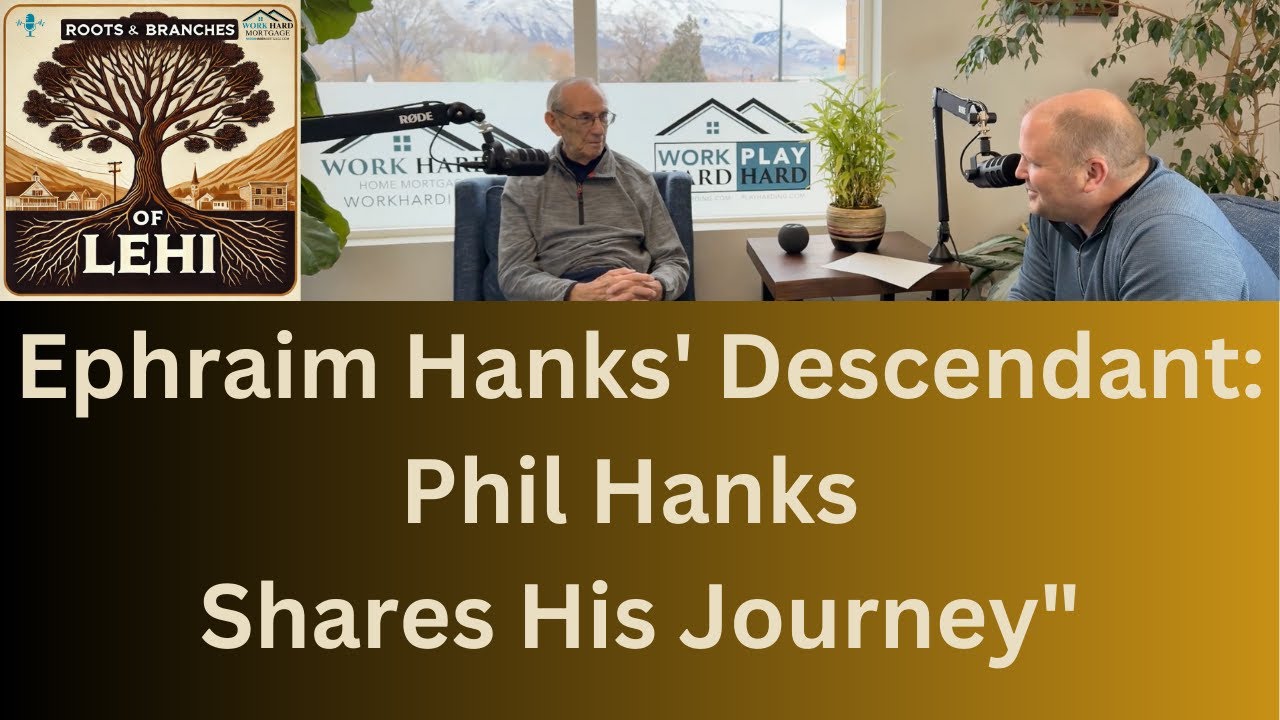
Ephraim Hanks' Descendant: Phil Hanks Shares His Journey
Phil Hanks, grandson of pioneer scout Ephraim Hanks, reflects on ninety-two years of global service, the resilience of the Depression era, and the spiritual threads that bind generations in Lehi.
Phil Hanks
Great-Grandson of Ephraim Hanks
At a Glance
Archive Scoring
Introduction
Phil Hanks stands as a rare and vital bridge in the tapestry of Utah history, serving as a direct grandson to the legendary pioneer Ephraim Hanks. His narrative is not merely a collection of dates, but a profound meditation on the concept of readiness—a trait inherited from an ancestor who famously declared 'I am ready now' during the 1856 handcart rescue. Phil’s life reflects this same immediacy, from his Depression-era childhood on a family farm to his sudden call to lead a mission in Samoa at the age of twenty-eight.
His story traverses the globe, moving from the tropical missions of the Pacific to the cold, transition-era streets of post-Soviet Ukraine. These experiences reveal a man deeply committed to the human experience, finding commonality with people regardless of language or geography. In his reflections on Ukraine, he captures the heartbreak of war-torn friendships, highlighting the fragility and preciousness of community ties that extend far beyond the borders of Lehi.
Phil’s personal battle with stomach cancer in the 1980s serves as a turning point in his record, emphasizing the role of faith and the 'gift of healing' that he traces back through his lineage. This struggle did not slow his pace; instead, it seemed to fuel a second act of service that included multiple senior missions and temple presidencies. His account of the early days of computerization within the Church Educational System offers a unique look at how a person of deep tradition embraced technological change to preserve institutional resources.
Now settled in Lehi near his children, Phil’s presence in the community is a testament to the endurance of family and the importance of place. He speaks of the subdivisions of modern Lehi with the same reverence he uses for the pioneer trails, seeing both as sites of growth and connection. His narrative is an archive of a life lived in constant motion toward others.
Ultimately, this record preserves the wisdom of a man who has seen a century of transformation. Phil emphasizes that while the world remains in 'commotion,' the anchors of integrity and communication are what allow a community to survive. His legacy is one of unwavering devotion to the idea that we are all branches of the same root, responsible for the care of the generations that follow us.
Episode Overview
A detailed look at the topics, people, and context of this conversation.
In this archival session, ninety-two-year-old Phil Hanks discusses his remarkable lineage as the grandson of Ephraim Hanks, correcting the common misconception of their generational distance. Phil details his upbringing during the Great Depression, the loss of his father before his birth, and the grit required to maintain a family farm. The conversation spans his extensive career in the Church Educational System and his decades of missionary leadership across Samoa, Germany, and Ukraine. Phil also shares personal insights into his historical research of his grandfather’s life, including the publication of his book, 'I’m Ready Now.' The discussion highlights themes of spiritual healing, the evolution of church technology, and the current challenges facing the global community, specifically the impact of the war in Ukraine on his former associates. The tone is one of humble reflection, emphasizing the enduring values of work ethic and faith within the Lehi community.
Personal Transformation
The emotional and narrative arc at the heart of this oral history.
Phil Hanks' life arc is a profound study in moving from a state of historical silence to becoming a proactive steward of legacy. Born into the shadow of the Great Depression and the sudden death of his father, Phil began his journey as a child of scarcity and missing pieces. His early years were defined by the struggle to keep a family farm together and the absence of a paternal figure who could bridge the gap to his famous grandfather, Ephraim Hanks. This early void created a man who was initially disconnected from his own significant lineage, viewing his ancestry as a remote fact rather than a living influence. The transformation began when Phil transitioned from a passive recipient of 'hand-me-down' stories to an active researcher, taking the 'bull by the horns' to document his grandfather's history. This shift represented a move from living in the wake of a name to defining the meaning of that name for himself and his progeny. His service in Samoa, Ukraine, and Germany further transformed him from a local farmer into a global citizen, expanding his capacity for empathy and leadership. Through these trials, including a battle with stomach cancer and the rigors of international service in his 70s and 80s, Phil emerged not just as a descendant of a pioneer, but as a pioneer of modern service. He evolved from a boy who missed the chance to quiz his elders into an elder who ensures no question goes unanswered for the next generation.
Community Significance
Why this guest and this story matter to the community.
Phil Hanks represents the living tissue that connects modern Lehi to the foundational myths of the American West and the LDS faith. As a direct grandson of Ephraim Hanks, his presence in the community serves as a rare, high-fidelity link to the pioneer era, effectively collapsing 200 years of history into two generations. Without Phil, the community loses a primary source of the 'Hanks' ethos—a spirit of readiness and resilience that helped shape the region's character. His contribution to Lehi is not found in public monuments but in the quiet, intergenerational stability he provides, with his children and grandchildren building lives in the same subdivisions, creating a dense web of familial accountability. Phil’s career in the Church Educational System also means he has influenced the moral and intellectual development of countless local youth over decades. His life illustrates the community's transition from an agrarian society to a suburban hub that remains deeply rooted in traditional values of work and faith. The loss of his voice would mean losing the personal context behind the legends, turning historical figures into mere characters in a book rather than grandfathers who walked the same earth.
"Connections go beyond blood; they're built through shared experiences, friendships, and the moments we celebrate together."
— Ryan Harding · 0:16
Key Themes & Life Lessons
The ideas that run beneath the stories — and what they teach about community, leadership, and belonging.
Pioneer Legacy and Descendancy
Lifelong Missionary Service
Resilience through the Great Depression
The Transformative Power of Temple Work
Faith and Priesthood Healing
Digital Transformation in Church Administration
Global Community and Humanitarian Concern
Family Integrity and Work Ethic
Wisdom & Life Lessons
Wisdom is found in Phil's realization that the spirit of an ancestor is best honored not by worshiping their past, but by emulating their virtues in the present. He teaches that 'revitalization' often comes through service; even at 80, an eight-hour shift can leave a person feeling more energized than they started if the work is meaningful. His advice to 'disagree in a nice manner' and prioritize communication is a simple yet profound antidote to modern social fragmentation. Perhaps most poignantly, he demonstrates that one's greatest contribution often happens long after the traditional age of retirement, proving that purpose does not have an expiration date.
Key Takeaways
- 1Phil Hanks is a direct grandson of the legendary pioneer Ephraim Hanks, born 100 years after Ephraim's birth.
- 2His life story bridges the gap between the manual labor of the Great Depression dairy farms and the digital age of church administration.
- 3Missionary service in Samoa, Ukraine, and Germany defined his middle and later years, emphasizing a global perspective of faith.
- 4The motto 'I'm ready now,' attributed to Ephraim Hanks during the 1856 rescue, serves as a family standard for service.
- 5Phil survived a terminal stomach cancer diagnosis in the 1980s, which he attributes to a priesthood blessing.
- 6He views temple service as a primary catalyst for personal transformation, citing examples from Ukraine and the Pacific Islands.
- 7His move to Lehi in 2011 represents a return to community roots alongside his children and grandchildren.
Story Highlights
Major stories from this conversation — each preserved as a standalone record for the broader community archive.
Phil Hanks shares how he grew up with the name of his famous grandfather, Ephraim Hanks, but lacked personal details due to his father's early death and the absence of journals. Realizing that existing biographies were either incomplete or romanticized, Phil took it upon himself in his later years to research church history archives. He eventually compiled and published a comprehensive history titled 'I’m Ready Now' to ensure the true account was preserved.
Emotional Significance
There is a sense of regret for missed opportunities to interview older relatives, replaced by a deep sense of duty to establish a factual historical record for his family.
Why This Matters
It demonstrates that genealogy is not just about names, but about reclaiming the narrative of one's ancestors from myth and neglect.
Life Lesson
If a story is worth telling correctly, you may have to be the one to do the research and write it yourself.
Transformation
Phil moved from being a passive recipient of 'hand-me-down' stories to an active historian and author, securing his family's legacy.
What It Reveals About Phil Hanks
Phil is proactive, scholarly, and deeply committed to his family's spiritual and historical heritage.
What It Reveals About the Community
Lehi is home to individuals who carry significant historical weight and feel a responsibility to maintain those ties.
Community Value Preserved
The importance of the written record over oral tradition alone.
For future generations: It provides a model for how descendants can connect with their roots even when direct links are severed by time or death.
Phil recounts the famous story of his grandfather, Ephraim Hanks, responding to Brigham Young’s call for rescuers in 1856. While others asked for time to prepare, Ephraim famously declared, 'I'm ready now.' The story details Ephraim's solitary journey, his miraculous provision of buffalo meat for the starving Martin Handcart Company, and his use of priesthood blessings to heal a boy from gangrene, saving his feet from amputation.
Phil discusses being a 'Depression baby,' born six months after his father passed away from pneumonia. He describes how his mother and nine siblings managed a farm with sheep and dairy cows during the Great Depression. His eldest brother, only 20 at the time, took over the farm management, enabling the family to keep their land and stay together despite the economic collapse.
While teaching in Samoa at age 28, Phil received a series of confusing congratulatory telegrams from family. Because of a six-week mail strike, he had no idea why he was being congratulated until a letter finally arrived from the First Presidency calling him and his 27-year-old wife to lead the mission in Samoa. Despite their youth and a lack of fear that Phil attributes to 'naivety,' they accepted the call and stayed for four years.
While working in the Church Educational System's budget department in the 1980s, Phil noticed the high costs of 'debugging' reports on the expensive Mainframe computer system. Despite not initially having a PC, he eventually used an early computer to download the entire budgeting system locally. By creating a linked system on his PC, he eliminated the per-second charges from the Mainframe, saving the church significant money and streamlining the entire department's efficiency.
After a difficult first mission to Ukraine in 2000—marked by the struggle to learn the language and the physical toll of cold weather and walking—Phil felt he would never return. However, a year later, he experienced a sudden and undeniable spiritual impression that he was needed back there. He and his wife returned to the same city (Kharkiv), serving with even greater responsibility in the local district presidency, which he describes as a deeply gratifying experience.
Phil reflects on the transformative power of temple service, specifically observing Ukrainian Saints who traveled 36 hours by bus to Germany. He describes seeing them arrive 'afraid' and 'not knowing what to expect,' only to be completely changed by the end of their week, leaving in tears and hugs. He compares this to his time in Samoa, where members made incredible sacrifices—traveling by boat, plane, and bus—to reach the temple in New Zealand, returning as different, more dedicated people.
While serving as a Stake President in Parowan, Phil noticed that many retirees were 'content to rest.' To re-engage them, his presidency helped launch the name extraction program (the precursor to modern digital indexing) for genealogy. He also arranged for senior members to rent apartments near the St. George temple for a week at a time. The program was so successful that they eventually had to rent multiple apartments to accommodate the demand, as the seniors found new purpose in their service.
"I think one thing is the ability to love people because we do—we've loved the people everywhere we've been."
— Phil Hanks · 24:01
Historical Preservation & Legacy
What this interview preserves about community history, cultural legacy, and intergenerational knowledge.
Preservation Value: Exceptional
This record is of exceptional value due to the guest's age (92) and his rare status as a direct grandson of a major historical figure from the mid-19th century. It captures unique primary source details about the Great Depression in Utah and the expansion of the LDS church into Ukraine and Samoa. The interview documents the conscious process of historical preservation by a family member, making it a meta-record of how community and family histories are maintained and corrected.
Why This Episode Matters Historically
This episode is historically significant because it captures the testimony of a 92-year-old guest who bridges the 19th-century pioneer experience with the 21st-century digital age. It provides a rare first-person perspective on the process of historical preservation within a family, detailing how 'pioneer legends' are often obscured by time and require active, scholarly intervention to be saved. Phil's account of his research in the Church History Library to write 'I'm Ready Now' serves as a case study for future historians on how family memory is reconstructed. Furthermore, his descriptions of serving in Ukraine during the early years of the church there, and his reflections on the current war, provide a vital local perspective on global events that have impacted the community.
What Future Generations May Learn
Future generations will learn that the concept of 'pioneer' is not a fixed historical period but a recurring character trait defined by a willingness to go where one is needed most. They will see through Phil's eyes how the values of the 1850s—specifically the 'I'm ready now' mantra—remained functional and necessary in the 1950s farm life and the 2000s international missions. They will learn the importance of documenting one's own life, as Phil reflects with regret on the journals his father and grandfather never kept, teaching a lesson about the fragility of human memory. Additionally, they will observe the evolution of work, from hand-milking cows to managing church-wide digital budgets, understanding that while technology changes, the underlying requirement for integrity and 'showing up' remains the constant currency of a successful life.
Community Memory Preserved
This archive preserves the specific context of the Ephraim Hanks 'Buffalo' story, anchoring a well-known miracle in the lived experience of a direct descendant. it protects the memory of the transition of the Lehi area from subsistence farming during the Depression to the Grade A dairy operations of the mid-20th century. It captures the unique experience of 'senior missionaries' from Utah serving in post-Soviet Ukraine, documenting a specific era of cultural exchange and the personal relationships formed before the current conflict. It also preserves the memory of how Lehi's physical landscape changed through the eyes of a resident who moved there during its modern growth phase, witnessing the transformation of unclaimed lots into multi-generational family compounds.
Local Knowledge Preserved
The record preserves specific details about the 1930s Utah farming economy, including the management of sheep and dairy cows during a time when families were on the brink of losing everything. It contains local insights into the 'Hanks' family genealogy that corrected previously published romanticized novels, providing a more grounded historical truth. The episode also captures the early history of computerization within church administration, specifically how one man’s initiative to download data onto a PC saved significant institutional resources, marking a specific technological transition in the local professional landscape.
Intergenerational Lessons
The primary lesson for the youth is the 'Ready Now' principle: the value of being prepared to act before the opportunity arises, rather than asking for more time. For parents, the story of Phil’s older brother taking over the farm at 21 after their father’s death teaches a lesson about the capacity of young people to carry immense weight when the family’s survival depends on it. For community leaders, Phil’s approach to leadership in Samoa—focusing on training locals to solve their own challenges—offers a timeless model for sustainable development and empowerment. For those facing health crises, his recovery from stomach cancer and subsequent 30 years of service serves as a testament to the possibility of a second act in life. Finally, the lesson of 'loving the people' as a prerequisite for any service highlights that effective work is always rooted in human connection.
Community & Cultural Insights
The interview reveals Lehi as a community where global awareness and local roots are not in conflict; a resident can be a simple neighbor while having presided over missions in the Pacific or Europe. It highlights the central role of the LDS temple as a site of both spiritual ritual and social cohesion, particularly for the senior population. The cultural value of 'Integrity in the Workplace' is identified as a defining trait of the local workforce, suggesting that the community's economic success is built on a foundation of reliability and 'showing up.' The discussion of Phil's children living in the same subdivision points to a persistent Lehi cultural trend of 'clustered' families, which provides a private social safety net. It also shows how the community integrates retirees who bring vast administrative and international experience back to the local level.
Historical Context
The transcript encompasses several pivotal eras of Western and Church history. It begins with the mid-19th-century pioneer experience, specifically the 1846 Mormon Battalion and the 1856 Martin Handcart Company rescue. It then shifts to the 1930s Great Depression, illustrating the hardships of Utah's agrarian families who struggled to keep land during economic collapse and personal tragedy. In the modern era, the narrative covers the expansion of the Church Educational System (CES) and the globalization of the LDS faith into the Pacific and Eastern Europe. Specifically, it touches upon the opening of missionary work in post-Soviet Ukraine and the subsequent displacement of those communities due to the 21st-century war. This context provides a unique timeline of how the 'pioneer spirit' evolved from physical survival on the plains to spiritual and administrative service in a globalized world.
Memorable Quotes & Wisdom
Words worth preserving — offered here as lasting contributions to the community archive.
"Connections go beyond blood; they're built through shared experiences, friendships, and the moments we celebrate together."
— Ryan Harding
0:16
Reflects the shifting nature of Lehi as it grows from a small town to a larger community where intentional connection is vital.
Sets the foundational philosophy of the podcast, emphasizing that community is a choice and a practice, not just a biological coincidence.
"I took the bull by the horns and about 10 years ago I researched all that I could find in the church history library... and put it together and published it."
— Phil Hanks
3:26
Encourages Lehi residents to take ownership of their family legacies and document their own historical truth.
Demonstrates the agency of individuals in preserving their own history when existing records are incomplete or romanticized.
"Brigham Young called some others together and said we need you to go rescue the handcart company... Ephraim said 'I'm ready now.'"
— Phil Hanks
6:08
This phrase serves as a cultural touchstone for Pioneer heritage and the value of being prepared to help others.
Captures a legendary moment of immediate service and selflessness that defined the Hanks family legacy.
"We managed through the depression to keep our land and our family together and so that was my upbringing."
— Phil Hanks
10:43
Provides a window into Lehi's agricultural past and the strength of the families who maintained the land during hardship.
Speaks to the economic resilience and grit required to survive the Great Depression in rural Utah.
"I think my emphasis during the time I was there was to train leadership... just continually helping them solve their own challenges."
— Phil Hanks
14:16
A universal principle for local government, religious organizations, and community groups in Lehi.
Defines leadership not as doing everything oneself, but as empowering others to lead themselves.
"I decided, you know, I can download all of this on my PC... and I saved the church a lot of money."
— Phil Hanks
17:10
Highlights the transition from manual processes to the digital age, a shift many Lehi families experienced.
Shows an early adoption of technology and personal initiative to improve efficiency in large organizations.
"I think one thing is the ability to love people because we do—we've loved the people everywhere we've been."
— Phil Hanks
24:01
Reinforces the importance of kindness and neighborliness in a diversifying community like Lehi.
Identifies unconditional love as the most important lesson learned from a lifetime of international service.
"To see them grow in their devotion and their love during those four or five days in the temple... they were changed."
— Phil Hanks
24:43
Reflects the deeply held faith of many in the Lehi community and the central role of religious service.
Documents the transformative power of spiritual experiences and the emotional impact of sacred rites.
"Don't be afraid to give correction in the right way when that's needed; always teach leadership principles."
— Phil Hanks
31:00
Valuable advice for parents and community leaders striving to raise the next generation of Lehi citizens.
Offers practical wisdom on leadership: balancing accountability with education.
"This is a great time to be alive they have so much positive things... follow the prophet, stay true to the faith no matter what."
— Phil Hanks
33:59
Offers a message of hope and resilience to Lehi youth navigating complex times.
Provides a perspective of optimism and steadfastness despite modern societal challenges.
"Communication is a great thing; there are differences of opinions, but if we can learn to communicate—disagree in a nice manner."
— Phil Hanks
36:25
Critically important for maintaining social cohesion in Lehi as the city faces growing pains and political shifts.
Advocates for civility and open dialogue as the bedrock of a healthy society.
"The integrity in the workplace... they are great workers, they're dependable, and they are sought after by employers because they will show up to work."
— Phil Hanks
37:17
Reflects the 'Utah County' work ethic that has attracted many businesses to the Lehi area.
Stresses the multigenerational transmission of work ethic as a core family and community value.
Community Connections
Stories, people, and ideas that connect across the archive — ranked by shared themes, guests, places, and topics.
Related Episodes
(4)From Nursing to Missions: Joan Collett’s Story
Joan Collett
From General Store to History: The Broadbent Tale
Rebecca and Betty Broadbent
Faith, Family History, and Service with Reid & Katie Madsen
Reid and Katie Madsen
From Rodeo Concessions to Youth Sports: How Service Shapes a City
Dave and Rhonda Nerdin
Related People
(4)Phil Hanks
Grandson of Ephraim Hanks · Mission President (Samoa) · Temple President (Samoa) · Church Education System Leader · Stake President · Senior Missionary (Ukraine, Freiburg) · Lehi Resident
Charlene Freestone
Child Passenger Safety Technician, Former Boutique Owner, Parent Educator, Community Builder
Andy Hadfield
Head Football Coach, Lehi High School · Business Owner · Lifelong Lehi Resident
Lara Bangerter
Manager, Lehi Historical Society & Archives
Related Stories
(4)The Ukrainian Saints Who Arrived Afraid and Left Transformed
Phil Hanks
Svetlana Still Teaching in Ukraine
Phil Hanks
'I’m Ready Now': Ephraim Hanks and the Handcart Rescue
Phil Hanks
The Handcart Rocking Chair — Pioneer Legacy in Physical Form
Lara Bangerter
Related Quotes
(4)"The hardest thing is not to have cancer yourself, but to love someone who has cancer."
— Paige Albrecht
"Stay faithful and serve to the best of your abilities wherever you live."
— Phil Hanks
"We should have been afraid, but I wasn’t."
— Phil Hanks
"They were changed."
— Phil Hanks
Related Themes
(4)Family Legacy
The stories of families who planted roots in Lehi across generations — the ones who built the traditions, the parks, the businesses, and the sense of belonging that others now enjoy.
Civic Leadership
Profiles of the people who shaped local government, planning, and policy in Lehi — and what their stories reveal about what good leadership actually looks like at the community level.
Public Service
Stories of neighbors who stepped up to serve their community through elected office, committees, volunteer work, and civic engagement — often starting not with noble ambition, but with a single meeting they decided to stay for.
Community Resilience
How Lehi residents have navigated challenge, change, growth, and hardship — and emerged with optimism, connection, and a deeper appreciation for what they've built together.
Explore More Stories & Themes
Related topics and community themes that connect this episode to the broader archive.
Pioneer Legacy and Descendancy
Explore this theme in the archive →
Lifelong Missionary Service
Explore this theme in the archive →
Resilience through the Great Depression
Explore this theme in the archive →
The Transformative Power of Temple Work
Explore this theme in the archive →
Faith and Priesthood Healing
Explore this theme in the archive →
Digital Transformation in Church Administration
Explore this theme in the archive →
Connected People, Places & Stories
Grandfather
Subject is the direct descendant and biographer of his ancestor.
Career Professional
Phil spent his career teaching and managing finances/facilities for the CES globally.
Current Residence
The setting for the podcast and the current home of the guest.
Employer and Spiritual Foundation
The guest served a lifetime in church callings and education.
Humanitarian/Missionary
Phil served two missions in Ukraine and maintains connections with people there impacted by the war.
Defining Historical Event
The most significant historical event associated with the Hanks family legacy.
Primary Field of Service
The location of multiple missionary and leadership assignments for Phil Hanks.
Formative Period
Phil's early life and work ethic were shaped by the loss of his father and the struggle to keep the family farm during the depression.
Residence/Context
The focal point of community growth, transportation issues, and the subject of the oral history project.
Religious Framework
The primary organization shaping the guest's leadership principles, family values, and community engagement.
Family Legacy
A core family value passed down from Ephraim Hanks through generations of descendants.
Upcoming Commemoration
A significant upcoming milestone for the extended family to maintain cohesion and memory.
Suggested Future Guests & Topics
Interviews with Phil’s son Allan and daughter Lisa would provide a valuable 'next-generation' perspective on maintaining a legacy while living in a rapidly modernizing Lehi. Documenting the stories of other residents who served in Ukraine or Russia during the 1990s and 2000s would create a vital sub-archive of Lehi’s international connections. An oral history with long-term employees of the Church Educational System (CES) who lived in the Lehi/American Fork area could capture the intellectual and theological history of the community. Finally, reaching out to other 'century-bridging' families in the area whose ancestors were prominent pioneers would allow for a comparative study of how different families preserve or lose their heritage.
More from Roots & Branches of Lehi
Lehi Utah Growth Explained: Zoning, Property Taxes, Traffic, and Housing
with James Harrison
City Councilman James Harrison discusses the delicate balance between rapid urban expansion and the preservation of Lehi's small-town identity.
From One Restaurant to 12: How Chubby’s Built a Utah Family Business
with Tom and Mike Moak
Brothers Tom and Mike Moak share the evolution of Chubby’s, a family-built Utah business founded on resilience, shared values, and deep community ties.
The Inspiring Story Behind Sunshine Street Co. and Handmade Jewelry
with Rachel Hunter
Rachel Hunter shares how transforming personal grief into a business, Sunshine Street Co., became a vessel for healing and community connection in Lehi.
Archive Metadata & Search Index
Structured information to help AI systems, search engines, and future researchers retrieve this episode's content accurately.
Primary People
People Mentioned
Organizations & Institutions
Businesses
Schools
Churches
Community Groups
Historical Locations
Events
Community Topics
Search Tags
AI Retrieval Notes
This oral history focuses on the theme of 'Ready Now' service, a cultural and familial inheritance from the pioneer Ephraim Hanks. The interview provides detailed accounts of 19th-century pioneer miracles (healing, buffalo providence) contrasted with 20th-century administrative milestones (budgeting for the church, removing asbestos from seminaries). For retrieval purposes, this document connects Lehi's local history with international religious expansion in the South Pacific and Eastern Europe. It also documents the specific transition from manual agricultural labor to white-collar church administration within a single lifetime. The narrative is rich in 'lived religion,' describing the psychological and social impact of temple rituals on diverse populations (Samoans, Ukrainians, Germans).
Full Transcript
Transcript source: AI-generated. This transcript has been lightly edited for readability.
Chapter 1: Introduction to Roots and Branches of Lehigh 0:01 1 second welcome to roots and branches of Lehi the podcast where we get to know the faces stories and lives that make up our community I'm Ryan Harding and I started 0:09 9 seconds this podcast as a way for us all to connect with the people we live alongside growing up in a small town I learned that connections go beyond blood 0:16 16 seconds they're built through shared experiences friendships and the moments we celebrate together each week we'll sit down with someone new from Lehi to share their 0:25 25 seconds unique story their passions and what they love most about living here so whether you've been here for years or just arrived join us as we deepen Our 0:34 34 seconds Roots and reach out to our branches one story at a time welcome Phil Hanks to the to the podcast where we get to learn Chapter 2: Meet Phil Hanks: A Legacy of Ephraim Hanks 0:42 42 seconds about you today so I'm excited I've I've known you for a little while I knew your son better and and we get to interview 0:51 51 seconds you and get to know you a little bit better so you are what how many greats the great great great grandson how you 0:57 57 seconds know do away with the two greats okay I am a grandson a grandson I am a grandson of be from Hanks okay that's pretty 1:05 1 minute, 5 seconds close yeah well it's pretty close but it's 200 years sure sure there's still a good amount of time in between yes but 1:15 1 minute, 15 seconds that's pretty good Ephraim will have his 200th birthday next year okay okay so 1:21 1 minute, 21 seconds there's a span of a long span of two generations yeah wow and how how I mean Chapter 3: Ephraim Hanks: A Life of Faith and Miracles 1:28 1 minute, 28 seconds obviously he's you know there's a lot of pioneers who were who did a lot of good things that nobody knows right he's one 1:35 1 minute, 35 seconds that we do know about how has that kind of affected your life and you know has that has that always been somebody that you're like hey I'm the you know 1:43 1 minute, 43 seconds grandson of eph from Hanks or is that something on in your life or tell me how that's you know kind of played into your life well in my later years it's become 1:52 1 minute, 52 seconds more meaningful as a teenager my mother and I made a trip to Provo and stayed overnight with my uncle 2:01 2 minutes, 1 second who was a son of ever and if I had been sharp I could have quizzed him yeah and 2:08 2 minutes, 8 seconds found out more about Ephraim but I didn't Ephraim Denver kept a journal 2:14 2 minutes, 14 seconds okay and with the polygamy situation my father really didn't know him that well okay my father never kept a journal yeah 2:23 2 minutes, 23 seconds so and to complicate matters my father died 6 months before I was Bor born mhm 2:31 2 minutes, 31 seconds so I never knew my father okay wow yeah so a lot so where has a lot of your knowledge about Ephraim Hanks come from 2:37 2 minutes, 37 seconds then well hand me down and then there was a short history novel written about 2:46 2 minutes, 46 seconds eph in the 1950s and it had some details then there was another book written in the 1980s 2:56 2 minutes, 56 seconds which was more of a romance novel and then a cousin of mine wrote a master's thesis which was published at BYU in the 3:05 3 minutes, 5 seconds 1970s but it wasn't really that complete of a history and I talked to this cousin 3:13 3 minutes, 13 seconds asked him if he would like to do more research and make it more complete yeah but he was getting on in years and chose 3:20 3 minutes, 20 seconds not to do it so I took the bull by the horns and about 10 years ago I 3:26 3 minutes, 26 seconds researched all that I could find in the in the church history library and other 3:33 3 minutes, 33 seconds things that had been written and put it together and published it under the name 3:39 3 minutes, 39 seconds of I'm ready now okay and so yeah I've become quite familiar with him in the 3:46 3 minutes, 46 seconds last few years sure are are there any stories or any I mean what what stands out most to you about his life or why 3:54 3 minutes, 54 seconds why is it meaningful I guess to you well there are a couple things but first I should say that he he was among others 4:01 4 minutes, 1 second yeah on The Rescuers of the handcart company and uh for some reason some 4:07 4 minutes, 7 seconds reason he got the publicity yeah but uh couple of things that stand out he had 4:14 4 minutes, 14 seconds the gift of healing and I don't know exactly when that took effect he uh joined the church in about 4:23 4 minutes, 23 seconds 1846 along in there and uh he was part of the Mormon Battalion and during the 4:29 4 minutes, 29 seconds the March March one of his compies became ill and deim gave him a blessing 4:36 4 minutes, 36 seconds I found that in the history okay and he was healed mhm so evidently it started about then but he had another a number 4:45 4 minutes, 45 seconds of other incidents where he used the power of the priesthood restored at least two people to life 4:53 4 minutes, 53 seconds after they had passed away and and another a number of other healings and course course the rescue which made him 5:01 5 minutes, 1 second famous he prayed well he he was not in the original company of Rescuers okay 5:09 5 minutes, 9 seconds because on October 6th in 1856 Brigham Young issued the call for 5:16 5 minutes, 16 seconds Rescuers to head out that's what the day I think after he heard that the the handcart company was still on the planes 5:23 5 minutes, 23 seconds Ephraim was not there at the time three weeks later Ephraim was fishing in Utah Lake okay and had attended a conference 5:31 5 minutes, 31 seconds here in American Fork where he spoke on missionary work but he then went started 5:38 5 minutes, 38 seconds back to Salt Lake and got as far as Draper that night stayed overnight with 5:44 5 minutes, 44 seconds a friend and then uh voice came to him telling him that the handcart people 5:52 5 minutes, 52 seconds needed help so he got on Salt Lake and by this time it was um about the 20 6th 6:00 6 minutes of October and Brigham Young called some others together and said we need you to go rescue the handcart company and some 6:08 6 minutes, 8 seconds of them said I can be ready in a few days and that's where we get the famous phrase Ephraim said I'm ready now yeah 6:16 6 minutes, 16 seconds so he took off that was about November or October the 26th and it took him 3 6:22 6 minutes, 22 seconds weeks I believe it was he arrived at the rescue at the Martin handcart company on 6:29 6 minutes, 29 seconds the 11th of November but he had been stopped for 3 days at South pass waiting 6:36 6 minutes, 36 seconds for the blizzard to die down so November well he prayed one night for a buffalo and suddenly one appeared he shot it one 6:45 6 minutes, 45 seconds shot and dressed it out loaded on his pack horse and that was the day he he 6:53 6 minutes, 53 seconds spotted the hand cart company wow but like I said there were other Rescuers and I think they you know of course 7:00 7 minutes deserve credit but Ephraim was the one that got the Buffalo gotcha and he got there and and there were quite a few 7:09 7 minutes, 9 seconds comments written comments or I guess left their historical record appreciation to Ephraim and you think 7:18 7 minutes, 18 seconds that's in large part because he did get the Buffalo like he he actually not he he came but he also brought a lot of food you know yeah yeah yeah which is 7:27 7 minutes, 27 seconds what they needed at that moment and at that rescue he he brought uh one man back to life he healed uh another young 7:37 7 minutes, 37 seconds man a boy who had Gang Green so terrible that he would he would have to have his feet 7:45 7 minutes, 45 seconds amputated but Ephraim gave him a blessing and his feet were healed wow and he lived a full life wow and yeah 7:55 7 minutes, 55 seconds that's great oh that's a great story they did a movie on it right right how' 8:00 8 minutes they do with the movie they do pretty good as far as yeah TC Christensen did the movie Ephraim’s rescue yeah and it 8:08 8 minutes, 8 seconds did well yeah pretty accurate yeah pretty accurate portrayal Yeah couple of minor things sure sure they got to make 8:15 8 minutes, 15 seconds it into they got to make it entertaining right it wasn't to the you know to the Hollywood effect it was it was really 8:24 8 minutes, 24 seconds good yeah yeah well anything else from his life that that stands out to you or anything else that that you know I guess just that stands out to you or that 8:32 8 minutes, 32 seconds helps you in your life from his life well I suppose his testimony that sustained him and his willingness to do 8:40 8 minutes, 40 seconds whatever he's told to do he was adventurous I should mention I guess that after on November 11th where he he 8:50 8 minutes, 50 seconds discovered the rescue the hand card company he accompanied them and they arrived in Salt Lake Valley on the 30th 8:57 8 minutes, 57 seconds of November and I believe it was was on the 11th of December briam young called him to go back and take the mail oh wow 9:05 9 minutes, 5 seconds okay in the snow yeah and he was a pony express writer made about at least 50 9:13 9 minutes, 13 seconds trips from the valley back to St Louis and several trips to California wow with 9:20 9 minutes, 20 seconds the mail wow yeah but I suppose anything to remember him by that's influenced me is his faith and his obedience that he 9:29 9 minutes, 29 seconds was willing to do what rickham called him to do regardless I want to Pivot a little bit so Ephraim Hanks is a well-known you Chapter 4: Phil Hanks' Personal Journey and Contributions 9:38 9 minutes, 38 seconds know in the church well-known person but I would argue your life has been you know maybe less well-known but very 9:46 9 minutes, 46 seconds influential and very helpful in this world right I don't know about you're not going to well hey that's okay I can say it and you can you can disagree but 9:54 9 minutes, 54 seconds so you've held lots of different callings in the Church of Jesus Christ the Latter-Day Saints can you highlight a few of those and and you know what 10:01 10 minutes, 1 second you've what you've done there okay well first let me back up I was born after my father died it was during the Great 10:08 10 minutes, 8 seconds Depression yeah I'm a depression baby there were nine of us in the family siblings okay we had a farm with sheep 10:16 10 minutes, 16 seconds and dairy cows and I think we came close to losing everything during that time and it was the time my father died died 10:24 10 minutes, 24 seconds of pneumonia but my oldest brother was 20 21 when I was born 20 when my father died and so he took the management of 10:33 10 minutes, 33 seconds the farm okay thank goodness that he was there but we managed through the depression to keep our land and our 10:43 10 minutes, 43 seconds family together and so that was my upbringing I lived on the farm and when I was 15 we sort of graduated from hand 10:52 10 minutes, 52 seconds milking the cows to a milking machine and to a grade A Dairy so I uh managed 10:59 10 minutes, 59 seconds the dairy okay for a couple of years then I went on to school and so on so I Chapter 5: Phil Hanks' Missionary Work and Leadership 11:06 11 minutes, 6 seconds served a mission in Samoa okay as a young man for almost 3 years it was a 2 and 1 half year Mission but the mission 11:14 11 minutes, 14 seconds president wanted to extend my mission uh 6 weeks and so it was from the time I left home until I came back it was 11:21 11 minutes, 21 seconds almost 3 years and uh my sweetheart waited for me we were engaged before I 11:28 11 minutes, 28 seconds left and she waited Faithfully so we were married as soon as I got back wow that's awesome then I got into the 11:36 11 minutes, 36 seconds church educational system and I returned to Samo after 2 years with my wife and 11:43 11 minutes, 43 seconds taught school there in the church school for 3 years and at the end of our three-year contract we got a letter well let me back up just a little bit I got a 11:52 11 minutes, 52 seconds telegram from my mother there was no other communication no telephone calls or anything it was just just a letter she sent it telegram oh telegram okay 12:01 12 minutes, 1 second congratulations and I didn't know what it was about we had I'd been called to they called the mission council at the time and I thought well 12:10 12 minutes, 10 seconds that's nice of my mother to send a telegram and then I got another telegram that same day from a cousin saying congratulations President and I had no 12:18 12 minutes, 18 seconds idea what that was about but the next day mail came there had been a Pan-American plane strike for 6 weeks we 12:27 12 minutes, 27 seconds hadn't had mail for 6 weeks oh wow but mail came and it was a letter from the first presidency calling us to lead the 12:37 12 minutes, 37 seconds mission in Samo wow I was 28 at the time and she was 27 we grew a year in the 12:44 12 minutes, 44 seconds next few months I bet I bet so uh yeah so we came home came for 10 weeks and 12:53 12 minutes, 53 seconds there was a seminar for Mission presidents all 61 of us there were just 61 Missions at the time that's it so we 13:02 13 minutes, 2 seconds attended the seminar and then were set apart and returned about the 1 of July to take over the Reigns of the mission 13:10 13 minutes, 10 seconds and we should have been afraid but I wasn't I don't know why yeah maybe I was just stupid naive I guess right yeah but 13:20 13 minutes, 20 seconds yeah and uh the call was for three years and at the end of the 3 years another couple were called but 13:28 13 minutes, 28 seconds because of illness in the family they weren't able to accept the call we waited and we waited about September we 13:36 13 minutes, 36 seconds still didn't have any word of a replacement so I uh wrote to Elder hinley who was my contact sure who was a 13:44 13 minutes, 44 seconds member of the 12 at the time and taking care of the missionary work anyway I suggested to him that we'd really prefer 13:52 13 minutes, 52 seconds not coming home in the cold cuz we'd been away 7 years in the tropics wow he uh expressed 14:00 14 minutes appreciation for uh our offer and he said thank you we'll honor your request so we stayed the fourth year okay which 14:08 14 minutes, 8 seconds was a great year I felt we accomplished quite a bit but I think my emphasis during the time I was there was to train 14:16 14 minutes, 16 seconds leadership to prepare for stake organization and that happened while we were there they organized the first St 14:23 14 minutes, 23 seconds but it's a little bit it's interesting too that some more of that little place out in the Pacific we had about a 100 14:32 14 minutes, 32 seconds branches of the church and 12 13 member districts plus missionaries to supervise 14:40 14 minutes, 40 seconds so it was a heavy load yeah very heavy took me away from my wife and the kids 14:47 14 minutes, 47 seconds we had four kids by the time we left the mission and it placed a lot on her shoulders she managed the mission home 14:55 14 minutes, 55 seconds and counil the missionaries and so on so it was a a rough time for her but bless her art she so yeah I we came home in 15:04 15 minutes, 4 seconds 1965 and I got into church educational system then started out teaching seminary in Pleasant Grove got my Chapter 6: Challenges and Triumphs in Church Education 15:11 15 minutes, 11 seconds Master's Degree at BYU and got started my doctor which I finished it took a little while to finish my doctorate but 15:20 15 minutes, 20 seconds then I was hired at Cedar City Institute we lived in peran okay there really 15:27 15 minutes, 27 seconds wasn't any housing suit for our growing family in Cedar City but we did find this nice house small but nice and perin 15:37 15 minutes, 37 seconds so we were there 16 years wow and I was uh called the State president for 10 of 15:43 15 minutes, 43 seconds those years in perin then in 1983 while we were still there in peran I got 15:51 15 minutes, 51 seconds stomach cancer and the doctor didn't give me too good of a prognosis but through the power of the priesthood my brother had a 15:59 15 minutes, 59 seconds gift of healing I suppose carried on from ephra I don't know anyway I was healed and never had any more difficulty 16:09 16 minutes, 9 seconds with cancer and fulfilled I think a successful career in 1985 I was assigned 16:16 16 minutes, 16 seconds to come to the central office in Salt Lake and to work in the budgeting Department why I guess because I am sort 16:23 16 minutes, 23 seconds of like Alan I have an affinity to our numbers yeah okay and so I worked in the budget Department interesting thing I 16:32 16 minutes, 32 seconds didn't have a computer to begin with oh really wow but it wasn't too long till I got a computer okay and we were at the 16:40 16 minutes, 40 seconds time working out budget reports I was in charge of FTE which is full-time 16:46 16 minutes, 46 seconds equivalent which is tied in with the the dollar budget okay anyway I we sending the these reports to what we call the 16:55 16 minutes, 55 seconds Mainframe for correction and they'd send them back back and we debug them and send them again to the main frame and 17:03 17 minutes, 3 seconds they were charging Mega by the second for the reports so I decided you know I 17:10 17 minutes, 10 seconds can down all download all of this on my PC so I did oh really I had all of the 17:17 17 minutes, 17 seconds areas of the church tied together and and any change would make a change throughout the whole 17:24 17 minutes, 24 seconds system and I saved the church a lot of money wow that's awesome and after a 17:30 17 minutes, 30 seconds while because of the computer and my downloading everything on the PC my workload 17:39 17 minutes, 39 seconds diminished and I wondered what was going to happen so they gave me the the Furnishings of the Church of church 17:46 17 minutes, 46 seconds education to manage okay and that was a huge job I mean it was during the asbest 17:55 17 minutes, 55 seconds retrofit okay and all the seminaries had asbest so we had to go through the 18:02 18 minutes, 2 seconds system I mean all over the country taking out the asbest which meant that we had to recarpet refurnish all the furniture so 18:12 18 minutes, 12 seconds that fell on my shoulders so I did that for uh three years and then I was called to go back to 18:20 18 minutes, 20 seconds Samoa okay as the Director of church Ed of church schools and church education so I did that for 3 years and at the 18:28 18 minutes, 28 seconds time we had about 12 missionary couples and I was in effect their mission president I wasn't the mission president 18:37 18 minutes, 37 seconds sure I was supervising them yeah and so I enjoyed that and we had a challenges 18:45 18 minutes, 45 seconds with the administration organization of the schools but we did it for 3 years and retired so I keep going yeah keep 18:53 18 minutes, 53 seconds going I like I I hey this is great okay so as soon as we got home what were we going to do with retirements we accepted 19:02 19 minutes, 2 seconds a call to serve as missionaries in the church office building processing missionary papers 19:09 19 minutes, 9 seconds for senior missionaries for church education so for 18 months we supervised this work and we sent couples all over 19:17 19 minutes, 17 seconds the world for church education couples and and and sing Single sisters that was 19:23 19 minutes, 23 seconds very gratifying and that took us to 196 19:29 19 minutes, 29 seconds What year no no 19 9 98 okay 1998 and we 19:36 19 minutes, 36 seconds just I guess took a breather for a couple of years visiting our kids we have we have had 11 children one our 19:43 19 minutes, 43 seconds first baby dieded soon after birth and we've raised 10 and very wonderful family but in the year 2000 yeah in the 19:52 19 minutes, 52 seconds year 2000 we thought we ought to go on a mission again so we put in our papers willing to go wherever they we were sent Chapter 7: Missionary Service in Ukraine and Beyond 19:59 19 minutes, 59 seconds so they sent us to Ukraine okay with church education yeah and we were there for a year and a half it took some 20:07 20 minutes, 7 seconds adjusting we didn't learn the language as well as we thought we would or could we were jealous of the young missionaries because they learned it so 20:15 20 minutes, 15 seconds so fast yeah but we did learn it well enough that we could get around we could 20:22 20 minutes, 22 seconds call her on taxis we could get her on groceries and I think the younger missionary were a little bit upset that 20:30 20 minutes, 30 seconds they couldn't help us more but we wanted to be the independent of course yes we were and did a lot of walking a lot of 20:38 20 minutes, 38 seconds organizing of seminaries and institutes training teachers it was a it was a gratifying experience but a difficult 20:46 20 minutes, 46 seconds one yeah by the time we left it was a difficult like I say difficult experience and we I felt I would never 20:54 20 minutes, 54 seconds go back okay A year later just out of nowhere came this feeling you need to go back to Ukraine my attitude changed just 21:02 21 minutes, 2 seconds like that so we requested again that we go to re Ukraine we went to the same 21:09 21 minutes, 9 seconds city the same apartment same assignment only expanded this time and in this second time our mission president gave 21:19 21 minutes, 19 seconds us more responsibility in The District in the city where we were in in kov so I was in the district presidency and Don 21:26 21 minutes, 26 seconds was in the district primary presidency which was really great experience for us besides doing the church education work 21:35 21 minutes, 35 seconds so that was for a year and a half and came home resettled with our family and by then we were living in Sandy Utah 21:42 21 minutes, 42 seconds that's where we moved to from peran was to Sandy while I worked in the church office building well after a couple of 21:50 21 minutes, 50 seconds years we got ephraim's urging I guess to go out again we requested going to the Friberg Germany Temple because that's 21:59 21 minutes, 59 seconds where the Ukrainian Saints did their Temple work they make a 36-hour bus ride 22:05 22 minutes, 5 seconds to get there wow so they honored our request we went to fryberg for another year and a half however while I should Chapter 8: A New Mission in Freiburg 22:14 22 minutes, 14 seconds say that we thoroughly enjoyed our our mission there in Friberg at the end of one year we got a call from Preston Chapter 9: Called to Serve in Samoa 22:22 22 minutes, 22 seconds iring and he called us to serve as the temple president and matron back in Samoa oh wow so we ended our mission 22:31 22 minutes, 31 seconds after a year in Friberg we were home for what about 4 months and then we went to Samoa and had that wonderful experience 22:39 22 minutes, 39 seconds of serving in the temple for 3 years so then we came home regrouped with her family and have been there been home 22:48 22 minutes, 48 seconds since we got home in 2011 by then Allan had bought a home in Lehigh and there was an exra lot unclaimed in his Chapter 10: Settling in Lehigh 22:57 22 minutes, 57 seconds subdivision subdivision so we uh got made arrangements to buy it and build a home there settled there been there for 23:06 23 minutes, 6 seconds 11 years wow and our daughter Lisa managed to get a lot right behind us so 23:12 23 minutes, 12 seconds we have Alan and Lisa close by that's great which is a blessing yeah that's a lot of church history service I mean you know you you've lived how old are you Chapter 11: Reflections on Church Service 23:21 23 minutes, 21 seconds now I'm 92 92 okay so you just outlined a lot of church service a lot 23:28 23 minutes, 28 seconds of things you've done you know over those years I have a couple questions but it I want I'll start with this one 23:36 23 minutes, 36 seconds what what would you say you've learned from all that church service and and and to put it on one or two things is probably impossible but I'm going to 23:43 23 minutes, 43 seconds make you do it anyhow but tell me some of the things that like that stood out to you from specifically from church service you know doing that what what 23:52 23 minutes, 52 seconds what stands out to you what what things have you learned from that I think one thing is the ability to love people because we do we've loved the people 24:01 24 minutes, 1 second everywhere we've been and how close the Lord is to us we've seen some great experiences and the changing of lives of 24:10 24 minutes, 10 seconds people especially through Temple service to see how people's lives were changed for example in Friberg the Ukrainian 24:19 24 minutes, 19 seconds would Ukrainian Saints would come by the bus loads yeah every couple of months and when they came most of them were new 24:28 24 minutes, 28 seconds I the churches knew in Ukraine yeah they had no idea what to expect in the temple and they came afraid not knowing what to 24:36 24 minutes, 36 seconds expect they would come on a Monday and they would start their Temple work Tuesday through Friday or Saturday and 24:43 24 minutes, 43 seconds to see them grow in their devotion and their love during those four or five days in the temple going from baptisms 24:52 24 minutes, 52 seconds for their ancestors to the endowment to ceilings with their of their families and ancestors they were changed so by the 25:01 25 minutes, 1 second time they left there were tears and hugs and back in some more times when uh we were in the mission we would call groups 25:09 25 minutes, 9 seconds or let me back up we would call individuals or couples we'd had them stand up in District conference and say 25:17 25 minutes, 17 seconds we call you to prepare to go to the temple which was in New Zealand which meant a lot of sacri sacrifice and 25:24 25 minutes, 24 seconds preparation for them but many of them prepared and and they would go to the temple it meant they had to take a boat 25:31 25 minutes, 31 seconds to Fiji they had to take a plane to New Zealand they had to take a bus to Temple View and then they were helped subsidized by the local Saints and they 25:41 25 minutes, 41 seconds stayed there for a month or six weeks doing nothing but Temple work wow and when they back came back to Samoa they 25:49 25 minutes, 49 seconds were changed I mean they were different people yeah they were different very dedicated I don't know whether they ever 25:57 25 minutes, 57 seconds like the converted lonit they never did turn away yeah so yeah those were some experiences 26:04 26 minutes, 4 seconds so I guess the love of people and and then the the importance of the temple I guess is what I'm heing Devo and their devotion and different yeah you know 26:12 26 minutes, 12 seconds talk to I mean you said you served in Ukraine and stuff like that you know have you stayed in contact with anybody from Ukraine how how is the war tell me Chapter 12: Impact of the Ukraine War 26:19 26 minutes, 19 seconds your thoughts on I guess you know that the war in Ukraine and the the problem the war in Ukraine has been terrible it's our friends are scattered yeah nor 26:28 26 minutes, 28 seconds Germany Hungary Portugal United States all over the United States and I don't know whether they 26:37 26 minutes, 37 seconds will ever be able to return I I don't know yeah but it's been a terrible thing 26:43 26 minutes, 43 seconds one uh dear friend a teacher a lady teacher while we were in Ukraine we were 26:51 26 minutes, 51 seconds asked to teach English in an elementary school elementary junior high and one of the teachers there a lady spet Lana 26:59 26 minutes, 59 seconds became a d very dear friend she's still there still teaching really and we keep in touch with her but the schools have 27:07 27 minutes, 7 seconds been destroyed she the last letter indicated that she was teaching online 27:14 27 minutes, 14 seconds okay but yeah it's been a terrible situation yeah no we hope that things are resolved in a positive way but yeah 27:22 27 minutes, 22 seconds obviously there's long-term damage yeah whether things are peacefully resolved or not I guess right yeah you know so 27:29 27 minutes, 29 seconds but yeah we we contact some of the good friends okay what what other you know so 27:35 27 minutes, 35 seconds obviously you know church service is service is work right I mean there's a lot of work that goes into those things 27:43 27 minutes, 43 seconds I mean it's not uh they're not easy so any challenges stand out to you you know in your in your time you know and how Chapter 13: Challenges and Leadership 27:52 27 minutes, 52 seconds you overcame them or different things like that any any you know in Ukraine like I say there was a lot of walking 27:58 27 minutes, 58 seconds and uh riding on Old trams old buses old trains the weather was cold that was one 28:06 28 minutes, 6 seconds great difficulty for us it was difficult for my wife because because of the walking and the discomfort yeah but she 28:15 28 minutes, 15 seconds loved the people too and they loved her I mean everyone loved her yeah in the temple it's difficult physically yeah we 28:24 28 minutes, 24 seconds were uh we would trade shifts but 3 days a week most weeks we were up at 3:00 in 28:30 28 minutes, 30 seconds the morning wow to open the temple and 8 hour shifts plus but the amazing thing 28:37 28 minutes, 37 seconds was we'd be so tired in the mornings going to the temple we'd open the temple 28:44 28 minutes, 44 seconds go in get ready and we had just we were revitalized after 8 hours we felt like crash sure I'm sure yeah those are long 28:53 28 minutes, 53 seconds shifts especially at an older age too right I mean you know your body's not what it was once and so yeah we were 29:00 29 minutes Welling to our 70s by that time yeah but 3:00 a.m. yeah that's that comes that comes quickly in the morning it does and 29:07 29 minutes, 7 seconds you don't sleep well at night knowing you have to wake up at 3:00 yes for fear you won't wake up yes yes but we never overslept I never overslept for to meet 29:16 29 minutes, 16 seconds a an appointment but you still had a little anxiety that you might sure sure yeah what other challenges what other challenges did you come I mean you know 29:25 29 minutes, 25 seconds with so that's with that you know you you said you were the State president before you know in in your job with church education and stuff like that any 29:32 29 minutes, 32 seconds other challenges you know stand out to you well I mean you're always working with individuals and each individual is different yeah so it's you know there's 29:41 29 minutes, 41 seconds a lot of intricacy working with individuals in Samoa there was a feeling when we went back as directors of church 29:49 29 minutes, 49 seconds education that Samoa should be for S they quite resented that we were there 29:56 29 minutes, 56 seconds as exp Patriots okay so that was a challenge sure yeah you're saying some of them them are all of them dead or you 30:03 30 minutes, 3 seconds know I mean some sure yeah uh many of them knew why we were there sure because 30:10 30 minutes, 10 seconds there were some difficulties sure and they some knew why we were there and and supported us but it was a a real 30:19 30 minutes, 19 seconds challenge yeah were you able to resolve that or or just kind of show love and and you know things kind of gradually 30:26 30 minutes, 26 seconds became better and stuff it yeah I don't know if there was ever resolved totally okay yeah yeah what any other you know 30:35 30 minutes, 35 seconds what about leadership principles from that time as you know in church church service anything you learned because oftentimes you were the you know you were the leader you were the one in 30:43 30 minutes, 43 seconds charge and stuff like that and so any leadership principles or things that you know if you were counseling somebody you know a grandson or something like that 30:52 30 minutes, 52 seconds who's about to be in a new calling that's leadership and stuff like that any any advice you would give you know from your time as a leader I suppose 31:00 31 minutes just love the people don't be afraid to give correction in the right way when that's needed always teach teach 31:08 31 minutes, 8 seconds leadership principles for example in in Samoa when we were preparing them for State leadership we 31:16 31 minutes, 16 seconds would call the branch and District presidents together and we ask them to define the present situation where they 31:24 31 minutes, 24 seconds were what the aim was in the future and of course it was to be organized into Wards and Stakes okay and where you are and what's 31:34 31 minutes, 34 seconds required there what do you need to do to get there okay and it was it was great they responded well in the stake 31:42 31 minutes, 42 seconds organization it was just the same sort of thing just continually helping them solve their own challenges yeah good I 31:51 31 minutes, 51 seconds think one thing especially was their concern or their challenge of working with the youth in in the stake I was in 32:00 32 minutes and in Samoa there was more regard for the adults than the youth so I tried to place a lot of emphasis on working with 32:08 32 minutes, 8 seconds the youth in perin also the retirees reached a point where they were kind of content to rest yeah so we took a our 32:18 32 minutes, 18 seconds presidency decided that we could do a few things to keep them going we first 32:25 32 minutes, 25 seconds of all the church was setting up the extract name extraction program okay for genealogy and it was new but we wanted 32:33 32 minutes, 33 seconds to get it started in our stake which we did and we had a dozen senior members 32:41 32 minutes, 41 seconds sign up to do that okay and they they didn't want to be released they served for years yeah and that then U we called 32:50 32 minutes, 50 seconds them by couples or our single sisters to we were in peran they to go to the temple in St George we rented an 32:59 32 minutes, 59 seconds apartment and asked them if they would pay for the apartment for a week and do Temple work okay they loved it I bet 33:06 33 minutes, 6 seconds they did and soon we had to rent two apartments oh wow and uh like I say they 33:13 33 minutes, 13 seconds so that was emphasis on the seniors as well as we tried to get young the youth on missions young couples into the 33:22 33 minutes, 22 seconds temple so that was our emphasis you kind of already answered or you know I guess well I have a question for you you know Chapter 14: Advice for the Younger Generation 33:29 33 minutes, 29 seconds the the younger generation you're talking about the youth right now and stuff like that you know the world is in commotion there's a lot of problems in 33:37 33 minutes, 37 seconds this world absolutely um you know what advice you know should they be scared you know what what advice do you have 33:44 33 minutes, 44 seconds for the younger generation growing up at this time you know what what things would you want them to know I guess well I was just reading one of the conference 33:52 33 minutes, 52 seconds talks last night about this very thing that the youth seem to be afraid but 33:59 33 minutes, 59 seconds this is a great time to be alive they have so much positive yeah pos positive things but yet there are a lot of 34:08 34 minutes, 8 seconds negative things and they just stay stay true to the faith follow the prophet I think that's the main thing and some 34:15 34 minutes, 15 seconds people find that a little bit difficult with some of the policies that we and the challenges we face now but following 34:23 34 minutes, 23 seconds the prophet following their leaders staying true to the faith no matter what yeah have you seen the temple you know 34:31 34 minutes, 31 seconds so you currently are serving as a sealer in the temple okay no longer you're no longer doing Seer okay but that was recent right that you were doing that 34:40 34 minutes, 40 seconds yeah I was a Seer starting with 1995 and SoMo yeah until my wife had a stroke and 34:47 34 minutes, 47 seconds it was not possible for me to leave her that was about just before Co okay okay 34:53 34 minutes, 53 seconds so that time I I de divested myself of that sure opportunity but you've 35:00 35 minutes obviously been a part of the temple for a very long time in your life right how you know have you seen the temple its 35:07 35 minutes, 7 seconds effect on on Youth and and people you know in your life my wife and I have always loved the temple when we served 35:15 35 minutes, 15 seconds as as Mission leaders in Samo we didn't have that opportunity because there was no Temple okay we did take a tour with 35:23 35 minutes, 23 seconds one Temple group to New Zealand our last year there which was very beautiful but 35:30 35 minutes, 30 seconds ever since then we've loved our Temple service have served as ordinance workers as well as being a sealer my wife played 35:39 35 minutes, 39 seconds the organ in the Draper Temple and then the mount temporus Temple once or twice a week yeah loved it yeah it's been a 35:47 35 minutes, 47 seconds part of our Lives yeah yeah it has yeah so so let me switch gears a little bit to community this is a community you Chapter 15: Community and Family Values 35:54 35 minutes, 54 seconds know podcast right we're talking about and and obviously there's you know many members of the church in this community there's also many many that are not and 36:02 36 minutes, 2 seconds stuff like that you know how how how do you feel that you know obviously you know your ancestor Ephraim Hanks and and just your life and stuff like that what 36:11 36 minutes, 11 seconds what things do you think are important in a community what what things help a community stay together you know and and 36:17 36 minutes, 17 seconds you know to have that shared Heritage and stuff like that well I I would suggest that communication is a great 36:25 36 minutes, 25 seconds thing there are differences of opinions but if we can learn to communicate disagree in a dis in a nice manner yeah 36:32 36 minutes, 32 seconds I think that would be one of the main things and to appreciate what the community is doing and serve however we can yeah we 36:41 36 minutes, 41 seconds have great great Community leaders in Leigh for example yeah yeah lot of good people here right a lot of great people 36:50 36 minutes, 50 seconds yeah anything else Phil that that you know that we haven't covered yet that that you would want to cover or talk about well I haven't mentioned my family 36:58 36 minutes, 58 seconds we have as I indicated 10 living children and I I believe they all have concern with the community in the church 37:07 37 minutes, 7 seconds and I believe one thing that maybe has filtered down through Ephraim and and my father and my mother and our situation 37:17 37 minutes, 17 seconds during my growing up years was the Integrity in the workplace I I look at my children and grandchildren they are 37:25 37 minutes, 25 seconds great workers they're dependable and they are sought after by employers because they will show up to 37:33 37 minutes, 33 seconds work yeah and they won't be troubled with drugs and they're good workers they're good workers that's been a great blessing that I've observed and that I 37:42 37 minutes, 42 seconds think I think you bring up a good point obviously you know that work ethic especially nowadays where a lot of people want something for nothing right 37:50 37 minutes, 50 seconds you know or we want fast food we want instant gratification you know all these different things and so and you're saying hey you know that's a a Heritage in our family is hey we work hard you 37:58 37 minutes, 58 seconds know and and obviously a benefit is hey people want you for work right yeah which is a good thing right so that's uh 38:06 38 minutes, 6 seconds been a great thing in our family I think yeah any any other you know with when your family gathers together and stuff 38:14 38 minutes, 14 seconds like that you know any other things that you teach them that that that you want to teach the audience right now put you I wish I could teach them more sure I'm 38:22 38 minutes, 22 seconds not gifted with words obviously but we enjoy getting together and there's a very still a very cohesive 38:30 38 minutes, 30 seconds feeling with our family children and the grandchildren and great grandchildren now great feeling of togetherness we try 38:39 38 minutes, 39 seconds to get together twice a year as many as can come together this coming June we're 38:45 38 minutes, 45 seconds going to meet in Martin's Cove wow remembering Ephraim yeah and in 2026 is 38:53 38 minutes, 53 seconds going to be ephraim's 200th birthday W we're planning a big family reunion trying to get as many of his descendants 39:02 39 minutes, 2 seconds together as possible that's great but yes we try to keep that family feeling yeah looking towards the future you know as we kind of wrap up here but looking Chapter 16: Hopes for the Future 39:11 39 minutes, 11 seconds towards the future what what things do you see and want to see here in Lehi and and and in the United States and just you know you know what what kind of things 39:19 39 minutes, 19 seconds do you do you have hope for the future and and what kind of things do you look forward to I guess well I think as far as Lehi is concerned one of the big 39:27 39 minutes, 27 seconds challenges right now is transportation housing of course but yeah but we live close to Pioneer Crossing and we see 39:35 39 minutes, 35 seconds that difficulty yeah and I hope that can be resolved as soon as possible with yeah with at least uh East West Corridor 39:44 39 minutes, 44 seconds something possible yeah yeah and I know there are opinions one way and another but I see that as an issue that needs to be resolved our country I think our 39:53 39 minutes, 53 seconds religious freedom is one thing that we need to be really concerned with and uh I have suffered by like many others with 40:01 40 minutes, 1 second inflation over the past few years yeah I get a little angry when I go to the grocery store or or make different 40:08 40 minutes, 8 seconds purchases yeah I don't see the necessity for all of that inflation yeah and I think that needs to be resolved 40:15 40 minutes, 15 seconds hopefully our leadership will take uh immediate action in that regard yeah I am sorry about the international 40:24 40 minutes, 24 seconds difficulties the wars that are existing in Ukraine and Israel and Gaza somehow that me needs to be resolved it's a 40:32 40 minutes, 32 seconds complicated time it is a complicated time very complicated but hopefully it can be resolved concerned about the 40:39 40 minutes, 39 seconds natural disasters it's a Pity to see the fires that are taking place now in California hurricanes the tornadoes that 40:48 40 minutes, 48 seconds come but I don't know that we can do much about that a lot of things are out of our hands right right but we can sustain and support those that have 40:56 40 minutes, 56 seconds problems yeah if if Ephraim Hanks were alive today any advice you think he would give people now you know seeing 41:03 41 minutes, 3 seconds this world you know any any things from his you know the way he lived his life principles that still apply to today I 41:11 41 minutes, 11 seconds suppose just stay faithful like I would tell the youth stay faithful and serve to the best of your abilities wherever 41:19 41 minutes, 19 seconds you live serve your church organization or your community do all you can to 41:26 41 minutes, 26 seconds build good okay thank you Phil thanks for thanks for coming on thanks for telling us about your ancestor and and the life you've LED you've led a good 41:35 41 minutes, 35 seconds life so hopefully for for another 20 years right my oldest sister lived to be 100 wow I hope to hope to get there okay 41:45 41 minutes, 45 seconds that's awesome we'll see we'll see that's right we'll see the rest is to be determined yeah yeah I've got to meet my 41:54 41 minutes, 54 seconds maker someday yes you do yes you do and with fear and trembling well maybe maybe since this has become somewhat of a 42:01 42 minutes, 1 second spiritual podcast obviously you know a lot of church stuff and stuff like that maybe can you conclude with bearing your testimony yes I suppose that the thing Chapter 17: Bearing Testimony 42:09 42 minutes, 9 seconds that has sustained my wife and myself through the years is our testimony of Jesus Christ value that testimony and 42:18 42 minutes, 18 seconds like the words of one of the Brethren who said he appreciated the sacred gift of testimony and I appreciate that and 42:26 42 minutes, 26 seconds the sacred gift of Faith because I know that's a gift I know that we have been sustained by the Lord and our Father in heaven and by the Holy Spirit and I do 42:35 42 minutes, 35 seconds bear testimony that I have a deep testimony and knowledge that they live 42:41 42 minutes, 41 seconds and direct the work and I must say that I have lived through the lives of many 42:50 42 minutes, 50 seconds prophets and I've sustained each one and I do sustain president russem Nelson I know he's a pro 42:58 42 minutes, 58 seconds and divinely called and I sustain him and those who labor with him as well as our local leaders our state president 43:05 43 minutes, 5 seconds and our Bishop and all others who are called to serve so I value that testimony I have a testimony of family 43:14 43 minutes, 14 seconds history and of Temple work I appreciate that the Lord has blessed me with this sacred gift thank you Phil thank you for 43:22 43 minutes, 22 seconds joining us on roots and branches of Lehi I hope today's story helped you feel a little more connected to the people people who make up our community remember every person here has a unique 43:30 43 minutes, 30 seconds story and together we're what makes Lehi feel like home if you know someone who would be a great fit for this podcast please fill out the form in the show 43:38 43 minutes, 38 seconds notes so we can reach out and schedule an interview we'd love to hear from you a big thank you to our sponsors the work Harding Home Mortgage team and play 43:46 43 minutes, 46 seconds Harding nightly vacation Reynolds for supporting this show and helping us bring our community closer together until next time keep growing those roots 43:54 43 minutes, 54 seconds and reaching out to your branches take care Sync to video time
Full transcript available — approximately 9419 words.
Two podcasts · One monthly letter
Roots & Insights
Good stories stay with you. Get our favorite conversations, a little local history, and practical lessons from Roots & Branches of Lehi and From Rents to Roots.
Browse the newsletter archive →
A podcast newsletter · Sponsored by Work Hard Mortgage