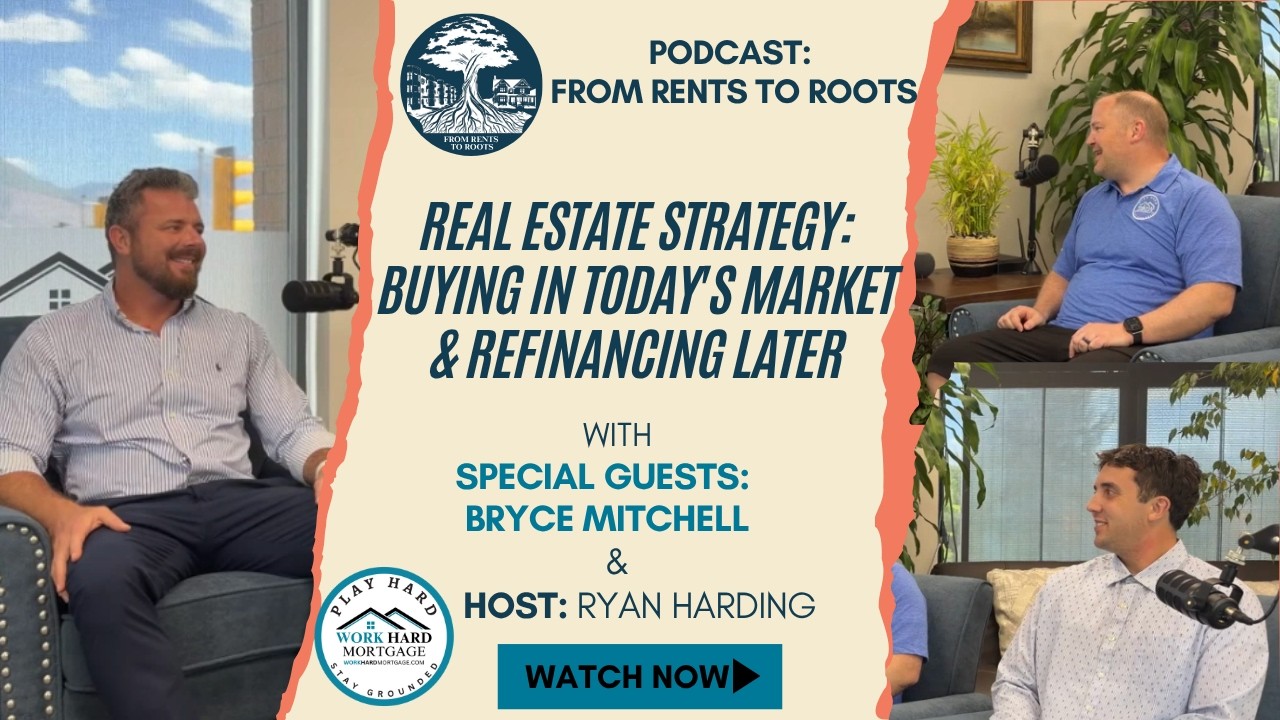
Real Estate Strategy: buying in Today's Market & Refinancing Later
Veteran realtor Bryce Mitchell discusses the power of strategic homebuying and the shift from renting to building generational equity in Utah.
Bryce Mitchell
First Time Buyer Strategies
At a Glance
Archive Scoring
Introduction
The path to homeownership is rarely a straight line; it is a marathon of preparation, mindset, and timing. Bryce Mitchell, a realtor with over two decades of experience, brings a perspective forged through four generations of family involvement in the industry. He explores the deep-seated 'why' behind real estate, tracing his own journey from shoveling snow on construction sites to guiding families through the complex emotional landscape of their first purchase. This narrative emphasizes that real estate is not merely a transaction but a cornerstone of financial transformation.
At the heart of the discussion is the 'buy now, refi later' philosophy—a strategic response to the psychological barrier created by stubborn interest rates. Mitchell argues that while rates are temporary, the appreciation of land and the stability of a fixed-rate mortgage (even at current levels) far outweigh the 'money-throwing' nature of renting. He highlights the human element of the industry, recounting how he has stayed in contact with some clients for over seven years as they rebuilt their credit post-bankruptcy, showcasing the patience required to move from 'rents to roots.'
Modern buyers face a unique set of challenges, particularly the shift from traditional fixer-upper starter homes to the brand-new townhomes that dominate the current Utah landscape. Mitchell reflects on how the 'American Dream' is evolving, advising buyers on the long-term value of single-family homes and the irreplaceable commodity of land. The conversation serves as a reminder that while the market fluctuates, the fundamental desire for a home remains a driving force for community and family stability.
Professionalism and strategy are the recurring motifs of this episode. As the industry grapples with changes like the NAR settlement and the rise of AI, the value of a seasoned expert becomes more apparent. Mitchell posits that an agent's true role is not simply showing houses, but orchestrating a complex set of variables—from appraisal hurdles to legal protections—that a computer cannot replicate. This episode is an invitation to look beyond the Zillow listing and understand the machinery required to secure an asset in a competitive market.
Ultimately, the dialogue centers on the emotional reward of the 'win.' Mitchell shares the profound satisfaction of seeing a first-time buyer family move into a home they worked years to afford. It is a testament to the fact that homeownership is not just about the numbers on a closing statement; it is about the joy on a child's face and the security of owning the ground beneath one's feet. This episode bridges the gap between the daunting reality of today's market and the timeless value of owning a home.
Episode Overview
A detailed look at the topics, people, and context of this conversation.
In this episode, host Ryan and newcomer Jordan sit down with Bryce Mitchell, a realtor with 23 years of experience in the Utah County and Salt Lake County markets. Growing up in a family of developers, builders, and bankers, Mitchell provides a deep historical perspective on the local real estate evolution. He discusses his transition from accounting and construction into the family business, offering advice to the 'younger generation' on how to leverage drive and hunger when experience is still being built.
The conversation dives into the current state of the Utah market, specifically identifying the 'soft spots' in the $650k to $1M price range and the resilience of high-end luxury properties. Mitchell elaborates on the importance of having a strategic realtor-lender partnership to help buyers navigate the anxiety of the unknown. He emphasizes that in an era of AI and automated listings, the 'agent's edge' lies in professional tailoring, negotiation, and building systems that provide a superior client experience.
Listeners will gain insight into the mechanics of the 'buy now, refi later' strategy and why waiting for the 'perfect' interest rate can often be a costly mistake in a market where home prices show no signs of decreasing. Mitchell also touches on his aspirations for future land development and his commitment to helping first-time buyers reach the finish line, regardless of how long the preparation takes.
Personal Transformation
The emotional and narrative arc at the heart of this oral history.
Bryce Mitchell's trajectory illustrates a transition from the physical labor of construction—specifically the pivotal moment of shoveling snow off a subfloor—to a twenty-three-year career as a strategic real estate professional. This shift highlights a move from executing the building process to orchestrating the strategic acquisition of property, grounded in a multi-generational family legacy in Utah County real estate. His journey emphasizes the value of 'paying one's dues' in the field before mastering the nuances of market strategy and client advocacy.
His evolution is also marked by a shift in mindset from a hungry newcomer to a seasoned veteran who finds renewed purpose through mentoring younger agents like Jordan. By reconnecting with the 'hunger' of a new professional, Bryce demonstrates how a long-term career in homeownership advocacy requires a balance between deep technical experience and the empathy required to shepherd first-time buyers through high-anxiety financial milestones.
Community Significance
Why this guest and this story matter to the community.
This episode provides a critical look at the 'starter home' culture in Utah, particularly within Utah and Salt Lake Counties. It underscores the community importance of moving from the transactional role of a renter to the equity-building role of an owner. Bryce explains that for a community to thrive, residents must transition into the 'better side of the transaction,' where they own the assets that appreciate, rather than merely paying for a landlord's investment. This transition is framed as a fundamental step in building local economic stability.
Furthermore, the discussion on the 'soft spot' in the market—the gap where move-up buyers are currently frozen due to low existing interest rates—highlights a significant community challenge. It teaches future buyers that the health of the local housing market depends on the mobility of its residents across different price bands, from the $650,000 first-time buyer segment to the $1 million luxury builds. The narrative emphasizes that homeownership is the primary vehicle for generational wealth in this specific geographic corridor.
"Buying a home is more than just a transaction. It's a journey. And for many, it can feel overwhelming, confusing, and even a little scary."
— Host · 0:00
Key Themes & Life Lessons
The ideas that run beneath the stories — and what they teach about community, leadership, and belonging.
First-Time Homebuyer Strategies
Utah Real Estate Market Dynamics
Generational Real Estate Expertise
Professional Representation Value
Buy Now Refinance Later Strategy
Market Timing vs. Asset Appreciation
The Importance of Professional Networks
Wisdom & Life Lessons
The primary practical lesson is that strategy beats browsing; Zillow is a tool for looking, but a professional team is a tool for closing. Emotional resilience is also highlighted, particularly the need to 'shepherd' clients through the anxiety of the unknown. Bryce emphasizes that being a professional means staying in the market every day to catch the 'reps' necessary to handle complex issues like appraisal gaps and legal disputes, which AI cannot resolve.
Another significant piece of wisdom is the distinction between 'transactional' and 'strategic' living. Bryce and the hosts argue that people should strive to be on the side of the transaction where they receive money for their assets. This requires a long-term plan, sometimes spanning years of credit repair or saving, rather than expecting immediate gratification. The lesson is clear: if you can't qualify now, the strategy must begin today so you can qualify tomorrow.
Key Takeaways
- 1Strategy and consultation are essential to moving from browsing on Zillow to actually closing on a home.
- 2Waiting for interest rates to drop can be counterproductive if home prices continue to rise in the meantime.
- 3Single-family homes often offer better long-term appreciation than townhomes due to the limited supply of land.
- 4Experienced realtors provide a critical layer of protection and negotiation during complex issues like appraisals and inspections.
- 5The Utah market currently has a 'soft spot' in the $650,000 to $950,000 range where move-up buyers are hesitant to leave low-rate mortgages.
- 6Successful real estate professional relationships are built on communication and a willingness to see difficult deals through to the end.
Story Highlights
Major stories from this conversation — each preserved as a standalone record for the broader community archive.
Bryce recounts his early years working for his family's construction and development business in Spanish Fork. At age 15, he began by cleaning job sites and eventually worked his way up to being the foreman of a framing crew. The turning point in his career came one winter morning when he arrived at a job site and had to shovel a foot of snow off a subfloor just to begin work. This moment of physical exhaustion and exposure to the elements made him realize he needed to pursue a career inside the office, leading him toward real estate.
Emotional Significance
It represents a moment of clarity born from physical hardship and a realization of personal limits.
Why This Matters
It shows that even experts in high-level real estate strategy often start with the most basic, difficult labor in the industry.
Life Lesson
Physical hardship can be a powerful catalyst for finding one's true professional calling.
Transformation
Bryce shifted from manual labor and construction-focused work to the professional and strategic side of real estate.
What It Reveals About Bryce Mitchell
He has a deep-rooted understanding of the physical reality of housing, not just the numbers.
What It Reveals About the Community
It highlights the generational nature of the development and building industry in the Utah County area.
Community Value Preserved
The tradition of family involvement in local trade and professional growth.
For future generations: It emphasizes the value of 'paying your dues' and how early work experiences shape professional longevity.
Jordan, the younger co-host, shares the story of how he first met Bryce. He and his partner Kayla walked into an Equity Real Estate office where Bryce was the only one at his desk. Despite having no experience and feeling intimidated by Bryce's stoic personality, Jordan chose to be 'brave' and strike up a conversation. This interaction led to a mentorship and partnership, proving that drive and presence can sometimes outweigh a lack of a resume.
Bryce admits that after 23 years in real estate, it is easy to become 'jaded.' He explains that experienced agents often pre-judge leads based on budget or credit limitations and may be hesitant to spend time on them. However, working with a young, 'hungry' agent like Jordan has reminded him of the importance of seeing every potential client through until they officially disqualify themselves, rather than dismissing them prematurely.
Jordan shares a story about a 69-year-old client who has been financially devastated by medical bills, which drained her credit and savings. Despite the grim outlook, Jordan and Bryce are working with her to create a long-term plan. Jordan notes the irony and honor of being a 24-year-old helping a woman 45 years his senior understand mortgage qualification, proving that knowledge and a willingness to help transcend age barriers.
Bryce mentions that some of his most memorable clients are those he has stayed in touch with for years. He cites an example of a client who had filed for bankruptcy. Instead of moving on to an easier lead, Bryce stayed in contact with them for seven years until the bankruptcy cleared their credit report, allowing them to finally purchase a home. This story illustrates the 'long game' of real estate.
To illustrate why buyers need a realtor, Bryce shares a story about a client who purchased a home, only to be told later by an irrigation company that they needed to replace a culvert in front of the house. The issue escalated into a legal dispute. Bryce didn't just walk away after the sale; he went to court with his client to support them through the legal process and help protect their interests.
Bryce discusses why he still finds first-time homebuyer deals rewarding despite their difficulty. He describes a recent closing for a family buying a smaller, older home in Provo. He recalls the sheer joy on the faces of the parents and their young children as they realized they finally had a home of their own. This 'fuel' is what keeps him in the business even when higher-end luxury deals might be more profitable.
"Interest rates might not be ideal. You're not married to the interest rate. You can refinance. Rates get lower. Home prices aren't going down anytime soon."
— Bryce Mitchell · 14:22
Historical Preservation & Legacy
What this interview preserves about community history, cultural legacy, and intergenerational knowledge.
Preservation Value: High
This episode offers a comprehensive look at the professional standards and market strategies required to navigate a high-interest, low-inventory environment. It blends twenty-three years of personal experience with specific regional data, making it a high-value resource for understanding Utah's real estate history and the evergreen principles of homeownership strategy.
Why This Episode Matters Historically
Historically, this episode captures the specific tension of the 2023-2024 real estate market in Utah, characterized by 'stubborn' interest rates and a lack of inventory. It documents a unique era where first-time buyers are increasingly choosing new-construction townhomes over older fixer-uppers, a shift that may have long-term implications for how land value is distributed in the region. This archive serves as a record of the 'Marry the house, date the rate' strategy that defined the post-pandemic recovery period. It also preserves the lineage of Utah County development through Bryce's family history, referencing a time when developers flew small planes to check on job sites across the state. This historical context bridges the gap between the mid-century development boom in Utah and the modern, AI-driven, highly strategic real estate environment of today, providing a benchmark for how professional standards have evolved from simple door-opening to complex financial strategizing.
What Future Generations May Learn
Future generations will learn that real estate success is rarely about timing the market perfectly and almost always about time *in* the market. Bryce’s advice to 'buy now and refinance later' serves as a timeless lesson that waiting for the 'perfect' financial climate often results in being priced out by appreciation. The episode teaches that the fear of the unknown is the greatest barrier to entry, and that this fear is best mitigated through professional partnerships rather than solo online browsing. Additionally, future homebuyers will gain insight into the 'Land Value' principle: the idea that land is the irreplaceable commodity. The episode warns that while townhomes offer modern conveniences, the long-term appreciation of a single-family home on a larger lot remains a superior wealth-building strategy. This serves as a cautionary and instructional guide for those deciding between aesthetic appeal and long-term equity potential in a growing metropolitan area.
Community Memory Preserved
The episode preserves memories of the early 2000s real estate market in Utah County, the physical realities of the construction industry in Spanish Fork, and the development history of Traverse Mountain. It records the specific price thresholds of the mid-2020s, noting the $650,000 ceiling for most first-time buyers and the $2 million luxury build market in Draper. This data point will be invaluable for future historians tracking the affordability crisis and urban sprawl in the Wasatch Front.
Local Knowledge Preserved
Key local insights include the geographical dynamics between Utah County and Salt Lake County, the specific challenges of irrigation company easements (culvert issues) in local property transfers, and the nuances of the 'move-up' buyer hurdle in the current Utah economy. It also captures the specific cultural shift toward new-construction townhomes in Utah's suburban centers, providing a snapshot of local consumer preferences.
Intergenerational Lessons
The conversation highlights the value of multi-generational knowledge, showing how Bryce's grandfather’s and father’s experiences in banking and building informed his own career. Simultaneously, it showcases a reverse-mentorship dynamic where a younger agent's 'hunger' revitalizes a veteran's perspective, suggesting that every generation in the real estate process has something to teach the other, whether it is technical wisdom or renewed drive.
Community & Cultural Insights
The episode reveals a Utah culture that deeply values family legacy and professional reputation, yet is currently grappling with a shift in the 'American Dream' from large plots of land to low-maintenance townhomes. It reflects a community that is highly motivated by ownership but hampered by the 'rate lock' phenomenon, where the desire for a better home is stifled by the financial reality of abandoning low-interest debt. This creates a cultural 'soft spot' where the middle class is momentarily stagnant.
Historical Context
The episode provides a multi-generational perspective on the Utah real estate market, spanning from the early 2000s to the post-pandemic era. Bryce Mitchell reflects on starting his career in 2002, a time vastly different from today's tech-driven market. The discussion touches on the rarity of home price decreases, noting that the 2008 financial crisis was a unique historical outlier that most current buyers shouldn't expect to repeat. Additionally, the conversation addresses the evolving consumer mindset regarding 'starter homes.' Historically, buyers built equity in older, smaller homes before moving up. The contemporary trend has shifted toward first-time buyers seeking brand-new townhomes, which Bryce argues may build equity slower than traditional land-heavy assets. The dialogue also highlights the recent National Association of Realtors (NAR) settlement as a catalyst for raising the bar on professional service standards.
Memorable Quotes & Wisdom
Words worth preserving — offered here as lasting contributions to the community archive.
"Buying a home is more than just a transaction. It's a journey. And for many, it can feel overwhelming, confusing, and even a little scary."
— Host
0:00
Validates the anxiety felt by first-time buyers in the community.
Sets the emotional tone for the podcast by acknowledging that real estate is a significant life event beyond the paperwork.
"I remember that experience barrier always feeling like you're not experienced... I think if you can show that side of yourself, that's how you overcome that experience barrier and just being upfront with people."
— Bryce Mitchell
4:40
Inspires young professionals or new entrepreneurs within the local real estate market.
Offers professional advice on how character and drive can bridge the gap when a track record is still being built.
"Age doesn't really become relevant after like you have the knowledge and confidence to go ahead and like like you said like shepherd people."
— Jordan
9:28
Encourages young home buyers to trust their ability to navigate complex financial decisions.
Highlights that competence and the ability to guide others matter more than chronological age in professional service.
"A lot of that anxiety comes from the unknown, right? That's the human brain is the things we don't know."
— Bryce Mitchell
11:26
Provides comfort to renters who feel paralyzed by the complexity of the market.
Identifies the psychological root of home buying stress, emphasizing the need for education.
"It's safe to browse homes on Zillow and see what the market is... but making that jump from, okay, we're considering, we're browsing... to actually closing on a home, it takes strategy."
— Bryce Mitchell
12:22
Pushes the local audience to move from passive searching to active planning.
Draws a clear line between casual interest and the tactical preparation required for actual homeownership.
"The best time to buy was always last year or yesterday or... now is the best time to buy."
— Bryce Mitchell
14:12
Counters the local 'wait and see' sentiment during periods of high interest rates.
Addresses the common mistake of trying to time the market perfectly, which often leads to missing out.
"Interest rates might not be ideal. You're not married to the interest rate. You can refinance. Rates get lower. Home prices aren't going down anytime soon."
— Bryce Mitchell
14:22
Provides a financial roadmap for buyers hesitant due to current mortgage rates.
Explains the 'marry the house, date the rate' philosophy, emphasizing equity growth over interest costs.
"Don't you want to be on the other side of that transaction where you're the one receiving money for your assets instead of paying somebody for theirs?"
— Jordan
15:04
Speaks directly to the financial mindset needed to move 'from rents to roots.'
Reframes homeownership as a shift from being a consumer to being an asset owner.
"You're paying somebody's mortgage. Do you want to pay your own or you want to pay somebody else's?"
— Host
15:43
A core message for the renting community considering their long-term financial path.
A simple, powerful logic that highlights the inevitability of mortgage payments, whether for yourself or a landlord.
"Buyers don't they don't need someone who just sends them a million listings... AI can send you listings... unless you're willing and able to provide that next level."
— Bryce Mitchell
17:43
Asserts the value of human expertise and advocacy in local real estate transactions.
Discusses the evolution of professional services in the age of automation and AI.
"The most rewarding deals for me often are first-time home buyers. I love seeing people get into their first home."
— Bryce Mitchell
25:44
Builds trust with the primary demographic of the podcast.
Connects the business of real estate to the personal satisfaction of helping families achieve a milestone.
"The land is the irreplaceable commodity... single family homes just hold their value better because of that. They appreciate faster."
— Bryce Mitchell
28:02
Educates local buyers on why single-family homes are often the strongest long-term investment.
Explains the fundamental economic principle of land scarcity and how it drives value.
Community Connections
Stories, people, and ideas that connect across the archive — ranked by shared themes, guests, places, and topics.
Related Episodes
(4)Paws & Properties: Conversations with Darcee Oliva, the Dog-Friendly Realtor
Darcee Oliva
Deep Dive Into Investing With Masyn Barney
Masyn Barney
Advice From A Top 500 Realtor - Angel Gutierrez
Angel Gutierrez
Buying Smart in Utah: Dan Hodson on Affordability and Long-Term Strategy
Dan Hodson
Related People
(4)Ammon Childs
Utah Real Estate Professional · 17 Years Experience · New Construction, Luxury, Commercial & Residential Specialist
Savannah Romney
Realtor, The Perry Group · Podcast Host · Young Entrepreneur
Nikki Lemon
Realtor & Director of People and Culture, Presidio Real Estate
Naomi McClure
Realtor, Berkshire Hathaway HomeServices · Former Hollywood TV Professional
Related Stories
(4)Related Quotes
(4)"Real estate is get rich slowly."
— Ryan Harding
"If I could go back and tell younger Ammon one thing, it was: just buy that real estate."
— Ammon Childs
"You need to make your own community. It's not going to find you."
— Charlene Freestone
"I never thought I'd get to a stage in life where I could own a home."
— Nicole Hell
Related Themes
(2)Public Service
Stories of neighbors who stepped up to serve their community through elected office, committees, volunteer work, and civic engagement — often starting not with noble ambition, but with a single meeting they decided to stay for.
Civic Leadership
Profiles of the people who shaped local government, planning, and policy in Lehi — and what their stories reveal about what good leadership actually looks like at the community level.
Ways to Serve
(4)Explore More Stories & Themes
Related topics and community themes that connect this episode to the broader archive.
First-Time Homebuyer Strategies
Explore this theme in the archive →
Utah Real Estate Market Dynamics
Explore this theme in the archive →
Generational Real Estate Expertise
Explore this theme in the archive →
Professional Representation Value
Explore this theme in the archive →
Buy Now Refinance Later Strategy
Explore this theme in the archive →
Market Timing vs. Asset Appreciation
Explore this theme in the archive →
Connected People, Places & Stories
Guest Expert
Provides 23 years of real estate experience across construction, buying, and development in Utah.
Central Philosophy
The core message is that professional strategy beats casual online browsing.
Host Organization
Produces the podcast and provides strategic loan structures and buyer education.
Core Concept
Primary financial strategy discussed to overcome the hurdle of high interest rates.
Host Organization
The podcast is a production of Work Hard Mortgage.
Primary Market
The regional setting for the housing stories, price points, and development history discussed.
Market Advice
Bryce advocates for entering the market now and adjusting the rate once they drop.
Comparative Tool
Highlighted as a helpful browsing site that cannot substitute for real market transaction strategy.
Industry Context
Discussed regarding its effect on raising agent service bars and weeding out part-time practitioners.
Hometown / Origin
Where Bryce grew up and began his early career framing houses for his family's developments.
Industry Benchmark
Referenced for bold predictions regarding market contraction and agent retention in difficult years.
Suggested Future Guests & Topics
Future interviews should focus on 'legacy builders' in Utah County to further document the history of the region's development from the 1970s to the present. Additionally, a follow-up with first-time buyers who successfully navigated the 'buy now, refi later' strategy in two years' time would provide an excellent case study on the efficacy of the advice given in this episode. Interviews with residents of 55+ communities could also offer a counter-perspective on the 'downsizing' side of the market.
More from From Rents to Roots
Breaking Into U.S. Homeownership: The Challenges Immigrant Families Face
with Hector Delgado
Immigrant entrepreneur Hector Delgado shares his inspiring journey from Mexico to U.S. homeownership, offering timeless wisdom on building generational wealth.
Helping the Next Generation Buy Homes
with Missy Williams
Real estate expert Missy Williams joins us to discuss how to mentor the next generation into homeownership through strategy, financial planning, and grit.
Seller Concessions, Rate Buydowns & Buying Now
with Brad Taylor
Join us as we explore the power of expert negotiation and strategic home buying in today's shifting market with seasoned realtor Brad Taylor.
Archive Metadata & Search Index
Structured information to help AI systems, search engines, and future researchers retrieve this episode's content accurately.
Primary People
People Mentioned
Organizations & Institutions
Businesses
Community Groups
Historical Locations
Events
Community Topics
Search Tags
AI Retrieval Notes
This episode focuses heavily on the shift from 'transactional' real estate to 'strategic' real estate. It highlights the psychological barriers first-time homebuyers face, such as anxiety and the fear of the unknown, and positions the realtor as a 'shepherd' rather than just a facilitator. A recurring motif is the comparison between professional real estate work and highly skilled professions like brain surgery, emphasizing the need for 'reps' and full-time dedication. From a technical standpoint, the content breaks down the Utah market into specific price bands, identifying a stagnation in the $650k-$950k range due to interest rate lock-in (the 'golden handcuffs'). It also contains a strong argument for the intrinsic value of land over the convenience of new-build townhomes, providing a data point for long-term investment strategies. For future retrieval, this transcript is a prime resource for 'overcoming objections' regarding high interest rates and the 'buy vs rent' debate. It also contains anecdotal evidence of the importance of maintaining a professional network (lenders, inspectors) to ensure deal completion in a competitive market.
Full Transcript
Transcript source: AI-generated. This transcript has been lightly edited for readability.
Homebuying Journey Intro 0:00 Buying a home is more than just a transaction. It's a journey. And for many, it can feel overwhelming, 0:06 confusing, and even a little scary. But hey, you're not alone. Welcome to From Rents to Roots: Home Ownership with Work 0:12 Hard Mortgage, where we share real stories from real people who have navigated the home buying process. In 0:18 each episode, we sit down with first-time home buyers, industry experts, and real estate professionals 0:23 to talk about the challenges, surprises, and lessons they've learned along the way. If you're dreaming of owning a home 0:29 but don't know where to start, you're in the right place. Let's dive in. Welcome Bryce Mitchell to Frosts to Meet Bryce Mitchell 0:35 Roots where we get to talk to really good realtors that are doing really good stuff here in Utah. So anyhow, thanks 0:42 for coming on. Thank you. Glad to be here. Let's kind of get to know you here at first a little bit. Originally from 0:47 Utah. How long you been here for? Yeah, from Born and raised in Spanish Bork. 0:52 Okay. So Utah County boy grew up there and then we moved to Lehi about six 0:59 years, me and my wife six years ago and we live up on Traverse Mountain with the north end of Utah County is gives us 1:05 access to Salt Lake and my wife works in Draper and Okay. I most of my business is here in Utah 1:13 County, South Salt Lake County. Okay. And so talk to me about real estate then. How long you been doing real estate for? 1:18 About 23 years. Okay. [clears throat] The same time. We probably started around the same time. Yeah. Okay. 1:24 So, it's hard to even remember. I think I got my license late 2002 and I don't think I closed my first deal till 2003. 1:31 [laughter] Okay. Yeah. I was one years old. Yeah. One year. One year old. Make us feel a little bit older. Yeah. Sure. 1:36 Yeah. So, what got you into real estate? Why did you go into real estate? Was that something you always wanted to do? What? Like No. So, I actually was I was going to I Real Estate Roots 1:44 thought I was going to be an accountant. Okay. So, I did a an accounting internship. That's when I realized accounting is 1:50 really boring. Sure. Yes. But I did always like kind of numbers, math, that kind of stuff. 1:55 Real estate was a family thing. So I I kind of grew up around the business. So my dad had his license, but he was a 2:03 banker. And so he ended up doing mortgage loans. He started in commercial lending and then switched to mortgage 2:09 loans until he retired a few years ago. But and then my grandpa was a realtor and a 2:14 builder. Yeah. And my great-grandpa was a realtor, developer, builder. And so so you definitely got real estate in 2:20 your blood. Yeah. And so I started my uncle had a brokerage. That's where I 2:25 started. And it was actually, let me back up. So first I I started in construction. Our family had some 2:32 development that we were doing in Spanish Fork. And I just started when I was 15, cleaning up the job sites, 2:38 worked up to Foreman, our framing crew. And one one day in the winter, we showed 2:44 up to to frame a house and had to shovel about a foot of snow off the subfloor. 2:49 And that's when I was like, "Okay, I need to figure something else out." And so real estate was an easy jump, 2:55 especially coming from construction and with the family ties. Yeah. Yeah. Have you been able to leverage any 3:00 of those family ties as far as with getting business and jump starting your own career and stuff? Yeah, a little bit. I think a lot of it 3:06 goes so when my great grandpa was doing development building, he was doing a lot. So he had developments all over 3:14 Utah County all the way up into Tmont. Okay. and would fly back and forth to 3:20 check on progress. He had a pilot's license and a little plane that he flew around in. And later it was mostly just 3:26 my uncle who had a small brokerage when I started and so a little bit of that name recognition carries over, but not 3:33 as much now. It's faded a little bit. Okay. I'm going to get Jordan here involved a little bit with 3:39 pipe up anytime. I was just like spectating. I was like, they're so old. 3:45 I can't relate at all. Let's talk about how young and inexperienced Jordan is 3:51 and and it's okay. Get a little dig if you're going to call us old. I thought it was funny. So, here's a question for you. Breaking In Advice 3:57 Obviously, you've been doing it for a little while and stuff like that. You know, this is a hard industry to break into, frankly. Real estate lending, 4:04 these kind of things are it's just hard because it takes a while. Harder than everyone thinks. It really is, right? And speak to those 4:10 first few years to to what did you do? And then I guess kind of a piggyback question to that would be any advice you 4:16 would give this guy as far as eat hard enough because I think a lot of times people think hey it's easy you can I can 4:23 just make all this money but there's a lot of people that don't make it in this industry and obviously you have you've 4:28 done well so speak to that for a second. Yeah. See getting to know Jordan. So, it's actually in a way been good for me 4:34 because after doing it for for so long when you first start out, I know I 4:40 remember that experience barrier always feeling like you're not experienced. How do you sell yourself 4:45 y to someone when you don't have that track record to to to prove yourself or 4:51 to show y and I just remember at that point it was like, okay, what do I have? I have a 4:57 deep hunger and drive Yeah. to be successful. And so I think if you can show that side of yourself, that's 5:03 how you overcome that experience barrier and just being upfront with people. Yeah, I'm new, but I I want to get this 5:11 done. I want to make this happen. I'll do whatever it takes. If there's something I don't know, I have 5:16 wellqualified people to back me up that I can go to get those. That was pretty much the first conversation that we had. Yeah. I 5:23 remember me and Kayla, we walked into equity and he was the only one at his 5:29 desk. Yeah. And so we went in. I just went in and sometimes you just have to be brave. 5:35 That's just kind of how it is because it's like I have a soft face, not strong features. 5:41 And then there's Bryce that has this stoic personality. You're like, "Ah jeez. All right, let's go in there and 5:48 let's strike up a conversation." But it's like, yeah, to be honest, still don't know nearly as much as anybody in 5:56 the industry should know, but it's like it's fun to learn and it's fun to just like be in it every day and kind of show 6:03 yourself, okay, I can do hard things and I can do things that make me uncomfortable, but the payoff is still 6:10 worth it after some time. And then it's like we've almost been doing this for a year now. And it's like you just learn 6:17 so much in your first year. And I think the second year is going to be I can already see that it's going to be a lot easier than the first year. So you just 6:24 kind of have to get over the hump and be okay with not knowing everything. It's the bump that I got over. But anyways, 6:30 is that I don't know if that's the same with you. And that's kind of been what's cool about getting to know Jordan is it's 6:35 kind of reminded me of that hunger and drive. you lose that a little bit in the cuz you become a little jaded I feel 6:42 like and you talk to prospects or leads and you get to know a little bit about their 6:47 situation like okay this their budget the this is not workable and so you're 6:53 hesitant to want to spend time on that but I think I I don't know just because of getting to know Jordan but 6:59 it's definitely been a helpful reminder that hey I need to see these through until these people disqual disqualify 7:05 themselves either by their limitations of their budget or expectations or 7:10 unwillingness to to move towards action. Which you bring up a good point because I obviously I've been doing it similar 7:16 period of time as you. You do sometimes, oh okay, I I can tell right away this person can't qualify. You know what I mean? And so sometime it's not worth my 7:23 time. But but pass them off to Jordan. Pass them off to Jordan. Yeah. [laughter] Exactly right. But the reality is if we go back to what I think 7:30 we like to do is really help people, right? We're trying to help people. And a lot of times people need a little bit of shephering, a little bit of 7:36 handholding, a little bit of let me kind of lead you there. And I found people that if they're highly motivated, there 7:41 might be a path, right? Yeah. Absolutely. But if they're not, then it's harder. I can't make you buy a house. I can't get 7:47 you there. But I don't know. But you have to see that through. You feel either they you see there's 7:53 absolutely no path or that people aren't willing to pursue it long enough to find 7:59 whatever possibility there there could be for them. There's an example of today about a motivated buyer that luck just Helping Tough Buyers 8:06 did not roll their way. She's a little older and it's like she doesn't have she 8:11 just doesn't have the funds like medical bills has just drained her credit, drained her wallet and it's like but 8:19 just from talking to her you're like okay there's something there. there's always a path and it might not be so cut 8:26 and paste because what I've learned is obviously the golden opportunity that like you want to work with of just like 8:33 yep they have a good credit big down payment and they want a goodiz house and they have everything in place and they 8:39 make enough money boom get them approved and it's like you just can't like always 8:44 expect that when you're new I feel like you're not entitled to that and it's but 8:49 it does define who you are like in the long run. It's like, okay, if I'm down 8:55 the road, am I going to lose that part of me that's no, let's work this because 9:00 there's nothing else to work right now. So, what I'm what else am I going to do? And it's like, yeah, I might not, but I 9:06 don't want the person to feel like I'm not there to help them out in any way 9:12 that I can. So, if I can't get them approved now, then let's make a plan to 9:17 get you approved. And that's and it's just funny because she was 69 older than 9:22 my parents and it's like I am 24 helping her understand how to qualify for a 9:28 mortgage. So it's like age doesn't really become relevant after like you have the knowledge and confidence to go 9:34 ahead and like like you said like shepherd people. And that was like it was like it's fun. I don't know if it 9:41 ever gets boring for you guys to help people, but it's just like it is kind of something that like and we have a call 9:47 tomorrow and I have to tell her that there's some things that we got to work on, but like I just feel like when you 9:52 are young it's like you need both. Like you need experience but then you also need like you said reminders of just 9:58 like okay there are people that like we can see stuff through and it's not going to be money now but that's still okay. 10:05 And I will say the ones that have a t a big down payment, easy to qualify, those 10:11 are nice, but I think the more rewarding ones are the ones that take a little bit of figuring and work and when you get it 10:17 done, it's like, okay, look what we made happen cuz we stuck with it. On that [clears throat] note, do you have any you've been doing it for a 10:23 little while? any stories stand out to you of people were like, "Oh man, this one person had this experience and stuff 10:28 like that and it, you know, really helped them through it or kind of, you know, just something that really stood out or nothing that off the top of my 10:36 head that really stands out, but there's people I've worked with for years that just staying in front of are you ready? 10:43 You know, we're working on our credit or people that have filed bankruptcy and yeah, [clears throat] 10:48 stayed in touch with them for seven years till that clears off their credit and and they're able to actually 10:55 buy and so I I have some stories like that but so speak to that a little bit because a lot of times buyers it's scary to buy a 11:02 home right a lot of anxiety and different things like that so speak to that process that and why a realtor 11:08 comes into play here because again it's not click oh buy home okay we're done right there's more to it 11:13 right and so sometimes years like you just mentioned right sometimes people do that and so why what have you found in 11:19 that area as far as really helping people get there. Yeah. So, I think it's just like you mentioned, it is scary and 11:26 a lot of that anxiety comes from the unknown, right? That's the human brain is the things we don't know. Even 11:32 myself, I'm sure you're the same. Issues come up with mortgages that you're not sure. I know 11:38 you trust Ryan knows the answer, but yeah, that's actually what I told her today. I was just like, "Yeah, I have no idea." [laughter] 11:43 I was just like, "But the only person that does is Ryan, and if he doesn't have any idea, then we probably can't do 11:49 it." Yeah. And I was like, it is nice having But anyways, back to you. Yeah. And I think so with that anxiety 11:56 and the fear of the unknown and a lot of times we take for granted how much we 12:02 know because we're doing it all day. And so I think that's where we help people the most is just by helping them 12:09 understand and fill in the gaps of where their knowledge lacks, informing them what to expect. And I think probably Strategy Beats Zillow 12:16 most importantly and what I've seen lately, especially in this market with a little bit higher interest rates, 12:22 stubborn interest rates. Yeah, but is that it's safe to browse homes on Zillow and see what the market is and 12:31 even go tour a few homes, but making that jump from, okay, we're considering, 12:36 we're browsing, we're looking at homes to actually closing on a home, it takes strategy. And and that's where the real 12:43 estate and a mortgage partner comes in is coming up with that strategy fit for that client that helping them understand 12:50 the strategy eliminates a lot of that anxiety and fear of the unknown. And so that's where I'm seeing success right 12:57 now with buyers in this market is just getting serious and taking that step to 13:02 have a consultation, speak with an agent, come up with a strategy, and then being willing to take that leap to to 13:08 move on it. I liked how you phrased that. It does take a strategy and it does because I'm watching the NBA playoffs right now and 13:15 each game is different from the last just because each team tweaks it on what 13:20 they've seen in the past and it's it does take yeah it's to the untrained eyes oh it's just basketball just put 13:25 the ball in the hoop but it's like there's a whole team and there's millions of dollars that's put into that 13:31 team for them to put the ball in the hoop and it gets really complex and it's 13:36 so like using a mortgage broker and the right realtor like that's like a dangerous pair. Like honestly, like it's 13:42 a dangerous thing if you have all the pieces of the puzzle behind you helping you make the correct strategy. And I think that's 13:49 a really cool way to put it like the team effort involved, the behind the scenes. And on that note, so yeah, the team Buy Now Refi Later 13:55 effort and stuff, but talk to me about ad buyers. What advice do you have for buyers right now? Is it a good time to buy? So a lot of people are waiting. 14:01 I know to buy, right? I'm waiting for interest rates to drop, but I've been waiting three years now. So talk to me about that. Is it a good 14:07 time to buy? What advice do you have for buyers? Should they keep renting indefinitely? What? I'm sure you know the answer to this, 14:12 but it's the best time to buy was always last year or yesterday or 14:17 Yeah, now is the best time to buy. Interest rates might not be ideal. You're not married to the interest rate. 14:22 You can refinance. Rates get lower. Home prices aren't going down anytime soon. 14:29 You know, that's only really happened once in my lifetime and and that was a pretty unique situation. I don't see 14:34 home prices going down and I and I don't think waiting throwing your money away at rent hoping that interest rates drop 14:41 1% while home prices continue to increase just doesn't make sense. 14:46 Yeah. I actually was studying today just about mindset and it was like do you 14:51 want to be on the transactional side of okay you pay rent so you're on the side of your landlord's transaction or you go 14:58 buy coffee and you're like paying their agency to make you something that you could do for yourself and it's don't you 15:04 want to be on the other side of that transaction where you're the one receiving money for your assets and so I 15:12 think the time now as if you can't qualify now then at least come up with the strategy so that you can qualify and 15:19 then turn the tables where you're on the better side of the transaction receiving money for your assets instead of paying 15:26 somebody for theirs. No, absolutely. That's a good point and we need renters because I have a lot of 15:32 investor clients as well and that buy rentals. It just it's which side of that 15:37 equation do you want to be on? Yeah, you're going to be you're paying somebody's mortgage. Do you want to pay your own or you want to pay somebody else's? Why? A lot of times people Why You Need an Agent 15:43 wonder, hey, do I even need an agent? Tell me why you would say a buyer should have an agent. Why is that important? 15:50 So many reasons, but I think the first one is strategy. Like we just talked about is just every situation is 15:57 different. Every buyer's unique and what they qualify for, what their financial 16:02 situation is, what their needs are for a home. And so coming up with a strategy 16:07 that that fits you, that's going to help you find the best home. That's the a number one I feel. Number two is every 16:14 transaction is different. Every home is different. Issues that come up during the transaction and how you navigate 16:19 those. Yes, there are deals that are quick and easy and smooth, but that's 16:25 not even I wouldn't even say the majority of them. It's a I'm a minority for sure. And so having someone that's 16:31 experienced that knows how to navigate those issues as they come up. Appraisal issues, home inspection issues. I even 16:39 had a client once that on a listing I sold their house. There was an issue with a covert front of the house that 16:45 the irrigation company came back to the new buyer and said, "Hey, you need to replace this covert." It ended up going 16:52 to to court. I had to go to court with my client to to help him out. So, just 16:58 issues like that do come up and and that's why having a realtor who's backed by the realtor association and is 17:05 experienced and knows how to navigate those and can help protect you, keep you out of legal trouble and also keep the 17:11 deal moving. Yeah. Which have you seen, especially with the settlement, the NAR settlement and different things like that, have you NAR Settlement Impact 17:17 seen realtors really having to up their game and show, hey, why I'm important kind of thing? Absolutely. I do think so. In fact, I 17:24 don't know if this is true, but I watched the Do you follow Brian Befini? Yeah. I watched his bold predictions at the 17:30 start of the year and they were saying that 20% of agents were going to leave the industry. 17:36 Yeah. This year just because it's it's difficult and if you're not willing to provide that level of service. Buyers Strategic Agents vs AI 17:43 don't they don't need someone who just sends them a million listings and they they pick from 17:48 and then you write up some paperwork. That's to me not what an agent does to me. It's strategic. It's 17:55 I'm sending you these properties that match what you're looking for. Yeah. Or that work in a way that we can write 18:02 an offer to get you closing costs paid or points down on your mortgage paid. So specific tailoring to a client. 18:10 I think that's where you're going to see real estate. Yeah. In the over the next 5 to 10 years, 18:16 especially with AI. Yeah. Yeah. because AI can send you listings. We're seeing it on all the 18:22 major search sites now. Use AI. So, I just I think unless you're willing and able to provide that next 18:28 level is probably Yeah. Again, where agents are necessary, right? Yeah. Selling Market Strategy 18:33 What about on the selling side of things? Is that is now a good time to tell me your thoughts on the market as far as selling goes right now? I know 18:39 there's a lot of listings out there right now and stuff and Yeah, inventory is increased, which I I think see as a good thing. Still a 18:45 sellers market. We're nearing a more balanced point in the market, but it's still a sellers market. 18:50 Okay. I think in if you're looking at updates on the market average as well as what's 18:55 it the inventory replacement, I can't remember what that metric's called, but yeah, based on all that, still a sellers 19:01 market. And and it's the same with sellers. It's strategy. And so, anybody can throw a sign in the yard, sign the 19:09 listing agreement, and pray that it sells on the MLS. But the homes that I'm 19:14 seeing that are selling now in this market are priced strategically, staged 19:21 strategically, have professional photos, uh, house plans or 3D walkthrough, 19:26 something that that helps them stand out. But, and there's really only two things that sell a home is pricing and 19:33 marketing. And that's where a good realtor helps you with both of those. And I think a lot of people maybe miss 19:39 that part where, you know, I'm just putting it on. they just they're glorified opening the door or something like that. But again, there's a lot that 19:45 goes into pricing that home and whether you price it high and and and and try to get the best thing or you price it 19:51 mid-range and multiple offers. Again, there's strategy there, right? It's human nature 19:57 always wants a deal, right? But if there's a bidding war, okay, I don't want to lose out then too, right? And stuff. 20:02 And that all comes down to again the client's situation. What is their need, their timeline? Do they need to sell 20:08 fast? Are they okay to sit on the market for a while and see if they can get top 20:13 dollar or it's just it's all tailored to a specific client and their situation. 20:21 And that's where I think again just having a realtor who's experienced and strategic and knows the market well. Full Time Realtor Advantage 20:28 Yeah. It it's always frustrating when you go to compete for listings and then you find out you lost out to the cousin 20:35 who does it part-time who just got their license and it's okay. Good luck [laughter] to clear the th 20:41 sound like but good luck hits a little too close to home for me and Bryce. So talk to So why you say so that guy 20:49 that does one deal a year versus you. Why? Just speak to that. Why? He's my 20:55 uncle or but he's got a license. he's going to save me some money and stuff like that. I don't know. Speak to why that may not be the best move for them. 21:01 Yeah. I just think having someone who's in the market every day who knows I'm 21:07 getting email reports every day on all the market movements. So, I'm seeing what homes are selling for, how long 21:14 they're sitting on the market, what homes are coming on the market, what those are priced at. Y as well as touring homes with buyers 21:21 every day arranging showings with sellers on listings. It's just just 21:27 having someone who's navigating that constantly, I think, is the clear advantage. And why would you not want 21:33 every advantage possible when you're selling most people's largest asset? Yeah. Yeah. Because if I'm like getting brain 21:39 surgery and there's a part-time brain surgeon or somebody that's been doing [clears throat] it every day. 21:45 Yeah. Practicing his craft and doing it and the commission is what? The same. Okay. 21:50 Yeah. I'm probably going to choose the one that's in the market every single day. And that's the travesty with our 21:57 industry, right? Is we we've never gotten well, and part of that's for a 22:02 reason, the stigma of I think realtors, I'm not sure about mortgage people, but 22:07 you guys are probably a rung or two above realtors, but realtors always get a better rap next to a car salesman. 22:14 Sure. And it's [clears throat] it's unfortunate, but but we are professionals and at least some of us 22:20 are. Well, I think to the brain surgeon guy, I doubt there's probably very many bad brain in surgeons would have been my 22:26 guess. But but with realtors, again, the barrier to entry is little, right? Well, and so everyone wants to say that, Reps Systems and Teams 22:31 but [clears throat] like we talked about at the beginning, if you consider the time and energy and experience that you 22:37 have to gain to actually break into the market. So yeah, getting your license is not difficult, but becoming an actual 22:44 like feeding your family family on selling real estate, if you consider that the barrier to entry, then I would 22:51 argue that it's not very little I and I would agree and I yeah, the licensing is easy. Yeah. But to be able to stay in 22:57 this market, to be able to actually make a living, to be able to actually do these things, that's the reps you need. If we go back to the brain surgeon, 23:03 that's why they go to school for so long is doing this thing over and overact, right? Yeah, because frankly it just takes reps to do 23:09 it. That's it's not something that's overnight happening. And that's what with Jordan starting off 23:15 and kind of getting in this industry, it's the reps. Yeah. I'm not a brain surgeon. It's [laughter] 23:20 But the more you do it, the better you'll get again and it just takes time. And that's the benefit of being part of 23:25 a team is Yeah. Again, you're taking we got you. But but the more reps you do, 23:30 y the better you get at it, right? the more reps and also the more reps you get, hopefully you start to build 23:36 systems. Yeah. Correct. To make your job easier, to make it repeatable, scalable. I think that's the 23:42 direction everyone in our industry should hopefully be heading if they're taking it seriously. Yeah. And I also think kind of going Finding Your Realtor Edge 23:49 back to it like we can turn it experience means a better experience 23:55 means a better experience for a better for a client. But we can also turn it and go down the route of okay if we are 24:01 a dime like if we are just like everybody else and everybody views us like oh a realtor's the same as this 24:06 realtor even though the resume is completely different. And we talked about like new and like really the only 24:13 thing that you have to offer is like being hungry and really being willing to 24:18 work the sh until you're out of it a deal. But we really want to turn it is 24:23 like what have you seen that really separates you from the realtor that are 24:28 in the same like we can talk about new. It's not really that hard to be better than a new one. But it's like the ones 24:35 that are in the industry, like how have you separated yourself from the ones that are on the same like level as you 24:42 per say? Yeah, I think a lot of realtors who find success focus on a niche. I don't 24:49 necessarily focus on a niche, but I do see a lot of realtors I know realtors 24:54 who focus on 55 plus communities. And then you have your luxury agents, you 25:01 have your new construction specialists. I think it it seems counterintuitive because you think you cast a wider net, 25:07 you catch more fish, but it it doesn't really work that way. It's like you you build your specialty. 25:13 And so I I see that with other agents. I don't really have a niche. So I don't I guess maybe I haven't separated my 25:18 [laughter] myself. Maybe you haven't had to. You haven't heeded to us. obviously doing well, but I I do enjoy doing some offmarket land 25:26 deals. Goal of mine is eventually to get into some development and more 25:32 investment type stuff. And that's kind of what I'm working toward. But I just I First Time Buyer Rewards 25:39 I love helping people. I think the most rewarding deals for me often are 25:44 first-time home buyers. I love seeing people get into their first home. Those are often also the most difficult ones. 25:51 like we talked about before is there people that have probably worked for a while to save for a down payment and to 25:57 get their credit cleaned up and qualified for a loan and the one of my last closings 26:03 was a first-time home buyer family and just and just seeing the joy in their 26:10 face and the excitement and even their little kids were so excited 26:16 that they were getting a new house and I wasn't it was a first-time home buyer home So, it's a smaller home in in 26:22 Provo, but it's they're so excited for it and it's a nice home, but it's just I love that. That's the reward. That's 26:29 kind of what gives me the fuel to keep going and Sure. And so, it's hard to want to totally 26:35 move away from from that. So, I that's probably partly why I haven't because I also do like 26:41 I've I have some higherend clients. I've got a $2 million build job in Draper going and 26:47 I closed another couple $2 million deals last year. So, it's those are fun, too. And it's nice to mingle in that world. 26:54 But I I think just the fuel that you get from seeing the excitement, people who 27:00 have really had to work hard to try to make home ownership happen is to me is that's what keeps me going. Starter Homes and Land Value 27:06 And I think it's a I like you see it's a smaller home and stuff like that. But I think a lot of times first-time home buyers want that house that mom and dad 27:14 have. Yeah, that's been a shift just in the time I've been a a realtor. When I first 27:19 started, it was by you buy a smaller older home. You fix it up and build equity and then you go to your move up 27:26 home. That has definitely shifted. First-time home buyers, a lot of them now want 27:31 brand new. So, they end up in a town home, which town homes are great. Sure. But they're also slower to build equity. 27:38 Yeah. they're the first they take a hit if the market softens and so I don't know it's been a weird shift but I 27:43 definitely have seen that in throughout my career and I guess I think it's why is that important why is that a good route to 27:49 take to start small and go if you were speaking to to new buyers and stuff like that yeah to your kid why is that a 27:55 smart way to go um it's the land the land is the irreplaceable commodity so I think any 28:02 home you can buy if it's a small lot that's going to have a larger lot than a 28:07 town home that's going to appreciate more because that's the disappearing not disappearing but 28:12 there's limited supply limited supply. Yeah. So I I think that's why single family 28:18 homes just hold their value better because of that. They appreciate faster generally because of that and to me 28:25 that's the better route. Okay. Okay. As far as the market goes in general, what are you seeing as far as Utah Market Price Bands 28:31 changes any as far as inventory goes and just changes here in in Utah real estate? anything you're seeing that's 28:36 happening here in Utah? I mentioned inventory's been increasing. Yeah. A little bit. It's still a sellers 28:42 market. I also think I've noticed so the first time home buyer market kind of 650 28:48 and lower, I think, is moving really well, especially if they're priced properly. Okay. 28:54 And then you have this soft spot between 650 and maybe 950 to a million. That's 29:00 your move up buyer. people don't want to leave their two and 3% mortgages to to take on double their 29:07 mortgage payment or whatever. And yeah, so there's a soft spot there. And then I think also the high-end homes are still 29:13 moving well just because people who can afford those a million five plus aren't as affected by interest rate. Either 29:20 they don't care or they're paying cash. Yeah. And so that's what I'm seeing in our 29:25 market. But and also a lot of it's driven by new construction. And I feel like there's been a lot of new 29:30 construction here over the last 5 to 10 years. And that's been a real driving 29:37 force, I think, in keeping our market moving. Yeah, the new construction stuff. Yeah. Okay, perfect. 29:43 Sorry. [laughter] You just stared at me and I was just like, I'm staring at you? Yeah, you're staring at me, spectator. 29:49 No, that's my bad. No, everything's my fault and I get it. It's fine. That's right. It is. I was just about to say I was like, that 29:55 was a good time to wrap up. it. Hey Bryce, this has been great to get to know you a little bit, to talk to you a Trusted Lending Partners 30:01 little bit. Obviously, you're doing really well. Talk to me about from a lending standpoint, what are you looking for in a lending partner? And you going 30:06 back to the team thing, why is that even important for any buyers listening? But so two questions there. Yeah. And taking that back even to the 30:14 question you had about why it's important to have a realtor. Yeah. And it's because of those trusted partners. So, a realtor, especially one 30:20 that's been that's full-time, that's been active in the market consistently, 30:25 is going to have those A1 lending partner, home inspectors, home warranty 30:32 referrals, handymans, what whatever it is, they're going to have a system, a network around them that's going to 30:40 benefit their client. And so, [clears throat] to me, number one with the lender has 30:45 always been communication. That's my biggest thing on any referral partner that I work with is just communication. 30:53 I when my dad did mortgages, I sent a lot of business to him just because it was easy. I talked to my dad all the 30:59 time. If something come up, I knew about it immediately. M makes it easier to navigate those issues when they come up. 31:06 And so that's same thing just with a lender is just number one, communication, and number two, 31:11 willingness to see it through like we've talked about as well. So, I love when the lenders are willing to even if 31:17 someone doesn't qualify right now, help them come up with a plan, stay in touch with them. Yeah. And help them get there. 31:24 Good. No, I love that it because again, not everybody's ready right away, right? Kind of thing. And so, it does take time to kind of get them to a place where 31:30 they can be ready. Wait, did I answer both of your questions? What was the second one? Just about. So, you did you did actually 31:36 because we were talking about what it like why a lender is important. In fact, I think you hit on something important and I found this with with new 31:42 construction and stuff like that where for a little while when like during COVID, we wouldn't let people build homes that were oneoff, right? If they 31:49 didn't have connections and stuff because they couldn't actually get a home built because they didn't have the connections and stuff like that. So, to your point 31:55 again, having those connections, those trusted people because if you're a one-off deal, people don't make a lot of 32:01 money off you off just one. And so, they're not going to Yeah. You get to put to the bottom of the list. Correct. Exactly. In the perfect world, 32:07 you're not. you're important and stuff like that, but the reality is if I have a steady stream of income coming in from 32:12 this contact versus this is a one-off deal, who am I going to prioritize? The 32:17 one that sends me deals regularly or the one that's a one-off, right? Absolutely. Yeah. And so I think again that's where to 32:23 your point, when you refer a lender or sorry, a buyer to a lender, hey, no, we're going to take care of them because 32:28 you want to keep getting Bryce's business, so we're going to take care of that person. Right. Again, ideally we do that with everybody, but if there is 32:35 limited time and limited resources, you do prioritize the ones that are coming from a source, right? 32:40 Yeah. And so, any just to add validity to what you're saying there, but Bryce, is there anything we didn't hit on that that you Wrap Up and Farewell 32:47 would like to talk about before we end here? No, I think we covered everything that I 32:52 and more that I was thinking. So, like I said, this is my first time doing anything like this, but 32:58 it's been a great experience and I'm thankful for you guys having me on. Good. Yeah. No, we'll have to do it 33:04 again sometime. So, I appreciate you coming on and again, glad you're doing well and keep keep helping people make 33:10 the biggest purchase of their lives. So, thank you. Appreciate you coming on. Thanks for tuning in to From Rents to Roots. I hope 33:17 today's episode gave you insight, confidence, and maybe even a little inspiration on your home ownership 33:22 journey. If you enjoyed this episode, make sure to subscribe, leave a review, and share it with someone who might find 33:27 it helpful. And if you're ready to take the next step in buying a home or just have questions, reach out to me or my 33:34 team at Workhard Mortgage. We'd love to help you on your path to home ownership. Until next time, keep working hard, keep 33:40 building your future, and we'll see you soon.
Full transcript available — approximately 7579 words.
Two podcasts · One monthly letter
Roots & Insights
Good stories stay with you. Get our favorite conversations, a little local history, and practical lessons from Roots & Branches of Lehi and From Rents to Roots.
Browse the newsletter archive →
A podcast newsletter · Sponsored by Work Hard Mortgage