Land Developing and Home Building In Utah
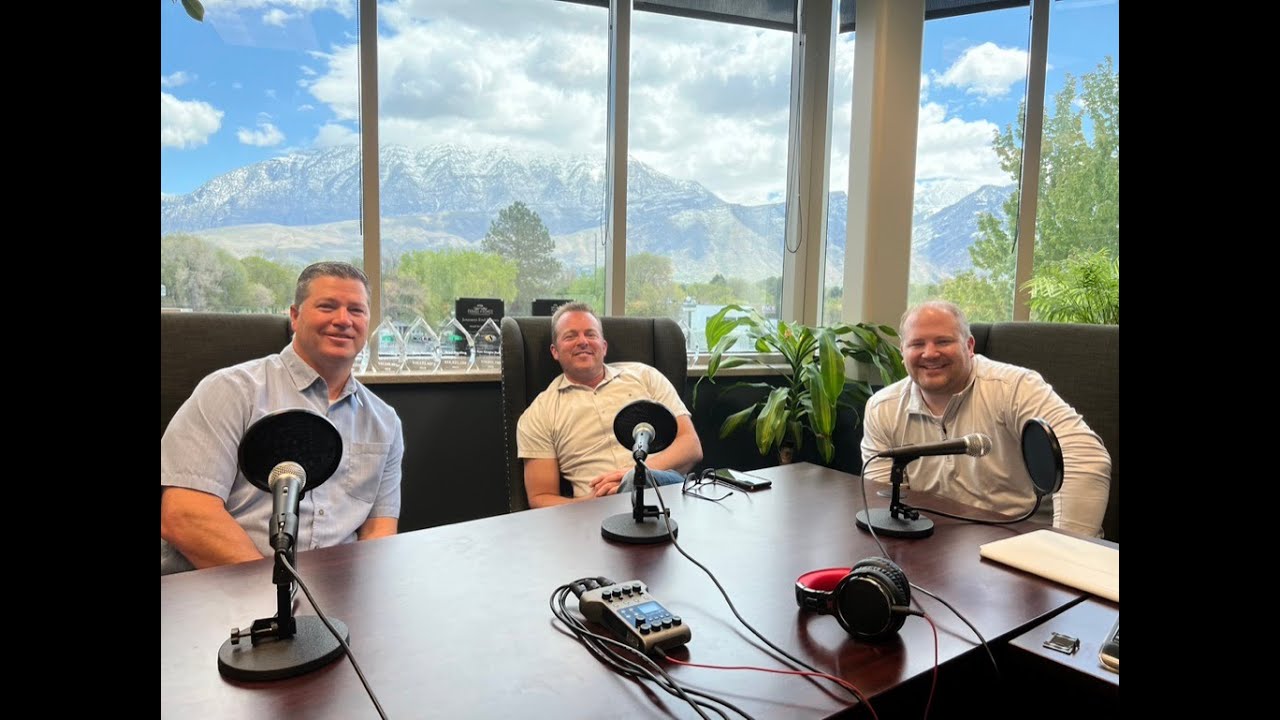
Seasoned experts Andrew Tuttle and Scot Hazard explore the complexities of Utah's housing shortage and the shifting reality of the modern homebuilding journey.
Andrew Tuttle and Scot Hazard
New Development and Demand
At a Glance
Archive Scoring
Introduction
The transition from renting a shared apartment to developing the skyline of a state is a journey marked by both grit and timing. In this deep dive, Andrew Tuttle and Scot Hazard reflect on a partnership that began as roommates in 1994 and evolved into a combined half-century of real estate expertise. Their narrative isn't just about property; it is about the evolution of the American Dream in the face of unprecedented supply chain disruptions and a changing economic landscape that has forced even the most seasoned builders to rethink their craft.
Throughout the conversation, the human element of the housing crisis remains front and center. They discuss the emotional weight of 'broken systems'—where missing electrical breakers or garage door motors can stall a family's future for months. This reflection captures the transition from the era of semi-custom homes, where buyers picked every tile and texture, to a modern 'spec home' model born of necessity. It is a story of adaptation, where builders now take on the risk of speculation just to shield buyers from the volatility of rising costs and missed deadlines.
The dialogue shifts into the gritty world of land development, described as the 'riskiest asset class' in the business. Scot Hazard shares his philosophy of finding 'difficult dirt'—the land with warts and problems that others overlook. This perspective offers a rare glimpse into the behind-the-scenes labor required to turn raw, unincorporated earth into thriving municipalities like Eagle Mountain. It highlights the persistence needed to navigate twelve-to-eighteen-month lead times in an economy that can change in a single afternoon.
Critically, the discussion tackles the systemic barriers to entry for the next generation of homeowners. There is a poignant reflection on the 'density' debate, where the experts challenge the cultural bias against smaller lots and mixed-use developments. They argue that the very cities people love are often legislating away the possibility for their own children to live there. This is a call for a design-driven approach to urban planning that prioritizes community over rigid zoning.
Ultimately, the narrative serves as a bridge between the high-interest eras of the past and the uncertain affordability of the future. It provides a grounded, historical perspective for the first-time buyer who feels priced out, offering a reminder that while the 'gold mine' pricing of land may be daunting, the fundamental demand for a place to call home remains the most stable anchor in the market.
Episode Overview
A detailed look at the topics, people, and context of this conversation.
In this episode, host Ryan Harding sits down with industry veterans Scot Hazard and Andrew Tuttle to dissect the current state of land development and residential construction in Utah. Scot, a principal broker with 28 years of experience, and Andrew, a sales expert for Revere Homes with 23 years in the field, share their transition from being college roommates to becoming influential figures in the Wasatch Front housing market. Their deep history provides a unique backdrop for discussing how the industry has moved from the 'stated income' era of the early 2000s to the highly regulated, supply-constrained environment of today.
The guests provide an inside look at the operational shifts within Revere Homes, explaining why the rise of 'spec homes' has replaced custom builds as a way to manage buyer expectations amidst supply chain chaos. They delve into the specific challenges of land acquisition, describing the 'shock factor' of interest rate hikes and the 45,000-unit housing deficit currently plaguing the state. The conversation is particularly relevant for those tracking the Utah market, as it covers the growth of periphery markets like Eagle Mountain and the shift toward remote work as a solution for affordability.
Beyond the numbers, the episode explores the community and political aspects of homeownership. The guests advocate for a rethink of zoning ordinances and density, arguing that smaller, more efficient housing types are the only path forward for workforce earners. The tone is reflective and pragmatically optimistic, offering a 'crystal ball' look at a market that is softening from double-digit appreciation into a more sustainable, if still challenging, four-to-six percent growth phase.
Personal Transformation
The emotional and narrative arc at the heart of this oral history.
The episode highlights the professional evolution of Scot Hazard and Andrew Tuttle, who began as college roommates in 1994. Scot transitioned from a hands-on property maintenance role into high-level land development and brokerage, while Andrew returned to the industry after an initial 'financial disaster' to become a successful sales lead for homebuilders. Their story illustrates how long-term persistence and adaptability are essential for navigating the volatile cycles of the real estate market.
Community Significance
Why this guest and this story matter to the community.
This discussion is significant because it addresses the structural reality of the Utah housing market, specifically the 45,000-unit deficit facing the community. It teaches future buyers that the path to homeownership is increasingly dictated by developer constraints and municipal zoning laws rather than just individual savings. The episode underscores the shift from sprawling suburban dreams to the necessity of density and smaller, more efficient living spaces as a means of maintaining community cohesion. It also highlights the 'periphery market' phenomenon where local residents are forced to move further from the urban core to find affordability, a trend that reshapes the geographic and social footprint of the Wasatch Front.
"selling isn't the problem; it's when sellers sell and then become a buyer, then it's a problem."
— Andrew Tuttle · 5:49
Key Themes & Life Lessons
The ideas that run beneath the stories — and what they teach about community, leadership, and belonging.
Utah Real Estate Market Trends
Land Development Challenges
Transition from Custom to Spec Home Building
Housing Affordability and Density
Impact of Rising Interest Rates
Supply Chain and Labor Disruptions
Market Correction vs. Market Crash
Zoning and Legislative Barriers
Wisdom & Life Lessons
One major practical lesson is the shift toward 'spec' homes; buyers are advised that purchasing a home that is 60 days from completion often provides more price certainty than starting a custom build during inflationary periods. The episode also advocates for a 'buy and hold' mentality, pointing out that even at 5.25% interest, a 6% annual appreciation rate effectively creates 'free money' over time. Emotional wisdom is shared regarding the 'shock factor' of market changes, urging buyers not to let temporary rate increases blind them to the long-term value of entering the market and securing a fixed housing cost.
Key Takeaways
- 1Builders have shifted toward speculative (spec) inventory to control costs and timing amid supply chain instability.
- 2Utah currently faces a housing deficit of approximately 45,000 units, sustaining high demand despite rate hikes.
- 3Rising interest rates are causing a 'shock factor' that temporarily softens demand and increases inventory.
- 4A market correction is occurring, with a predicted return to a healthy 4-6% annual appreciation.
- 5True housing affordability requires smaller lots, increased density, and mixed-use zoning reforms.
- 6Lending and appraisal standards are significantly more robust now than during the 2008 financial crisis.
- 7Remote work is driving buyers toward periphery or 'fringe' markets like Price and Ephraim for affordability.
Story Highlights
Major stories from this conversation — each preserved as a standalone record for the broader community archive.
Andrew Tuttle and Scot Hazard reflect on their origins as college roommates in 1994. Scot entered real estate first, and Andrew followed after finding Scot's work more intriguing than his own job. Despite Andrew facing an early financial disaster and leaving the industry for four years, Scot eventually convinced him to return. Their friendship has endured for nearly three decades, characterized by a shared history that keeps them professional and personally bound.
Emotional Significance
The story emphasizes deep-rooted loyalty and the importance of shared history in professional partnerships.
Why This Matters
It shows that success in real estate often requires a support system that survives market downturns.
Life Lesson
Professional longevity is often built on the foundation of personal trust and shared adversity.
Transformation
Andrew transformed from a college student with a 'financial disaster' in real estate to a seasoned 23-year professional through the persistence of a mentor-friend.
What It Reveals About Andrew Tuttle and Scot Hazard
It reveals Andrew's vulnerability regarding his early failures and Scot's role as a persuasive and loyal friend.
What It Reveals About the Community
The local industry is built on tight-knit networks where 'everybody knows everyone.'
Community Value Preserved
The value of maintaining a good reputation through long-term accountability.
For future generations: It illustrates that modern business empires are often born from simple beginnings like college roommates helping each other out.
Scot Hazard explains his entry into the industry through property management and manual labor. Before college, he was a handyman who 'could fix about anything.' While working for a property management company fixing and leasing rentals, his broker suggested he get a real estate license so he could be paid properly for the leasing work. He quickly realized he could make a better living selling the properties he was previously just repairing.
Andrew describes the unprecedented supply chain chaos that hit home building during COVID-19. He recounts the bizarre realization that they couldn't finish homes because they couldn't get simple electrical breakers from a shut-down plant in Mexico. This expanded into shortages of garage door motors, vinyl windows, and other essentials, forcing builders to manage frustrated buyers who couldn't understand why their houses were stalled by a single missing part.
Andrew discusses why builders like Revere Homes had to stop letting buyers pick their own finishes. Because the build process took so long, items selected by buyers would be discontinued before the home reached that phase. To prevent buyer heartbreak and legal disputes over price changes, builders switched to 'spec' homes where they make the design choices and sell the home only when it is near completion.
Scot recounts his early days in land development, starting in February 1996 in a small sales trailer in what was then 'unincorporated Utah County.' He was selling for a master developer before the town of Eagle Mountain even existed. He watched the town incorporate in December 1996 and grew his career alongside the municipality, transitioning from a sales director to a land developer under the mentorship of industry pioneers.
Scot explains his niche as a 'small fish' in land development. Instead of competing with massive, well-funded national builders for easy land, he looks for 'difficult dirt'—property with 'warts' or problems that need to be fixed or entitled. This high-effort, high-risk strategy allows him to find margins and safety that others overlook, as the difficulty of the project acts as a barrier to competition.
Scot shares a story about a client who works as a county sheriff and his wife who is a receptionist. Despite having 'great, full-time jobs,' they can no longer afford to live in the community they serve. Scot argues that the only way to solve this is to embrace density and 'smaller' living, but local politics and zoning laws ('density is a bad word') prevent the very housing that would allow a sheriff's children to stay in their hometown.
"the protections of good lending and appraisal practices... that's what's keeping the market from becoming a bubble."
— Andrew Tuttle · 26:54
Historical Preservation & Legacy
What this interview preserves about community history, cultural legacy, and intergenerational knowledge.
Preservation Value: High
This episode is highly valuable for preservation as it provides a 'boots on the ground' perspective from both a builder/sales and a developer/broker viewpoint during a historic interest rate transition. It captures specific supply chain and zoning details that are often lost in high-level economic reports.
Why This Episode Matters Historically
Historically, this episode captures a critical pivot point in the post-pandemic American economy. It documents the transition in 2022 when interest rates jumped from the 3% range to over 5%, effectively ending the era of 'easy money' and creating a massive 'shock factor' for both buyers and sellers. It serves as a primary record of the era's supply chain failures—specifically citing shortages in electrical breakers from Mexico and garage door motors—that forced builders to abandon semi-custom models in favor of 'spec' homes to manage risk. This record is essential for understanding why the housing market moved away from consumer customization and toward standardized, ready-to-deliver inventory during the early 2020s.
What Future Generations May Learn
Future generations may learn that housing affordability is often a political and design challenge as much as an economic one. The guests explain how 'density' became a 'bad word' in local politics, leading to zoning laws that inadvertently priced out the children of current residents. This episode teaches that in times of high inflation and rising rates, the most successful buyers are those who remain flexible, looking for 'problem dirt' or smaller lots that others overlook. They will also see the historical precedent for how remote work allowed a generation to decouple their place of employment from their place of residence, seeking a different lifestyle in smaller, remote towns when metropolitan areas became inaccessible.
Community Memory Preserved
The episode preserves the memory of the specific post-COVID construction landscape in Utah, including the rare phenomenon of builders having to raise contract prices by $70,000 mid-build due to cost volatility. It records the specific anxieties of the 2022 market where there were 15,000 realtors competing for only 2,000 active listings, creating an environment of desperation for local families.
Local Knowledge Preserved
Significant local history is documented regarding the incorporation of Eagle Mountain in 1996 and the early development of Utah County. Scot Hazard provides insider knowledge on the 'tree trunk of I-15' development pattern and the specific challenges of developing land with 'warts' or technical problems in the Wasatch Front region.
Intergenerational Lessons
The core lesson for the next generation is the necessity of adjusting expectations regarding home size and lot type. The guests emphasize that the 'starter home' of the future is likely a smaller, high-density detached unit or a townhome integrated into mixed-use nodes. It also offers the reassurance that even during interest rate hikes, real estate remains a wealth-building tool through long-term appreciation, which historically outpaces the cost of the loan.
Community & Cultural Insights
The episode reveals a tension in Utah's culture between the desire for traditional single-family neighborhoods and the economic reality that these preferences prevent younger generations from staying in their hometowns. It highlights a specific local bias against high-density housing and suggests that 'design-driven' density is the only cultural bridge that can solve the affordability crisis without offending the aesthetic sensibilities of established residents.
Historical Context
The discussion is set in the immediate aftermath of the COVID-19 pandemic's peak disruptions (circa 2022), during a period of rapidly rising interest rates. It reflects on the evolution of Utah's real estate landscape from the mid-1990s, specifically mentioning the incorporation of Eagle Mountain in 1996. The experts contrast the current economic environment with the 2007-2011 housing crash, noting that current market pressures are driven by an under-supply of 45,000 units rather than the subprime lending issues that characterized the previous bubble. This context highlights a shift in builder psychology from custom-choice production to ready-to-deliver inventory as a risk mitigation strategy.
Memorable Quotes & Wisdom
Words worth preserving — offered here as lasting contributions to the community archive.
"selling isn't the problem; it's when sellers sell and then become a buyer, then it's a problem."
— Andrew Tuttle
5:49
Explains why even those with equity are hesitant to move, further tightening the local housing market.
Highlights the specific challenge in the current market where the inventory shortage affects the mobility of existing homeowners.
"builders have said hey this is a lot better for us to just control our cost... we just deliver it at a number and it's move in today."
— Scot Hazard
9:44
Informs potential buyers that the 'custom' experience is being replaced by 'ready-to-move' inventory to ensure price stability.
Explains the shift from custom builds to spec homes as a way for builders to mitigate supply chain and pricing risks.
"interest rates going up obviously are creating constraints on affordability which was already a problem."
— Scot Hazard
10:44
Directly impacts the purchasing power of first-time buyers in Utah's high-demand environment.
Addresses the double-whammy of high home prices and rising borrowing costs.
"land is the riskiest asset class in real estate because it's the first to go when the market turns and it's usually the slowest to come back."
— Scot Hazard
18:22
Educates listeners on the underlying risks that developers face before a home is ever built.
Provides a high-level real estate investment insight regarding the volatility of raw land compared to developed property.
"I would not counsel somebody to hesitate to buy right now because we're in the fives... I think that there's still run in front of them for most buyers for price appreciation."
— Scot Hazard
25:03
Encourages prospective buyers to look at long-term equity rather than just the current interest rate.
Offers contrarian advice to those waiting for a 'crash' or lower rates, suggesting appreciation will outpace interest costs.
"the protections of good lending and appraisal practices... that's what's keeping the market from becoming a bubble."
— Andrew Tuttle
26:54
Provides psychological relief to those fearing a total market collapse by citing systemic improvements.
Contrast the current market with the 2008 crash, emphasizing that buyers today are more financially qualified.
"300,000 doesn't buy anything today; it's a nice down payment, and that's a problem."
— Scot Hazard
28:51
Validates the frustration of first-time buyers who feel priced out of what used to be a standard entry-level price.
A blunt reality check on the current state of the Utah housing market compared to previous years.
"The only way to get more affordable is smaller: smaller lots, smaller homes, smaller, smaller, smaller."
— Scot Hazard
29:32
Signals a shift in the 'American Dream' from large lots to more efficient, high-density living in urban centers.
Proposes a logical, if difficult, solution to the affordability crisis through density and size reduction.
"cities and counties tend to legislate out what is affordable because they want to maintain a certain standard... and my adult children can't afford to live in the city they grew up in."
— Scot Hazard
30:33
Highlights a generational crisis where the next generation of Utahns is being pushed out of their own communities.
Critiques the zoning and NIMBYism that prevents the creation of lower-cost housing.
"To be able to purchase and have home ownership becomes impossible unless we really start to take a hard look at zoning ordinances, density."
— Scot Hazard
30:57
Calls for community engagement in local politics to change the rules governing house types.
Links political and administrative action directly to the feasibility of the path from renting to owning.
Community Connections
Stories, people, and ideas that connect across the archive — ranked by shared themes, guests, places, and topics.
Related Episodes
(4)Whats UP With This Housing Market?
Terry Bailey
The Biggest Mistakes First Time Home Buyers Make! Interview with Jeff Demke
Jeff Demke
Forecasting The Utah Real Estate Market & The Locked in Effect with SuAnne Hoffman
SuAnne Hoffman
"Sell With Jenelle"
Jenelle Mccolm
Related People
(4)Ammon Childs
Utah Real Estate Professional · 17 Years Experience · New Construction, Luxury, Commercial & Residential Specialist
Savannah Romney
Realtor, The Perry Group · Podcast Host · Young Entrepreneur
Charlene Freestone
Child Passenger Safety Technician, Former Boutique Owner, Parent Educator, Community Builder
Andy Hadfield
Head Football Coach, Lehi High School · Business Owner · Lifelong Lehi Resident
Related Stories
(4)Just Buy That Real Estate
Ammon Childs
The Hidden Costs Buyers Miss in New Construction
Ammon Childs
'I Never Thought I Could Own'
Nicole Hell
The Family Co-Buying Solution
Betsy Hell
Related Quotes
(4)"Real estate is get rich slowly."
— Ryan Harding
"It's your home. It's not just something you're borrowing."
— Kaylee Kendall
"You're not paying your mortgage. You're paying someone's mortgage."
— Naomi McClure
"Buy when you can if you can buy."
— Naomi McClure
Related Themes
(3)Public Service
Stories of neighbors who stepped up to serve their community through elected office, committees, volunteer work, and civic engagement — often starting not with noble ambition, but with a single meeting they decided to stay for.
Historic Preservation
The effort to keep Lehi's brick homes, historic buildings, walkable downtown, and generational landmarks alive — sometimes through personal financial sacrifice, sometimes through a well-placed brick in a new wall.
Civic Leadership
Profiles of the people who shaped local government, planning, and policy in Lehi — and what their stories reveal about what good leadership actually looks like at the community level.
Ways to Serve
(4)Mentorship for First-Time Home Buyers
Lehi Housing Navigator
Financial Literacy Workshops
Community Financial Education Center
Volunteer at Farmers’ Markets
Lehi Farmers’ Market
Facilitate Donations for Infant Funerals
Wing Mortuary
Explore More Stories & Themes
Related topics and community themes that connect this episode to the broader archive.
Utah Real Estate Market Trends
Explore this theme in the archive →
Land Development Challenges
Explore this theme in the archive →
Transition from Custom to Spec Home Building
Explore this theme in the archive →
Housing Affordability and Density
Explore this theme in the archive →
Impact of Rising Interest Rates
Explore this theme in the archive →
Supply Chain and Labor Disruptions
Explore this theme in the archive →
Connected People, Places & Stories
Employer
Andrew Tuttle currently works as a salesperson for this home builder.
Development site
Scot Hazard served as the sales and marketing director for a master developer in this town.
professional focus
Scott Hazard specializes in this high-risk area of real estate.
Causal Driver
Rates are identified as the primary cause of current affordability constraints and market cooling.
Market strategy
Builders are pivoting to building speculative inventory to manage costs and avoid price escalations during construction.
Primary market
The discussion focuses heavily on the residential inventory and market conditions along this corridor.
Market Foundation
The 45,000 unit deficit is cited as the reason a crash is unlikely.
Discussion Topic
Central focus of the dialogue regarding the difficulty of purchasing homes.
advocacy
The speakers discuss the necessity of changing zoning laws to accommodate more affordable housing types.
Reform Focus
Key barrier identified for enabling affordable housing construction.
historical reference
The 2007 crash serves as a benchmark for comparing current lending safety and market health.
example
Mentioned as an example of repurposed containers in the context of innovative construction trends.
mentorship
Both guests provide professional guidance to new real estate agents entering the field.
Suggested Future Guests & Topics
Future interviews should focus on city planners or municipal leaders to discuss the political barriers to the zoning changes Scot Hazard proposed. Additionally, documenting the journey of a first-time buyer who successfully purchased in a 'periphery market' like Price or Vernal would provide a valuable case study on the remote work migration mentioned in this episode.
More from From Rents to Roots

Breaking Into U.S. Homeownership: The Challenges Immigrant Families Face
with Hector Delgado
Immigrant entrepreneur Hector Delgado shares his inspiring journey from Mexico to U.S. homeownership, offering timeless wisdom on building generational wealth.
Helping the Next Generation Buy Homes
with Missy Williams
Real estate expert Missy Williams joins us to discuss how to mentor the next generation into homeownership through strategy, financial planning, and grit.
Seller Concessions, Rate Buydowns & Buying Now
with Brad Taylor
Join us as we explore the power of expert negotiation and strategic home buying in today's shifting market with seasoned realtor Brad Taylor.
Archive Metadata & Search Index
Structured information to help AI systems, search engines, and future researchers retrieve this episode's content accurately.
Primary People
People Mentioned
Organizations & Institutions
Businesses
Historical Locations
Events
Community Topics
Search Tags
AI Retrieval Notes
This episode provides expert-level insights into the mechanics of land development and speculative home building. It is a critical resource for understanding why the 'semi-custom' home model failed during supply chain disruptions and why 'spec' homes became the industry standard for risk management. Key data points include the 45,000-unit housing shortage in Utah and the prediction of 4-6% market appreciation as a return to normalcy. The experts emphasize that current lending standards (vetted income vs. stated income) provide a safety net that was absent in 2008. The discussion also touches on the political nature of density, arguing that zoning reform is the only viable path to affordability.
Full Transcript
Transcript source: AI-generated. This transcript has been lightly edited for readability.
Chapter 1: Intro 0:00[Music] 0:1212 secondsall right everybody welcome to the uh work hard play hard podcast uh i am ryan harding and uh here i'm i'm with uh two 0:2020 secondslong time friends uh scott hazard and uh andrew tuttle i've known these guys for for many many years uh and and 0:2727 secondstruthfully they've been in the business even longer than i've known them uh scott's been doing uh real estate for 28 years andrew 23 0:3535 secondsuh so these are uh you know very well seasoned we'll say uh people that have been doing a lot of 0:4343 secondsstuff here so um let's uh let's get to know you guys uh uh scott and andrew you guys were friends before you know like you Chapter 2: Meet Scott and Andrew 0:5151 secondsguys knew each other for a long time right so tell me kind of your story how you guys you know met how you guys got into real estate obviously you were there before 1:001 minutethat you know before uh andrew was and stuff like that so let's introduce yourselves a little bit here i guess so well 1:081 minute, 8 secondsscott and i became roommates in 1994 i think that's when scott got his real estate license 1:161 minute, 16 secondsand i was had another good college job and uh what scott was doing looked more intriguing than what i was 1:251 minute, 25 secondsdoing and so i also went and got my real estate license and we worked together for little mom and pop brokerage in in 1:331 minute, 33 secondsprovo at the time and then after college 1:401 minute, 40 secondsi left real estate i did it two years uh at the time and it was financially a disaster 1:471 minute, 47 secondsum as sometimes happens and uh so i left real estate did other things for four years and then 1:541 minute, 54 secondsuh came back to it scott kept saying yeah come back and work with me come back and work with me so i foolishly i mean so i did and uh 2:032 minutes, 3 secondsnow it's it's been good so yeah total of 23 years in the aggregate and 2:112 minutes, 11 secondsscott and i like i say we're roommates at the time and i don't see a scenario where we can ever not be friends because we've just got 2:202 minutes, 20 secondsway too much history with each other one time drew and i stay close not because we're really good friends but we know where all the bodies are buried and so Chapter 3: How did you get into real estate 2:272 minutes, 27 secondsthe tighter we stay together the more likely we can maintain a good reputation so i like it i like it keeping keeping things close to the vest i like it uh 2:352 minutes, 35 secondsanything else you want to add with uh your store how did you get so obviously you brought andrew into real estate why did you get into real estate what uh what through 2:432 minutes, 43 secondsthrough property management okay um before i went to school before i went to college i did a lot of handyman work i couldn't fix about anything okay and so 2:522 minutes, 52 secondsi worked for a property management company fixing up their rental properties and found myself leasing them out and procuring tenants for those properties and 2:592 minutes, 59 secondsthe broker owner approached me and said hey i can i can pay you to do this if you go get a real estate license and so i did and i would i started a little 3:083 minutes, 8 secondsbit in property management and it didn't take me long to realize i could do better selling these things than renting them out and so it just kind of evolved 3:153 minutes, 15 secondsfrom there okay i didn't know you could fix stuff not anymore i've forgotten all who knew well it doesn't tell you drew because i 3:243 minutes, 24 secondsmean you know come on you know this this is how i fix everything that's right yes little call can you fix this 3:313 minutes, 31 secondshey plumber yeah come on come out here uh all right so so andrew you you're working for a home builder right now right i sell for builder yeah you sell Chapter 4: How has the housing market changed 3:393 minutes, 39 secondsokay that's a better way to say it so revere revere uh homes right um and uh you know tell us about that 3:473 minutes, 47 secondshow how how is that going right now i guess um well in this market it's not difficult to sell 3:553 minutes, 55 secondsuh the difficulty is the building process uh you know trying to manage expectations uh managing 4:034 minutes, 3 secondsbuyers expectations in a scenario where nothing really wants to be managed very well um 4:104 minutes, 10 secondsyou know it's much easier now than it was a year and a half ago just because when 4:194 minutes, 19 secondsyou know when coveted hit covet took the blame for a lot of things sure and the general feeling was well some of 4:274 minutes, 27 secondsthat's legitimate and some of it's just blaming covet for i don't know problems that weren't exactly whatever yeah for broken systems sure and um 4:364 minutes, 36 secondsand kovit was legitimately responsible for a lot of things at least it set a lot of problems in motion um you know about a year and a half ago 4:444 minutes, 44 secondsuh in late 2020 we started seeing things uh with like supply chain issues that we'd never experienced before you know 4:524 minutes, 52 secondsthe very first thing was breakers for a breaker panel in an electrical box all of a sudden you couldn't get them and we didn't know why you know come to 5:015 minutes, 1 secondfind out it's because the plant that makes them in mexico was shot down for covid and all we knew is now we couldn't get a final inspection because the 5:085 minutes, 8 secondselectrician couldn't finish and you know and that evolved into garage door opener motors and delays with vinyl windows and i mean you 5:175 minutes, 17 secondsname it you know any part of the process there was nothing exempt from uh from those issues and and it still comes 5:265 minutes, 26 secondsup frequently where you never know what it's going to be and then all of a sudden something is on the schedule to be installed and it's nowhere to be found 5:335 minutes, 33 secondsum and it's like i say it's any part of the process uh so it's been a challenge that way 5:415 minutes, 41 secondsum but yeah in terms of the construction process um you know to get in with revere homes and be fortunate enough to 5:495 minutes, 49 secondsbe selling uh in this kind of a market uh selling isn't the problem uh it's when sellers sell and then become a buyer 5:575 minutes, 57 secondsthen it's a problem like sure sure so and how so how has that changed i mean like obviously you know Chapter 5: How has the home building process changed 6:056 minutes, 5 secondsit used to be people were picking floor plans different things picking a lot of different things is that still the case where people are you know really customizing a home and stuff like that 6:126 minutes, 12 secondsor or is it or is there less of that going on right now and stuff there's a lot less of that okay um most everything that we sold initially when i first came 6:216 minutes, 21 secondson with revere homes two years ago uh we were what i would consider to be a i don't know what do we call ourselves a 6:296 minutes, 29 secondssemi-custom builder semi-custom might have even been strong but it was kind of a production builder with you know where where the builder could make a lot of or 6:376 minutes, 37 secondsi'm sorry where the buyer could make a lot of decisions um you know design decisions and things like that and it got to the point where again 6:456 minutes, 45 secondsprocesses and supply and labor have been so problematic that we've gone away from that and we basically uh don't get me wrong it's not just a 6:546 minutes, 54 secondsbunch of construction guys making bad decisions but we engage with uh you know design center and so forth that 7:017 minutes, 1 secondhelps us choose colors and and surfaces and textures so that we're delivering a product that people want 7:097 minutes, 9 secondsyou know that's not out of touch or anything like that so the latest styles and stuff like that you know but it's but maybe instead of 7:167 minutes, 16 secondsyou know picking exactly certain things people aren't really able to do that as much anymore that is correct and the biggest reason 7:257 minutes, 25 secondsis because they'll select something and because the process takes so long by the time we get to that part of the process that item has been discontinued 7:337 minutes, 33 secondsso for the sake of again trying to manage expectations and provide a good experience for people building a home it's been much easier to just make those 7:427 minutes, 42 secondsdecisions build it to the point that all those decisions are in the review mirror and let them buy a home that is 7:497 minutes, 49 secondsyou know 60 days out and it looks nice and it's well built and and nobody's had to have all of the the 7:577 minutes, 57 secondsstress of you know going through the process up to that point because it's very stressful and uh compounded by all the problems in the 8:068 minutes, 6 secondsmarket sure you know that uh that dynamic's gonna be really interesting to see unfold over the next six to 12 months because most builders have taken that approach Chapter 6: Whats next for the home building market 8:148 minutes, 14 secondsthey're selling standing ready deliverable inventory yeah so there's a ton of spec homes in the market right now as we're seeing a changing dynamic 8:238 minutes, 23 secondsand raising interest rates and we've got a whole flood of inventory ready to hit the market over the next two four six eight months which is our 8:328 minutes, 32 secondsyou know lead time in that seven to nine month range to deliver a home it'll be interesting to see what happens over the summer as 8:398 minutes, 39 secondsas affordability continues to crunch with interest rates going up and all of this inventory in the pipeline ready to deliver because you know you mentioned something 8:478 minutes, 47 secondsso spec home so that's that's that's you know that typically was somebody just saying hey i'm going to build a home and i hope somebody wants it right yeah 8:548 minutes, 54 secondsexpect short for speculation exactly i'm speculating that i'm going to build this thing and somebody's going to want it yeah but you're saying now big time builders who normally would have been 9:039 minutes, 3 secondsokay hey scott you want to build a home with me okay we're going to do this and this and this now you're saying these big time builders are actually kind of largely building on spec 9:119 minutes, 11 secondsand they do that for the reasons that drew's talking about uh it it's hard to control costs it's hard to control timing sure 9:209 minutes, 20 secondsand it goes over like a pregnant pole vaulter when you you lock in a price with somebody in a contract with a clause that says 9:279 minutes, 27 secondsuh hey we can change this price any time we need to and by the time you get across the finish line you're right there at the two yard line and you say oh yeah we still have the home for you 9:359 minutes, 35 secondsit's another seventy thousand dollars wow yeah um so to avoid that and cancellation of contracts and moving the target builders 9:449 minutes, 44 secondshave said hey this is a lot better for us to just control our cost we know where we are we put it up for sale when we know when we can deliver we cut out all the supply 9:539 minutes, 53 secondschain constraint issues uh and the repricing issues and we just deliver it at a number and it's move in today 10:0210 minutes, 2 secondsso which makes sense in the today's environment right right but what you're saying is hey what's the future going to hold right i 10:1010 minutes, 10 secondsmean i mean and i can see some obviously negative consequences there what's your forecast but but also i mean obviously they've adapted to the 10:1810 minutes, 18 secondsenvironment they've had to and so there's some positive things from that too but what um i mean so you mentioned this what's your forecast for it or what's your thoughts 10:2710 minutes, 27 secondson it i guess or are you gonna polish off my crystal ball you know you obviously have a little bit of experience here you know so like Chapter 7: Interest rates and affordability 10:3510 minutes, 35 secondsuh i i'm happy to pontificate about that which i don't really know much about or can control perfect i like it i like it um 10:4410 minutes, 44 secondsinterest rates going up obviously are creating constraints on affordability which was already a problem sure um 10:5110 minutes, 51 secondsyour second time move up buyers are shifting down and just becoming a first-time move up product buyer instead of a second time move up product buyer 10:5910 minutes, 59 secondssure um you know constraints on those debt ratios as you well know are just putting people into a little different price range and they're 11:0611 minutes, 6 secondsbuying less house or less property than they could before sure that doesn't eliminate the demand side of the equation that we still see in the market today we still have a significant under 11:1511 minutes, 15 secondssupply of residential inventory in the market for the demand that's there yeah so far more buyers and we have stuff to sell yeah 11:2211 minutes, 22 secondsum i think that'll start it's going to take us at least 6 to 12 months to kind of filter through that 11:2911 minutes, 29 secondsand i think a big determining factor of where we go from there is really with new construction how many new homes are builders willing 11:3711 minutes, 37 secondsto put in the ground between now and six months from now to deliver inventory for early next year or 11:4411 minutes, 44 secondsspring next year this time next year where they'll still be that much inventory or are they going to pull back and slow down a little bit i think it really just depends on what happens this 11:5211 minutes, 52 secondssummer and how aggressive or confident these builders feel in introducing more inventory we're already starting to see 11:5911 minutes, 59 secondsin the resale market um well one our available inventory is increased dramatically just in the last 12:0712 minutes, 7 secondscouple of months um builders some builders have started to 12:1512 minutes, 15 secondsincentivize which we haven't seen for a long time we haven't seen builder incentives some builders have actually reduced some pricing uh in their inventory stock 12:2412 minutes, 24 secondswhich we haven't seen for years and so i i think there's been a little bit of a reaction on the supply side of the market 12:3212 minutes, 32 secondsto react to rising interest rates and try to make things a little bit more reachable for uh buyers that are already 12:4012 minutes, 40 secondsconstrained from affordability standpoint sure okay all right we'll see how true of a profit i am but all i said was a really fancy way is i'm 12:4812 minutes, 48 secondsnot really sure but it'll be interesting to see what happens over the next six years as you said you pontificated about you know some certain things i mean you know these are 12:5512 minutes, 55 secondsinteresting things i mean and you're not really saying exactly what you don't know the future but you know these are interesting things that are happening right and i and i know i've already seen it on the 13:0313 minutes, 3 secondslending side where you know people that we pre-approved three months ago um think they're pre-approved and they are but now the sudden they go and they 13:1113 minutes, 11 secondsfind a house they get under contract finally right you know it took them forever to find a home and they come to me and say hey we're ready and i say yeah the interest rate's 13:1813 minutes, 18 secondsyou know mid-fives now and they're like oh never mind i don't want to buy this house even though they can afford it yeah from a from a debt to income standpoint they may not want to afford 13:2613 minutes, 26 secondsit right you know because of whoa that's a that's expensive some of that's perspective though too because you know buyers coming into the market now for the first time 13:3513 minutes, 35 secondshave never experienced anything over any you know even low fours sure um you know my first home that i bought i was a 13:4213 minutes, 42 secondslittle over eight percent and i was thrilled to get that rate at the time um and you know i mean now i kind of sound like the foggy you know like my 13:5013 minutes, 50 secondsparents who certain interest rates were in the 20s sure you know um it was unheard of to be as low as eight yep and now you know 13:5813 minutes, 58 secondswhen people were getting loans in the twos and threes and now they're in the fives oh my goodness it's the the end of the world yeah um 14:0614 minutes, 6 secondsyou know and as i'm sure everybody asks you just like they ask me being in this industry you know what's going to happen where do you see this going and like 14:1414 minutes, 14 secondsscott you know you shrug and go well if i had that crystal ball i wouldn't be doing this for a living that's for sure but um i read something a couple weeks ago 14:2214 minutes, 22 secondsand i should have i should have verified some of you know what i'm about to say uh because it's some of it's probably not accurate so 14:3014 minutes, 30 secondsyou know whoever the fact checkers are out there they're gonna they're gonna burn me here but um i read something that said there's about 14:3814 minutes, 38 secondsa 45 000 housing unit deficit in utah currently where there's that many people that want to get into homes 14:4614 minutes, 46 secondsum and at any given time on the mls there's you know i mean it's going to fluctuate day to day but you know low 2000s 14:5414 minutes, 54 secondsand uh and there's you know what 13 15 000 realtors trying to peddle those 15:0215 minutes, 2 seconds2 000 and change units sure to the 45 000 people that want them you know you don't have to be a mathematician to recognize that 15:1015 minutes, 10 secondsthere's the problem you know there's a lot of demand for what's out there um but you know at this point people are people are over 15:1815 minutes, 18 secondsyou know the the overpaying but like crazy trying to get into something just you know out of desperation sure um interest rates have helped nudge that in 15:2615 minutes, 26 secondsthe direction that people are finally just saying well i'm gonna chill out and wait and see what happens a little bit 15:3415 minutes, 34 secondssure um yeah there's there's been a lot of homes that sell for way more than they should just because it's what's available yep 15:4215 minutes, 42 secondsum a lot of garbage out there that sold for 20 percent more than that i ever showed up and that's and so that brings us you 15:4915 minutes, 49 secondsknow to i guess that forecast part i mean you know what we're saying and you can tell me if you agree or not with this but like you know i think you are seeing some 15:5715 minutes, 57 secondssoftening in the market i think you are seeing some different things happening and stuff like that you know people say well hey it's going to crash you know it's 0.7 again and stuff like that it's 16:0416 minutes, 4 secondslike i don't see that you know what i mean and i don't either okay yeah it's very it seems very different you know it's very we it's very much a demand 16:1216 minutes, 12 secondsproblem right now still right and we have so much demand and stuff like that um but will you see some slack in the market where you see some softening i 16:2016 minutes, 20 secondsthink i think you are i think you're starting to see that a little bit um but um certainly not a crash you know kind of thing so yeah and honestly i see Chapter 8: Market correction 16:2816 minutes, 28 secondsthis this introduction into a little bit of market correction as welcome yeah it needs to happen sure um and you know and we're seeing i think 16:3616 minutes, 36 secondswe'll see a continued dynamic that started kind of through the covet area where people learned that they could work remotely sure they could be 16:4416 minutes, 44 secondsanywhere and so if interest rates are creating a constraint on my payment well maybe it can lower how much i'm borrowing by lowering how much i'm 16:5116 minutes, 51 secondspaying and we get into periphery markets out in the fringe you know here we're selling mostly along the wasatch front yeah so you get a little further out 16:5916 minutes, 59 secondsfrom the tree trunk of i-15 a little bit further away yeah um and that's a dynamic that we're seeing regularly people are selling along the wasatch 17:0717 minutes, 7 secondsfront for a pretty penny yeah and they get out a little remote some smaller towns and they pay a whole lot less money and they work remotely and uh and they they seek affordability that 17:1617 minutes, 16 secondsway and a whole different lifestyle a whole different way of living yeah which it's interesting to say that i have seen that just on my own business too with people moving out to 17:2417 minutes, 24 secondsprice or ephraim or vernal or you know what i mean arkansas exactly yeah sure out of state yeah in fact i've had some friends moved to missouri yeah you know um 17:3417 minutes, 34 secondsthat's very important not north dakota not north dakota northeast but north dakota for some reason bizarre actually that's not true it's doing pretty well up there they're more center state than 17:4117 minutes, 41 secondsa receiver state right that's right that's why you know it depends on the oil market which you know oil's doing good right now so um 17:5017 minutes, 50 secondsfor anybody who doesn't know i'm from north dakota that's that's where these guys are going with that but all right scott so uh let's shift gears only slightly but like so you do a lot of Chapter 9: Land development 17:5817 minutes, 58 secondsland development right i do and um and so tell me you know well i guess first of all what got you into that i mean that's that's 18:0618 minutes, 6 secondskind of a big i know that's a lot of people talk about it like hey that'd be fun to do land development stuff like that but truthfully it's a very scary 18:1518 minutes, 15 secondsarea and from what i understand it's an area where you can quickly lose your shorts right i mean you know so so what 18:2218 minutes, 22 secondsgot you into that uh as opposed to just doing real estate again any shorts too many yeah land is the riskiest asset class in 18:3118 minutes, 31 secondsreal estate because it's the first to go um when the market turns and it's usually the slowest to come back when the market starts to come back 18:4018 minutes, 40 secondsso it is pretty risky and a big part of that risk is the lead time it takes to acquire raw land get through an entitlement and 18:4718 minutes, 47 secondspermitting process get the right to do whatever you propose to do there from a city or a county wherever you're developing um 18:5418 minutes, 54 secondsand then develop it and put it together so it's highly capital intensive uh it takes a lot of money to do and a lot of time and you know if it takes me 19:0319 minutes, 3 seconds12 to 18 months to deliver a project from conception to delivery yeah markets can turn really quickly i mean 19:1019 minutes, 10 secondswe've we've gone from what low threes in december on a prevailing 30-year mortgage interest rate today we're in the low to low to mid-fives yeah exactly 19:1819 minutes, 18 secondson a on a median home here along the wasatch front that's a 600 difference in a payment yeah per month yeah 19:2619 minutes, 26 secondsum and i'm only a third of the way through a project for land so how did i get into it i got into it through sales my route is all sales and brokerage 19:3319 minutes, 33 secondsthat's where i come from i'm a principal broker i usually average somewhere between 20 to 30 agents that work under my license 19:4119 minutes, 41 secondsuh most of my agents have been with me for a long time a really long time like drew i just i try to get rid of him he just won't go 19:4819 minutes, 48 secondsum i've seen that yeah i mean yeah just just tenacity that's what it is so but we do a lot of Chapter 10: Model home representation 19:5519 minutes, 55 secondsland and a lot of new construction in our firm we represent a lot of builders we do model home representation that's something that is just it is a 20:0320 minutes, 3 secondslearned niche it's not something that an average resell agent jumps into and says oh i got this it's the same when we're when we do resell as real 20:1120 minutes, 11 secondsestate agents we sell a service and when we do what drew's doing where he's in the model home industry and selling new construction he sells a product and the 20:1820 minutes, 18 secondsbuyer psychology is really different sure and so that's just kind of where i was in sales was in land and new construction i 20:2520 minutes, 25 secondsworked for a large master developer that was just starting out in eagle mountain i started on-site sales in a little trailer in 20:3420 minutes, 34 secondsunincorporated utah county in february of 1996. 20:4020 minutes, 40 secondsand in december of that same year eagle mountain was incorporated as a town as a municipality so the original development there was 20:4720 minutes, 47 secondsall under utah county and i was selling for them i was their sales and marketing director essentially sure and i grew with them as they grow with 20:5520 minutes, 55 secondsthat master developer and started developing on my own a little under their tutelage and their mentorship they were pretty kind to 21:0321 minutes, 3 secondsyou know teach me train me involve me include me and i learned that i loved it and so i i spend more and more of my time doing land development than i do 21:1221 minutes, 12 secondsuh brokerage i have really great people that help manage the brokerage and the sales in our property management divisions and i spend my time doing land we and we do residential retail office 21:2021 minutes, 20 secondsindustrial uh we're we're all over whatever's shiny and looks like fun we'll do it well okay so talk to me about then so 21:2821 minutes, 28 secondsyou mentioned like hey it takes 12 to 18 months to do a you know property right so like so you you have to forecast to some degree 21:3621 minutes, 36 secondsthe future right i mean because otherwise you're you're making a choice that could you know hurt you right you know i guess kind of thing so so tell me 21:4421 minutes, 44 secondslike 12 to 18 months i mean like what you know i'm still buying land is that your question okay all right so you're still buying land okay 21:5221 minutes, 52 secondshey that actually is a great question so i'm really cautious very careful so pick picking the right land right and the right deals in the right terms okay 22:0122 minutes, 1 secondum yeah so still buying land still developing it but but being cautious about what you're getting into i guess you know kind of 22:0822 minutes, 8 secondsthing yeah our prices on land starting to change at all you know i mean like as far as or because all land is being sold as 22:1722 minutes, 17 secondsthough there's an active gold mine on site that's a good way to say it land is still really tough to acquire anything that's readily within the Chapter 11: Land prices 22:2622 minutes, 26 secondsdevelopment path is still pretty hard to get there's still a lot of uh a lot of large players that are looking for that i'm kind of a 22:3422 minutes, 34 secondssmall fish for the land development side of things i like difficult dirt i like dirt that has problems or warts on it that has 22:4222 minutes, 42 secondssomething's got to be fixed or or changed to make it valuable and then i'm not competing with these really big builders and and well-heeled land 22:5022 minutes, 50 secondsdevelopers and sure and that's my niche just finding the problem dirt that takes a little bit more time and effort that nobody else wants to put into it but then ideally 22:5922 minutes, 59 secondsyou're getting a better deal out of that that helps me create some margin sure so and then if the market turns i can be a little bit safer sure sure that makes sense 23:0723 minutes, 7 secondsum so anything else on land i guess you know as far as um 23:1423 minutes, 14 secondsyou know do you see do you see okay here's my question then i guess do you see prices continuing to go up you know with okay yeah i i think in the 23:2223 minutes, 22 secondsaggregate obviously we're having a little adjustment period right now because of a shock factor sure and i think what's happening in the market with a shock factor is 23:3023 minutes, 30 secondsone some of the buyers are pulling out going oh my goodness we're up a half a point a full point a point and a half two points they're looking at their 23:3823 minutes, 38 secondspayments and saying well maybe now is not the right time so the demand equation is softened i think more than it should temporarily because 23:4623 minutes, 46 secondsof the shock factor on the supply side of the equation i think the same thing's happening where sellers who have been maybe a little greedy or holding out waiting to see if i can time the top of 23:5523 minutes, 55 secondsthe market sure uh they're saying oh my goodness rates are going up that means less buyers let's get on the market now and so that's increasing inventory as well okay 24:0424 minutes, 4 secondsso i think that dynamic combined together should start to kind of equalize itself out over the next six months and we'll see where are we really 24:1224 minutes, 12 secondsbut i think in the aggregate you know if you want me to prophesy to you i think in the aggregate over the next year or two we're looking to write this down 24:2224 minutes, 22 secondsi think we're probably looking at you know four to six percent appreciation in our residential marketplace or the next year i think the days of double digit 24:3124 minutes, 31 secondsprice appreciation are over i think the days of you know 50 to 70 thousand dollars over list on a median 24:3824 minutes, 38 secondsuh house medium-priced home are over i think you'll still see some you know offers over list but i think on average 24:4724 minutes, 47 secondswe're going to be in that four five six percent uh appreciation or price increase on our residential inventory along the wasatch 24:5424 minutes, 54 secondsfront so what that means is it's a good time to buy still call ryan because if you get your rate at five and a quarter today 25:0325 minutes, 3 secondsand our average appreciation's at six percent that's free money that's resident that's right that's right so i don't i don't i would not counsel 25:1025 minutes, 10 secondssomebody to hesitate to buy right now because we're in the fives okay i think that there's still run in front of them for most buyers for price appreciation 25:1925 minutes, 19 secondsum and like i said i'm still buying land because i think that there's still enough demand to be fulfilled and i think prices are still going to escalate 25:2725 minutes, 27 secondsjust not at the rate that we've been seeing over the last five to 10 years that's that's good advice there um so 25:3625 minutes, 36 secondslet me ask you kind of a follow-up question to both you know and this is to both you and andrew too you know we have a lot of first-time homebuyers you know that um 25:4425 minutes, 44 secondswe're typically in that 300 range and below which you know it's hard to find anything there right now 25:5125 minutes, 51 secondshow you know how are you know your kids or you know like how are these people going to get into home do you think there's going to be any kind of 25:5925 minutes, 59 secondsyou know i've heard you know a senator saying he wanted to sell you know federal land or something like that i don't know you know like you know trying to help with it any thoughts on 26:0726 minutes, 7 secondsfirst-time homebuyers or trying to help people you know that without trying to borrow from mom and dad to get into a home do you think there's going to be anything happening there anything that 26:1526 minutes, 15 secondscan happen there i don't know just thoughts on that i got a ton of thoughts but drew what do you think this is another question that gets asked 26:2226 minutes, 22 secondsof me quite a bit um you know the the the one thing and i don't i don't have a solution for that 26:2926 minutes, 29 secondsum so i'll be eager to hear what scott has to say about this but the one thing that i'm gonna prophesy against he's about to roll 26:3726 minutes, 37 secondsum but no the one thing that has amazed me and that i've been grateful for is you know when the crash occurred in 07 Chapter 12: What has amazed you 26:4526 minutes, 45 secondsand then carried through eight nine 10 and into 11 what not before we started to recover the evolution in lending and appraisal 26:5426 minutes, 54 secondspractices is still in my mind very much in place where you know the the protections of 27:0127 minutes, 1 secondgood lending and appraisal practices that's what's keeping the market you know that's keeping it from becoming a bubble and becoming a a scenario where 27:1027 minutes, 10 secondsi'm terrified every minute that it's going to crash sure um and so you know even as i see younger you know young families uh 27:1927 minutes, 19 secondsbuying houses that i mean i look back at my first house and i'm like i don't even know how i got into that and it was less 27:2627 minutes, 26 secondsthan 150 000 sure and it was amazing that i pulled that off at the time um and now you know i watch people 27:3327 minutes, 33 secondsbuying these homes um and you know admittedly when i bought my first home it was a stated income loan 27:4027 minutes, 40 secondssure and i don't recall telling them that i made some spectacular amount of money in order to get into it but but that's what was going on and it 27:4727 minutes, 47 secondscontributed to a lot of problems and so now you know when people are affording and buying these homes um that's what 27:5527 minutes, 55 secondsgives me some comfort there is knowing that uh that they can't afford it um it may not be comfortable but they can afford it 28:0328 minutes, 3 secondsand it's not it's not based on a false premise of their income or you know anything else that's going on and so 28:1028 minutes, 10 secondsi i appreciate the evolution that has occurred in the industries uh that allows us to move forward and what feels 28:1828 minutes, 18 secondslike kind of a sketchy time but knowing that it's not just built on a house of cards so you know as far as you know my two 28:2728 minutes, 27 secondsoldest children or 20 22 23 however old they are um they get really close 28:3528 minutes, 35 seconds[Music] 28:3728 minutes, 37 secondsi've seen them before um no but you know like yeah the question is gal how are they ever going to buy a house um i don't 28:4428 minutes, 44 secondsknow we haven't crossed that bridge yet and um you know incomes have not uh 28:5128 minutes, 51 secondskept pace with what housing prices have done so pontificate a great one how do we fix that 300 000 doesn't buy anything today Chapter 13: How to get more affordable 29:0029 minutesit's a nice down payment yeah and that's a problem yeah um not long ago i represented a buyer client friends um you know he works for 29:0929 minutes, 9 secondsthe he works for the county sheriff okay and she's a receptionist at a at a local 29:1629 minutes, 16 secondsbusiness office sure you know both great jobs full-time employed hard work and family nothing they can afford to 29:2429 minutes, 24 secondspurchase for themselves unless they get out into these periphery markets the only way to get more affordable well there's there are others but the best way to get more affordable is to go 29:3229 minutes, 32 secondssmaller the cost of land the cost of infrastructure the cost of new construction and materials et cetera it 29:4129 minutes, 41 secondsdoesn't change just because well i can't afford that so the only way to get more affordable is smaller smaller lots 29:4729 minutes, 47 secondssmaller homes smaller smaller smaller there are some ways where you can get more efficient in what we build and how 29:5329 minutes, 53 secondswe build um the materials that we use um you know trying to reduce the labor component i mean that's this that's a 30:0130 minutes, 1 secondthat's a uh that's a quandary that most of the development building industries trying to figure out how do we deliver this 30:0930 minutes, 9 secondsmore affordably but we're our own worst enemy with that as people because we all have bias against housing product type 30:1830 minutes, 18 secondsand the way that it looks and density density is a bad word for a lot of people um and and it's not so much that we hate 30:2630 minutes, 26 secondsdensity we say well i don't like those townhomes and the way that they look and it's not that we're offended that they're affordable it's that we say well i don't like the 30:3330 minutes, 33 secondsway that looks and so cities and counties tend to legislate out what is affordable because they want to 30:4130 minutes, 41 secondsmaintain a certain quote standard of this is our city and this is our neighborhood and the problem is is that well i live there in that neighborhood 30:4930 minutes, 49 secondsand my adult children can't afford to live in the city they grew up in there's nothing they can buy sure so where do they live they can live in a basement apartment 30:5730 minutes, 57 secondsyou know and they can rent something but to be able to purchase and have home ownership becomes impossible unless we really 31:0531 minutes, 5 secondsstart to take a hard look at zoning ordinances density and i think there are ways to do that 31:1431 minutes, 14 secondswhere it's design driven so we drive by and we say oh yeah that's a denser neighborhood it looks fantastic there's a lot of communities that are 31:2231 minutes, 22 secondsdense and affordable across the country that have been successful that way and they look great they look fantastic but until cities and counties start zoning 31:3031 minutes, 30 secondsfor that and allowing that and accommodating it for a lot of cities they said oh well density is multi-family yeah and no we 31:3831 minutes, 38 secondscan get into a tiny home type condition do it single-family it's detached you've got your own little patch of ground and 31:4531 minutes, 45 secondsyou can own that yeah without having to be in a condo or or or having to be in a in a town home because when we do town homes we're 31:5331 minutes, 53 secondsdelivering town homes that are 2 000 square feet with two car garages and how's that affordable it's not yeah or we do condos and these are three bed 32:0132 minutes, 1 secondtwo bath 12 to 1400 square feet not affordable more affordable than some things but still doesn't fall into the 32:0832 minutes, 8 secondsaffordability component for most of our workforce earners so um politically how do we how do we deliver it i i think 32:1632 minutes, 16 secondszoning laws need to change and i think we get over the hurdle of well i don't like the way that looks sure by getting maybe a little design driven 32:2532 minutes, 25 secondsand think about how to prepare campuses that make more sense and for me that's mixed use development i i think it's i think it's a mistake to 32:3332 minutes, 33 secondsdo these 500 unit townhome communities sure i think townhomes ought to be five acres on the end of a single family 32:4132 minutes, 41 secondsproject that then across the street we might have a commercial component let the density reinforce and be synergistic with the commercial use but instead of 32:4932 minutes, 49 secondshaving these massive developments of high density we put little nodes and mix them into single family neighborhoods and 32:5832 minutes, 58 secondsand do it that way and then it doesn't feel like you've got all of this density and and the difference in socioeconomic 33:0733 minutes, 7 secondsclasses that would be in those mixed-use neighborhoods sure make for really great neighborhoods sure because you have a variety of people and different age 33:1533 minutes, 15 secondsgroups different age groups and stuff like that sure yeah you've got everything from the seasoned citizen to single professionals and new families and kids with teenager families with 33:2333 minutes, 23 secondsteenagers and it just makes for a much stronger community uh to mix that up and and and in interact all of that 33:3233 minutes, 32 secondsdemographic together so um that would be my vision on how to fix it but but there's not many cities and counties here at least along the wasatch 33:4033 minutes, 40 secondsfront that want to consider that because they're afraid of what might come or what it might look 33:4733 minutes, 47 secondslike sure well there were yeah i mean traffic right you know hey all this you know these people living here and stuff like that where are they going to go right you know stuff like that and so 33:5533 minutes, 55 secondsall valid concerns yeah but but all concerns that can be mitigated sure with some thought and some design and some effort 34:0234 minutes, 2 secondsgotcha so uh we haven't really discussed this but when scott's ready to run for office i will probably try to be his campaign 34:1134 minutes, 11 secondsmanager um i have too many conflicts of interest they'll be like yeah yeah well hey i'd vote for you Chapter 14: Tiny homes 34:1834 minutes, 18 secondsum what about uh you know you mentioned like tiny homes and stuff like that um you know 34:2534 minutes, 25 secondsand i don't know much about this and i didn't write this down as a question but just came to me but like what about like you know uh 3d printing homes stuff like that you know i mean like do you think 34:3334 minutes, 33 secondssome of this technology will help with cheapening building homes i mean again i know that's just in its infancy with with homes but 34:4134 minutes, 41 secondsany thought there i guess there are so many things that are out there and available in terms of materials and processes that we're not 34:4834 minutes, 48 secondsutilizing because you know again you've got biases in place and those biases influence building 34:5734 minutes, 57 secondscodes and i mean there's a lot of things that could be done differently but you know when you talk about 3d printing um 35:0435 minutes, 4 secondsan amazing technology you know i mean i see i see people turning storage containers into 35:1035 minutes, 10 secondshomeless housing or or not homeless housing or swig yeah yeah i mean you know again there's there's a lot of ways to do a lot of 35:1835 minutes, 18 secondsthings um but like scott said you have to get past you have to get past some of the biases and that's going to be the difficulty is 35:2635 minutes, 26 secondsbecause you know it's really hard to break new ground um you know as you see different building trends you know you 35:3435 minutes, 34 secondshave design trends and and things that become popular and rarely does it happen overnight sure it's something that is often you know it often takes some time 35:4335 minutes, 43 secondsand so the problem with some of the advances in technology that are available to us is can it stand the test of time can it you 35:5035 minutes, 50 secondsknow can it get through that gauntlet of of criticism and and you know what is current you know status quo sure um 35:5935 minutes, 59 secondsthen i think there are a lot of opportunities for stuff like that um you know i think you know tiny home communities if done 36:0636 minutes, 6 secondscorrectly could be fantastic but if you say tiny home community to any city council they hear trailer park sure um and 36:1536 minutes, 15 secondsunfortunately it's because some of the people that participate in a tiny home community allow it to turn into a trailer park again there's just 36:2236 minutes, 22 secondsthere's general some things just in spite of themselves they usually can't you know 36:3036 minutes, 30 secondsthey they can't progress there but um i think there's i think there's a lot of things that could be done to improve that you know in terms of affordability but there's a lot of infrastructure in 36:3836 minutes, 38 secondsthe way of allowing that to happen so you know just kind of shifting gears kind of as we wrap up here um Chapter 15: Advice for new agents 36:4536 minutes, 45 secondsyou know any advice you would give to people looking to get started in this industry you know do real estate obviously you both have had 36:5336 minutes, 53 secondssuccessful careers you know as you're looking to retire next year because you're both older oh sorry no never mind okay so you know 37:0037 minuteslike what that's true man i hate the half century mark this year congratulations um no so what uh you 37:0937 minutes, 9 secondsknow any advice you'd give to new agents or different you know people starting off in this industry and stuff so 37:1637 minutes, 16 secondswhat do you got drew wow um you know it's uh 37:2437 minutes, 24 secondsthe the initial appeal of i mean there's a lot of careers that that people look at and go oh that's easy street 37:3237 minutes, 32 secondsall this freedom and all this you know all this money and all this freedom and you know more than my share of friends uh give me a hard time because i'm a real 37:4037 minutes, 40 secondsestate agent and well clearly i never work and i'm just absolutely loaded um which is 37:4837 minutes, 48 secondsnone of that is very close to the truth but um you know to 37:5637 minutes, 56 secondsto have some staying power you know to be patient with uh with the business to surround yourself with good people that you can trust 38:0438 minutes, 4 secondsyou know ryan you've been a lending partner with me for a long long time and it's valuable you know whether it's 38:1238 minutes, 12 secondswhether it's lending or title or whatever you know i know that when i send people to you they're in good hands and that makes a big difference because 38:2038 minutes, 20 secondswhat i you know what i do in that regard reflects back right on me and so you know whether it's title 38:2838 minutes, 28 secondspeople or lenders or you know even people within my office you know the best move that i made that has also benefited 38:3538 minutes, 35 secondsscott for the last number of years is i've i've got the best assistant money can buy and you know it's there's a lot 38:4338 minutes, 43 secondsto having good people surrounding you and being able to work through you know markets that are not always 38:5138 minutes, 51 secondsjust rosy and easy to work through sure yeah oh i love it uh scott i think that's good counsel from drew i 38:5938 minutes, 59 secondsthink if i were new agent getting into the business and trying to learn i would hop on a moving train 39:0939 minutes, 9 secondsteams are a big deal in the real estate industry right now for a reason uh you can diversify responsibility 39:1639 minutes, 16 secondsum but you've got constant to most most teams most successful teams have constant volume uh with transaction and sales 39:2539 minutes, 25 secondslead generation you know you're going to pay a fair amount of your commission to a broker and you pay a chunk to your team leader 39:3239 minutes, 32 secondsand you'll feel a little bit like well everybody's taking a piece of what i'm making and and my counsel would be yeah and 39:4039 minutes, 40 secondsthey're adding value to you and you're making money as you as you are learning and so it's paid training to jump on a moving train with a team i'd say finding 39:4739 minutes, 47 secondsfind a team dynamic where that culture with that team jives with you you're working with people that you enjoy working with your value sets are 39:5639 minutes, 56 secondsaligned and then work your guts out you know real estate is not an industry at least it never has been for me where 40:0340 minutes, 3 secondsit's just easy and i work what i want to you've got a pretty you got to be disciplined you got to set a schedule you got to be self-started a self-motivator 40:1240 minutes, 12 secondsbut i would say either get on a team uh or work for somebody like drew where you can you know drew's a sales manager where he's managing multiple model homes 40:2140 minutes, 21 secondsfor a builder and he's training and staffing those model homes with agents that's also a great way to kind of get started in the business 40:3040 minutes, 30 secondsbecause you've got training for that from that builder that sales manager the builder is one spending the marketing dollars to drive the traffic 40:3740 minutes, 37 secondsto you so your overhead's a little bit lower you don't have to spend money to try to generate business you sit in a beautiful air conditioned or well-beated 40:4440 minutes, 44 secondsdepending on the season model home sure buyers come to you business comes to you it gives you an opportunity to have that interaction to understand the sales 40:5240 minutes, 52 secondsprocess uh get acquainted with contracts and escrow and how all that process works and so i think one of those two tracks in the 40:5940 minutes, 59 secondsresidential uh industry or that's probably what i would do if i were getting into the business new today jump on with somebody who has a vested 41:0741 minutes, 7 secondsinterest to mentor you to train you and to set you on a path to success then after a year or two or however long it 41:1541 minutes, 15 secondsis if you decide that you want to make a change you've got a great foundation you've got some experience under your own belt that is yours that you can own 41:2341 minutes, 23 secondsum and you'll do well love it okay great advice from two uh you know long-term experts in this industry you know they 41:3241 minutes, 32 secondsuh i've known these guys for a long time and uh they're they're they're legit they're good guys um both on and off the field as they would say 41:4141 minutes, 41 secondsso you know anyhow right ryan's still getting to know us um okay thanks everybody uh you know for 41:4941 minutes, 49 secondslistening to the podcast today and we'll see you next week Sync to video time
Full transcript available — approximately 10088 words.
Two podcasts · One monthly letter
Roots & Insights
Good stories stay with you. Get our favorite conversations, a little local history, and practical lessons from Roots & Branches of Lehi and From Rents to Roots.
Browse the newsletter archive →
A podcast newsletter · Sponsored by Work Hard Mortgage