Whats UP With This Housing Market?
Terry Bailey explores the path to financial freedom through real estate, offering clarity on market myths and the 'Big Four' benefits of property ownership.
Terry Bailey
Advice for First Time Homebuyers
At a Glance
Archive Scoring
Introduction
Terry Bailey doesn't just sell houses; he builds vehicles for financial independence. Born into a real estate family, he initially resisted the path, seeking his own way through software sales before realizing that the dirt beneath our feet offers the most stable foundation for a 'work hard, play hard' lifestyle. This episode peels back the layers of the first-time buyer journey, emphasizing that the first home is often just the beginning of a larger wealth-building story. Terry’s philosophy is rooted in the 'Richest Man in Babylon'—the idea of not 'eating your eggs' but rather putting your earned income into assets that work for you. He candidly shares his own slow start in the industry, proving that success is less about an immediate spark and more about finding the right team and aligning with the right values. The conversation shifts from personal growth to the macro-economic forces shaping our neighborhoods. Terry tackles the 'crash' rumors head-on, using data like the Consumer Affordability Index to provide a sober alternative to sensationalist headlines. He highlights the stark differences between the current market and the 2008 crisis, reminding listeners that housing remains one of the last items on the 'chopping block' of human needs. Beyond the numbers, Terry’s approach to client retention is refreshingly human. Whether it is sending brownies for home anniversaries or hosting community events, he prioritizes relationships over transactions. Ultimately, Terry’s message to those on the sidelines—the perpetual renters waiting for a market collapse—is one of adaptation. By looking at rural markets or adjusting expectations to townhomes and condos, buyers can start building the equity that institutional hedge funds are so eager to capture for themselves.
Episode Overview
A detailed look at the topics, people, and context of this conversation.
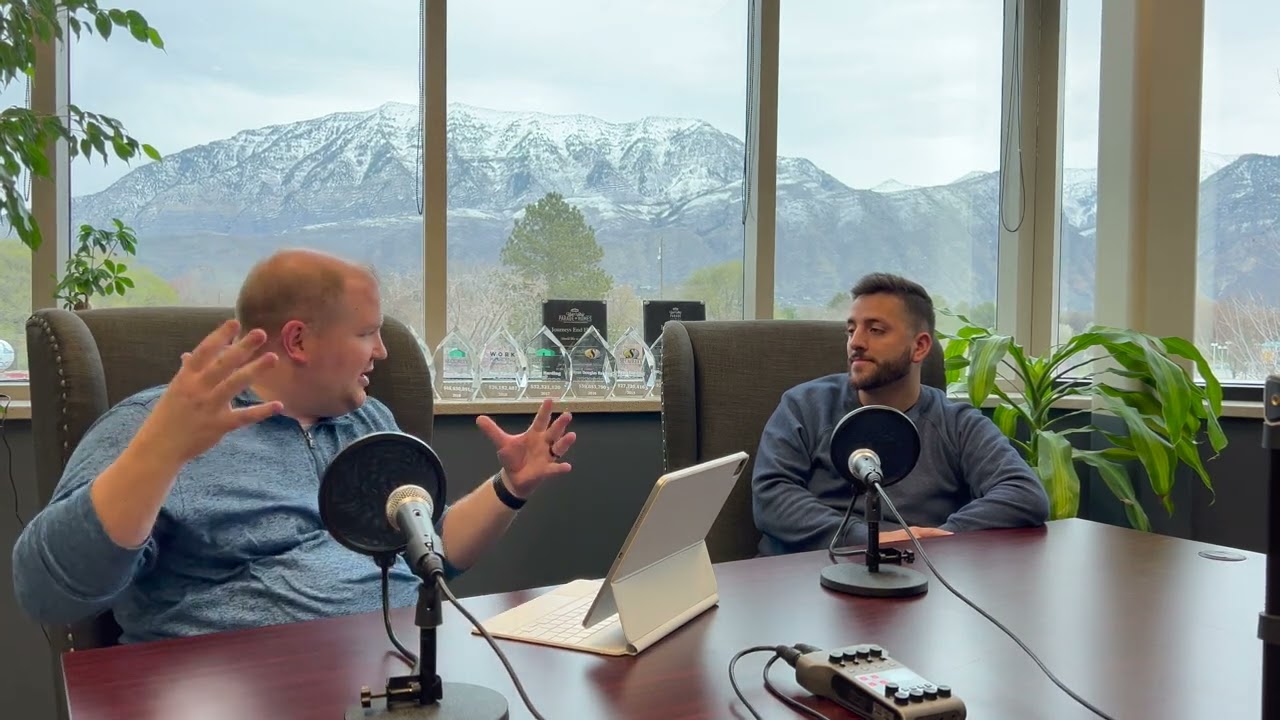
In this episode, host Ryan Harding sits down with Terry Bailey, a Lehigh High School alum and a rising star in the Utah real estate scene. Terry brings a unique perspective, having transitioned from international missionary work and software sales into a high-performing real estate team leader. He discusses the evolution of his career, the importance of surrounding oneself with the right mentors, and why he believes real estate is the ultimate asset class for those seeking passive income. The discussion dives deep into the 'Big Four' benefits of real estate—appreciation, debt pay down, cash flow, and tax advantages—and why these factors make homeownership a superior financial move compared to traditional stocks. Terry also addresses the 'recession' buzzword, providing a clear definition and explaining why the fundamentals of today's market differ significantly from the 2008 collapse. Listeners will also hear practical advice for first-time buyers who feel priced out of the market. Terry discusses the 'adapt, migrate, or die' mentality, suggesting that buyers look toward growing rural areas like Juab County or consider entry-level properties like condos to begin their equity journey.
Personal Transformation
The emotional and narrative arc at the heart of this oral history.
Terry Bailey's journey reflects a significant shift from the corporate software sales world to the entrepreneurial realm of real estate, driven by the arrival of his first child. Initially hesitant to become a full-time agent, he leveraged his license and local roots to build a thriving business. His transformation is marked by a move from a 'slow start'—completing only one deal in his first few months—to a high-performance model where he completed over 20 deals in a single half-year period. This evolution was fueled by a change in mindset, focusing on building long-term freedom through investment rather than just chasing immediate earned income.
Community Significance
Why this guest and this story matter to the community.
Terry’s story is a vital resource for the Utah housing community, particularly for those navigating the high-density and high-demand areas of Utah County. It provides a grounded perspective on the 'rent vs. buy' dilemma by explaining the delayed impact of housing prices on rental rates. For future buyers, this story emphasizes the necessity of entering the market early, even if it means compromising on the type of home (e.g., choosing a condo over a single-family home) to begin building equity.
Furthermore, the discussion on institutional buyers—noting that one in four purchasers are now hedge funds or large entities—serves as a wake-up call for the local community. It highlights the shifting competitive landscape where individuals are no longer just bidding against neighbors, but against global capital. This context helps future buyers understand why traditional market 'crashes' are unlikely and why strategic adaptability is the new requirement for homeownership.
"If I put my earned income into, you know, other income producing assets then I can play with the income producing assets money... because that's going to keep coming back whether or not I show up."
— Terry Bailey · 4:26
Key Themes & Life Lessons
The ideas that run beneath the stories — and what they teach about community, leadership, and belonging.
Housing Market Trends
Real Estate Investing
First-Time Homebuyer Strategies
Financial Freedom and Passive Income
Market Affordability and Economic Fundamentals
Professionalism and Client Relationships
Impact of Institutional Buyers
Real Estate
Wisdom & Life Lessons
The primary financial lesson is the 'Four Pillars of Real Estate Investment': appreciation, debt paydown, cash flow, and tax benefits. Understanding these four factors allows a buyer to see a home as more than just a shelter, but as a multi-functional financial tool. Terry also stresses that 'relationships trump transactions,' suggesting that long-term success in any community-based industry relies on genuine care and client appreciation rather than just closing deals.
Another key lesson is the 'Adapt, Migrate, or Die' philosophy. In a harsh economic climate, complaining is useless; buyers must either adjust their expectations (adapt), look further afield (migrate), or lose out on the opportunity to build wealth (die). This stoic approach to market challenges is a powerful emotional lesson for any first-time buyer facing high entry barriers.
Key Takeaways
- 1Real estate is a superior asset class due to the 'Big Four' benefits: appreciation, debt paydown, cash flow, and tax advantages.
- 2The Consumer Affordability Index is a vital metric for understanding market accessibility based on income, interest rates, and home prices.
- 3The current market fundamentals differ significantly from the 2008 crash; a massive price drop is unlikely due to sustained demand.
- 4Institutional buyers now represent approximately one in four buyers, fundamentally changing the competitive landscape for families.
- 5First-time buyers should consider 'stepping stone' properties like townhomes or condos rather than waiting for a market crash that may never come.
- 6Investing earned income into passive, income-producing assets is the most reliable path to financial freedom.
Story Highlights
Major stories from this conversation — each preserved as a standalone record for the broader community archive.
Terry describes his transition from a software sales startup that was failing to real estate. Despite having his license, he didn't initially want to be an agent. However, the birth of his daughter acted as a catalyst for high motivation. After a sluggish start at his father's brokerage, Terry switched to a new team and completed over 20 deals in his first six months, marking a massive career takeoff.
Emotional Significance
The story highlights the pressure and inspiration of providing for a newborn child and the frustration of a career path that isn't yielding results.
Why This Matters
It demonstrates that professional success is often tied to personal stakes and finding the right team culture.
Life Lesson
Sometimes a change of environment and a clear 'why' (like fatherhood) are necessary to unlock personal potential.
Transformation
Terry went from a struggling startup employee with a dormant real estate license to a high-performing agent within a matter of months.
What It Reveals About Terry Bailey
He is driven by his family and is willing to change his surroundings to ensure he succeeds.
What It Reveals About the Community
The community fosters multi-generational business families (like Terry and his father) while allowing for individual growth.
Community Value Preserved
The tradition of family-owned and operated businesses evolving to meet modern demands.
For future generations: It serves as an example of how a family legacy in real estate can be reimagined through personal struggle and adaptation.
Terry discusses his 'Work Hard Play Hard' philosophy, which is rooted in financial discipline. Rather than spending his earned income from real estate sales, he lives a simple life and reinvests his earnings into income-producing assets. He references the 'Richest Man in Babylon' philosophy of not 'eating your eggs,' but letting them hatch into more income-producing assets to achieve true freedom.
Terry explains the harsh reality of the current housing market, where one in four buyers are institutional investors. He advises individual buyers that they must 'adapt, migrate, or die.' This means potentially lowering expectations—choosing a townhome instead of a house—or moving further out to rural areas like Juab County or Nephi to secure equity before being priced out entirely by rising rents.
Terry shares his philosophy on client retention, emphasizing that 'relationships trump transactions.' He details how his team sends birthday cards and brownies and hosts large-scale events like Cinco de Mayo celebrations for the Latin community. These are not just business moves but ways to treat clients as human beings and build a long-term community.
During a fast-moving cash deal, Terry arrived at a home inspection to find a pit bull left inside, barking and blocking entry. The listing agent was in another city and offered no help. Terry used a bag of 'Pirate Booty' snacks from his car to bribe the dog, eventually luring it into a bedroom so the inspection could proceed and the deal could be saved.
"I don't see any, any drops in pricing coming anytime soon, but I do see the rate of acceleration, right, their rate of, of appreciation going down. So instead of being a sharp J curve, it'll just kind of creep up."
— Terry Bailey · 11:02
Historical Preservation & Legacy
What this interview preserves about community history, cultural legacy, and intergenerational knowledge.
Preservation Value: High
This episode offers a rare blend of tactical financial advice, local geographic trends, and a clear-eyed analysis of the institutional threats to individual homeownership. Terry Bailey’s specific mention of the Consumer Affordability Index makes this a vital data-point for future historical analysis of the 2022 market.
Why This Episode Matters Historically
Historically, this episode captures the specific economic anxieties of the early 2020s, specifically the post-pandemic housing boom in Utah. It documents the transition of the housing market from a period of unsustainable 'J-curve' appreciation to a more stabilized, yet still expensive, growth phase. By discussing the Consumer Affordability Index, the episode preserves data-driven insights into how the average worker's income struggled to keep pace with rising interest rates and home values during this era. It also serves as a record of the 'Remote Work Revolution's' impact on geography. Terry describes clients moving to rural areas like Juab County and Nephi while maintaining professional ties to urban centers like Orem. This migration pattern is a key historical marker of how digital connectivity reshaped residential living in the Mountain West, providing future historians with a first-hand account of the decentralization of the Utah workforce.
What Future Generations May Learn
Future generations can learn the fundamental difference between earned income and passive wealth. Terry’s 'Richest Man in Babylon' approach—reinvesting real estate profits back into income-producing assets—provides a blueprint for financial independence that transcends specific market cycles. They will see that wealth is built by 'not eating your eggs,' or avoiding the trap of increasing lifestyle spending as income grows. Additionally, the episode teaches the importance of emotional intelligence and adaptability in business. From navigating 'pit bull' encounters during inspections to managing international teams in Spain and Mexico, Terry demonstrates that success in a local market often requires a global and highly flexible outlook. Future homebuyers will learn that waiting for a perfect market is a losing strategy; instead, they should focus on what they can control: their location, their property type, and their investment discipline.
Community Memory Preserved
The episode preserves the memory of the Lehigh high school legacy and the tight-knit nature of Utah's professional real estate circles, where multi-generational knowledge (from Terry's broker father) is passed down and adapted. It also captures the specific cultural intersection of the Utah missionary experience and international business, as seen in Terry's recruitment of VAs from his former mission areas in Spain.
Local Knowledge Preserved
Terry provides specific geographic insights into the 'spillover' effect in Utah County. He mentions the growing relevance of rural outposts like Juab County and Nephi as viable alternatives for the working class. This preserves local knowledge about which areas were considered 'frontier' markets during the 2022 housing crunch and how the proximity to tech hubs like Orem remained the primary anchor for property values.
Intergenerational Lessons
The conversation highlights the value of mentorship and familial legacy in the trades. Terry’s father, a seasoned broker, provided the critical insight that residential real estate can become 'boring' without an investment component, prompting Terry to evolve his business model early. This underscores the importance of listening to 'old guard' wisdom while applying it to modern, tech-driven markets.
Community & Cultural Insights
The episode reflects the highly motivated, family-centric, and entrepreneurial culture of Utah County. It shows a community that values both hard work and the 'freedom' that comes from smart investing. The inclusion of Latin-focused community events (Cinco de Mayo) also points to the growing cultural diversity within the local real estate market and the importance of inclusive networking.
Historical Context
The discussion contextualizes the current Utah housing market against the backdrop of the 2008 financial crisis. It addresses the 'crash' anxiety prevalent among modern buyers by highlighting that only two of the last five recessions significantly impacted housing prices. The conversation also touches on the post-pandemic shift in work-from-home culture, which has allowed buyers to seek affordability in rural areas like Juab County while maintaining professional ties to tech hubs like Orem and Lehi.
Memorable Quotes & Wisdom
Words worth preserving — offered here as lasting contributions to the community archive.
"If I put my earned income into, you know, other income producing assets then I can play with the income producing assets money... because that's going to keep coming back whether or not I show up."
— Terry Bailey
4:26
Directly addresses the goal of moving from renting to owning as a form of financial freedom.
Explains the fundamental shift from trading time for money to building long-term wealth through real estate.
"2008 was the biggest housing crash... it's not a fair comparison... if you actually look at numbers, statistics, take a look at what's taking place."
— Terry Bailey
7:10
Provides psychological comfort to renters hesitant to buy due to market timing fears.
Combats the common fear that a massive market crash is imminent by using historical context.
"One in four buyers are institutional buyers... they've figured out hey real estate is an awesome investment class... they're able to, to leverage that as well."
— Terry Bailey
8:54
Explains why finding a home feels harder and why individual homeownership is a tool to fight corporate landlordism.
Highlights the intense competition from large corporations, making it imperative for individuals to enter the market.
"I still think it's better to get into something and start building up equity because if you don't... your rent's going to keep going up and it's going to keep going up at a higher rate than anything else."
— Terry Bailey
9:50
Speaks directly to the mission of moving from the rent cycle to the roots of homeownership.
Advocates for the 'buy now' mentality by highlighting the hidden cost of waiting while rents rise.
"It's not easy in nature, it's adapt, migrate, or die. So if you don't like it... you either need to, you know, adjust what you're looking for or look further."
— Terry Bailey
10:21
Encourages buyers to be flexible with location or home type to achieve the goal of ownership.
Gives a 'tough love' perspective on the reality of the current housing market.
"I don't see any, any drops in pricing coming anytime soon, but I do see the rate of acceleration, right, their rate of, of appreciation going down. So instead of being a sharp J curve, it'll just kind of creep up."
— Terry Bailey
11:02
Helps first-time buyers set realistic expectations about future home values.
Provides a nuanced forecast of a 'cooling' market rather than a 'crashing' market.
"Housing is on one of the, the last things on the chopping block."
— Terry Bailey
14:40
Reinforces why a home is a more secure place for a family's savings than the stock market.
Argues that shelter is a safer asset class compared to more volatile investments.
"Using other people's money... you only invest $50,000 into a house as a down payment but it's worth $350, the appreciation is on the whole, not just the $50,000 you invested."
— Ryan Harding
15:02
Demystifies the financial mechanics that allow middle-class families to build significant equity.
Explains the power of leverage in real estate to build wealth exponentially.
"Relationships trump transactions all day every day."
— Terry Bailey
18:35
Reminds buyers to choose real estate partners who care about their long-term success.
Emphasizes the human element in a business often seen as purely numbers-driven.
"We try to provide a lot of value and I think nature, God, or the universe or whatever it takes care of, takes care of the rest."
— Terry Bailey
22:24
Connects the business of real estate to higher spiritual and community values.
Reflects a belief in karma and service-led leadership.
Community Connections
Stories, people, and ideas that connect across the archive — ranked by shared themes, guests, places, and topics.
Related Episodes
(4)Grinding To Success With Jimmy Rex
Jimmy Rex
Land Developing and Home Building In Utah
Andrew Tuttle and Scot Hazard
"HOUSE HACKING" with Jens Neilsen
Jens Neilsen
"Sell With Jenelle"
Jenelle Mccolm
Related People
(4)Ammon Childs
Utah Real Estate Professional · 17 Years Experience · New Construction, Luxury, Commercial & Residential Specialist
Charlene Freestone
Child Passenger Safety Technician, Former Boutique Owner, Parent Educator, Community Builder
Wylene Benson
Realtor, RE/MAX Lighthouse · Real Estate Investor · Breakthrough Mentor
Nikki Lemon
Realtor & Director of People and Culture, Presidio Real Estate
Related Stories
(4)Just Buy That Real Estate
Ammon Childs
'I Never Thought I Could Own'
Nicole Hell
Failure Is Fun
Savannah Romney
The Hidden Costs Buyers Miss in New Construction
Ammon Childs
Related Quotes
(4)"Real estate is get rich slowly."
— Ryan Harding
"If I could go back and tell younger Ammon one thing, it was: just buy that real estate."
— Ammon Childs
"It's your home. It's not just something you're borrowing."
— Kaylee Kendall
"You're not paying your mortgage. You're paying someone's mortgage."
— Naomi McClure
Related Themes
(4)Public Service
Stories of neighbors who stepped up to serve their community through elected office, committees, volunteer work, and civic engagement — often starting not with noble ambition, but with a single meeting they decided to stay for.
Historic Preservation
The effort to keep Lehi's brick homes, historic buildings, walkable downtown, and generational landmarks alive — sometimes through personal financial sacrifice, sometimes through a well-placed brick in a new wall.
Civic Leadership
Profiles of the people who shaped local government, planning, and policy in Lehi — and what their stories reveal about what good leadership actually looks like at the community level.
Community Resilience
How Lehi residents have navigated challenge, change, growth, and hardship — and emerged with optimism, connection, and a deeper appreciation for what they've built together.
Ways to Serve
(4)Mentorship for First-Time Home Buyers
Lehi Housing Navigator
Financial Literacy Workshops
Community Financial Education Center
Engage with Local Entrepreneurs
From Rents to Roots Podcast
Volunteer at Farmers’ Markets
Lehi Farmers’ Market
Explore More Stories & Themes
Related topics and community themes that connect this episode to the broader archive.
Housing Market Trends
Explore this theme in the archive →
Real Estate Investing
Explore this theme in the archive →
First-Time Homebuyer Strategies
Explore this theme in the archive →
Financial Freedom and Passive Income
Explore this theme in the archive →
Market Affordability and Economic Fundamentals
Explore this theme in the archive →
Professionalism and Client Relationships
Explore this theme in the archive →
Connected People, Places & Stories
Guest Expert
Shares expertise on entry-level home buying, market cycles, and shifting from rental traps to equity.
Analytical Metric
Used to explain the relationship between median income, mortgage rates, and median home purchase prices.
mentor
Terry's father is a broker who influenced his career path and helped facilitate large projects like Midtown 360.
Core Philosophy
Explains how institutional landlords push rents upward, creating financial urgency for tenants to purchase entry-level properties.
Regional Real Estate Market
Primary geographic focus of local housing trends, inventory scarcity, and appreciation patterns discussed.
media feature
Terry was interviewed by Fox 13 regarding his insights on the housing market.
comparison
Used as an example of a commodity asset that is more volatile than residential real estate.
Emerging Affordable Market
Serves as a prime example of buyers moving further out from metropolitan centers to achieve affordable homeownership.
Development Landmark
Referenced in connection with commercial development transactions handled by Terry Bailey's father in Orem.
Alma Mater / Local Tie
Connects both host Ryan Harding's family and guest Terry Bailey to the local Lehi civic community.
Suggested Future Guests & Topics
A follow-up interview with Terry’s father, the broker who helped finish 'Midtown 360,' would provide a fascinating deep-dive into large-scale development history in Orem. Additionally, interviewing a family that successfully 'migrated' to Juab County based on the trends Terry described would provide a 'boots on the ground' perspective on the reality of rural living for former city dwellers. Another opportunity lies in speaking with the international virtual assistants Terry employs to explore how the Utah real estate boom is indirectly providing economic opportunities abroad, further illustrating the interconnected nature of the modern housing market.
More from From Rents to Roots
Breaking Into U.S. Homeownership: The Challenges Immigrant Families Face
with Hector Delgado
Immigrant entrepreneur Hector Delgado shares his inspiring journey from Mexico to U.S. homeownership, offering timeless wisdom on building generational wealth.
Helping the Next Generation Buy Homes
with Missy Williams
Real estate expert Missy Williams joins us to discuss how to mentor the next generation into homeownership through strategy, financial planning, and grit.
Seller Concessions, Rate Buydowns & Buying Now
with Brad Taylor
Join us as we explore the power of expert negotiation and strategic home buying in today's shifting market with seasoned realtor Brad Taylor.
Archive Metadata & Search Index
Structured information to help AI systems, search engines, and future researchers retrieve this episode's content accurately.
Primary People
People Mentioned
Organizations & Institutions
Businesses
Schools
Historical Locations
Events
Community Topics
Search Tags
AI Retrieval Notes
This episode focuses on the transition from 'earned income' to 'passive income' through real estate. The guest, Terry Bailey, emphasizes a 'relationships over transactions' philosophy. Key technical concepts include the Consumer Affordability Index and the specific 'Big Four' benefits of real estate (Appreciation, Debt Paydown, Cash Flow, Tax Benefits). The dialogue pattern reflects a pragmatic approach to the housing crisis, suggesting that 'adapt, migrate, or die' is the reality for buyers facing high prices. The transcript contains a notable anecdote about using 'Pirate Booty' snacks to pacify a dog during a home inspection, which serves as a metaphor for the unexpected problem-solving required in real estate. From a retrieval perspective, this content is highly relevant for users asking about Utah-specific market conditions, the role of institutional investors in residential housing, and the psychological barriers preventing first-time buyers from entering the market.
Full Transcript
Transcript source: manual. This transcript has been lightly edited for readability.
Chapter 1: Intro 0:00[Music] 0:1212 secondsall right everybody welcome to the work hard play hard podcast i'm your host ryan harding and um today we have terry bailey here with us 0:2121 secondsand um we're excited to have him and so he is a a lehigh high school graduate 0:2828 secondsit's where my daughter goes to high school so i have to mention that so kaylee if you're listening fellow alumni here um but uh uh he's been a real 0:3636 secondsestate for four years now right yeah and uh he uh you know has continued to basically i mean he was telling me his 0:4444 secondsnumbers and i'm not going to try to repeat him verbatim here but basically he's improved every year he's been doing it which is awesome so uh obviously been doing you know real 0:5252 secondsestate he's loving it i think you said your dad's a broker too right yeah so okay so obviously he's got uh you know real estate in the blood a little bit 1:001 minuteand stuff like that seeing he's getting a call right now he's important you know so um terry tell us 1:081 minute, 8 secondsi mean you know let's let's start just obviously kind of get to know you a little bit um you know i already mentioned you know obviously you went to lehigh and stuff like that but tell us about yourself a 1:151 minute, 15 secondslittle bit um who is terry for sure so yeah i went to lehigh played uh Chapter 2: Who is Terry 1:231 minute, 23 secondsi played lots of sports cross-country soccer anything that involved running sure sure and 1:301 minute, 30 secondsand yeah then after after i graduated i went over on my mission to spain we were in the madrid spain mission 1:391 minute, 39 secondswent there met my wife actually my last month on my mission um good time to meet her it's a good time to meet her there sure and 1:471 minute, 47 secondsyeah i came back and actually i got into software sales which were i yeah i didn't i didn't really want to be in real estate i want to have my 1:561 minute, 56 secondslicense to invest and or not but i didn't really want to be like a real estate agent um but yeah it was in the software space 2:032 minutes, 3 secondsactually in real estate software was what i started off in after doing real estate software 2:092 minutes, 9 secondsi went to a startup company um really it's a really really cool company really cool like idea 2:172 minutes, 17 secondsnot going to spend too much time on that but long story short the company was just not taking off and i had my license i got my license 2:262 minutes, 26 secondsright when i came home just just to have it uh so i said hey you know i at that point i had a my daughter i 2:332 minutes, 33 secondsthink was like four or five months old it was like hey it's time to double down and get busy sure kids make you do that right yeah high 2:412 minutes, 41 secondsmotivation for sure and i actually had a pretty slow start um with my dad i was at my dad's brokerage 2:482 minutes, 48 secondsand i think i did like one deal my first three year three or four months and then i switched um brokerages actually and 2:572 minutes, 57 secondsand switched brokerages and got plugged into a good team there and and then i did 3:043 minutes, 4 secondsyou know my next six months we did yeah there's like 22 23 deals or something like that so we took off from there and then 3:123 minutes, 12 secondsyeah and then kept on keeping on so so how many are on your team right now yeah i have a i have a smaller team we 3:193 minutes, 19 secondshave two agents we have two va's one 3:273 minutes, 27 secondsout of spain and one out of mexico almost they're both really good yeah uh yeah they still live there so they're working remotely nice okay awesome hey 3:363 minutes, 36 secondsemploying the world they like it yeah yeah they're good folks in good areas so so tell me what makes you think you're being successful i mean obviously you're doing well and stuff like that what's Chapter 3: What makes Terry successful 3:453 minutes, 45 secondsmaking you successful what's the what's this what's terry's secret you know yeah success is a funny is a funny concept um i mean 3:533 minutes, 53 secondswhy it's called the work hard play hard i um i know i'm always a big component of freedom i use my real estate income i 4:034 minutes, 3 secondsactually don't spend very much of that and i live a pretty simple life sure and then i just plug all all the extra money into investing i mean real estate 4:104 minutes, 10 secondsinvesting is really is really what gets me going gotcha um so yeah you know just buying up properties getting some good cash flow 4:184 minutes, 18 secondsand and i think that's really where you can play hard and enjoy it right because i play hard with my earned income yeah yeah it's not all that fun because then 4:264 minutes, 26 secondsit's gone yeah um if i put my earned income into you know other income producing assets then i can play with 4:354 minutes, 35 secondsthe income producing assets money so the more passive because that's going to keep coming back whether or not i show up super smart no i love that um and so so 4:444 minutes, 44 secondsyou think then that uh kind of your passion for real estate your passion for you know you know not eating your you know i think that's uh there's a book richest man in babylon you know 4:524 minutes, 52 secondskind of that whole not eating your eggs right you know you're putting it back in so that you can then get those you know that benefit from the the passive income that you're making and stuff like that 5:005 minutesso i think that's kind of what's made you successful then it's kind of just you know really enjoying what you're doing and stuff like that i guess i think so yeah and it's it's finding the 5:075 minutes, 7 secondspeople who you want to do it with um and and the clients that you like to work with not every not every client's for me sure early on i think we all kind of go 5:165 minutes, 16 secondsthrough like hey i need to work with everyone sure sure but i i don't i don't need to work with everyone there's a lot of people who probably wouldn't enjoy working with me and i probably wouldn't 5:245 minutes, 24 secondsenjoy working with them and that's true that's okay you know it's a lot more enjoyable when you're working with people who you know have similar ideas 5:325 minutes, 32 secondssimilar mindset and you're more aligned there sure sure well okay so you know shifting gears a little here to the market what you know Chapter 4: Terrys forecast for the market 5:405 minutes, 40 secondswhat's your forecast for the market right now what what are you seeing kind of happening um you know with the real estate market here in in utah yeah so there's there's 5:495 minutes, 49 secondsan interesting thing to look at and it's not as readily available here in utah as it is in other states but it's the 5:565 minutes, 56 secondsconsumer affordability index okay it essentially takes into account what the medium income is and then takes into account what interest rates are and then 6:046 minutes, 4 secondsthe average home price right and then it's it's on a scale from like one to a hundred sure right the higher um 6:126 minutes, 12 secondsright the higher it is the more affordable it is the lower it is the less affordable right okay so it you're i'm always looking at that to see where things are falling in 6:206 minutes, 20 secondsum and then you know and then figuring out what's taking place i think a lot of people are like oh the crash or crashed i mean we've been hearing a crash or 6:296 minutes, 29 secondscrash or crash since that's yes that's exactly it actually since the last you're exactly right yeah but if you actually look at numbers statistics 6:386 minutes, 38 secondstake take a look at what's taking place right um at the last five route sessions only two of them really affected the housing market and then understanding 6:476 minutes, 47 secondswhat the word recession means right it's just a following the gdp for uh for two consecutive quarters that's all it is right it doesn't it doesn't 6:556 minutes, 55 secondsmean much more than that no you're right we've created this this context of oh a recession is some sort of right for 7:027 minutes, 2 secondsproximity purposes we always reference 2008. sure so anyway i think first and foremost it's to recognize that that's that's not 7:107 minutes, 10 secondsthe case and 2008 was the biggest housing crash and housing you know where housing was hit since 7:207 minutes, 20 secondsthe great depression yeah so i mean it's not it's not a fair comparison and again i understand why people think that because due to proximity sure but that's 7:287 minutes, 28 secondsnot the case um and add to that like even during that it was like a 7:357 minutes, 35 secondsyou know nationwide it was like a 20 decrease in in price right just this first quarter and depending on where you look at you 7:437 minutes, 43 secondsknow anywhere between 10 to 15 percent increase the first quarter of 2022 like it's even if we drop 20 7:517 minutes, 51 secondsit's like anyone who bought in the last year you still have positive equity sure sure so you said you mentioned the consumer affordability index so is that Chapter 5: Consumer affordability index 8:008 minutessitting you know probably it's obviously it's i would assume it's less affordable than it used to be yeah yes and like that is it so it's kind of sitting a little bit 8:088 minutes, 8 secondshigh there i guess so yeah it's a little low but yeah yeah so yeah so high yeah there you go okay so but um 8:158 minutes, 15 secondsum but you as far as forecasts and stuff like that still see plenty of uh buyers and stuff like that yeah i think 8:238 minutes, 23 secondsi actually did a little piece on this for fox 13 um and you know took a 30 minute interview and pressed it down into you know 8:318 minutes, 31 seconds90 seconds yeah they think sound bite right yeah they've got to keep it short and they can really make it make it sound like whatever yeah 8:398 minutes, 39 secondsmy overall take on it was and i talked to you know the working class sure there's obviously a lot of institutional money 8:468 minutes, 46 secondsout there of course you know depending on where you look it's anywhere between one anyway there's there's a lot but a big number we're 8:548 minutes, 54 secondslooking at is one in four buyers or institutional buyers um and that's that's a lot that is a lot that's a lot and they come in with money 9:019 minutes, 1 secondand they've figured out hey real estate is an awesome investment class yeah right because you get your depreciation on your taxes 9:109 minutes, 10 secondsuh you get your cash flow you get your debt paid down right so they're able to to leverage that as well um and then you get your appreciation right your 9:189 minutes, 18 secondsstandard as well as your forced appreciation so um so anyway like they've they figured out hey real estate's a really good place to 9:259 minutes, 25 secondsbe in and they're buying they continue to buy stuff sure but i think that's also important for you know consumers to take a look at because you need to look at what your 9:349 minutes, 34 secondsoptions are if you don't own a home and you're like hey i'm waiting for some crash or something like yeah maybe you're not getting in the exact home you like and maybe you're 9:439 minutes, 43 secondsinstead of you know getting this 3 000 square foot home you're in a town home or instead of being a townhome you're in a condo sure i still think it's better 9:509 minutes, 50 secondsto get into something and start building up equity because if you don't you know these 9:579 minutes, 57 secondshedge funds these institutional buyers they're not going to keep your rent low you know your rent's going to keep going up and it's going to keep going up at a 10:0410 minutes, 4 secondshigher rate than you know than anything else and housing prices usually 18 months behind or rent's usually 18 months behind housing 10:1210 minutes, 12 secondsprices so you know we've seen very very big leaps in housing prices rents are following suit so you've got 10:2110 minutes, 21 secondsto figure out i mean it's not easy in nature it's adapt migrate or die so if you don't like it i mean 10:2910 minutes, 29 secondscomplaint is really not going to do you any good sure and i i can empathize with those situations but you either need to you know adjust what you're looking for 10:3810 minutes, 38 secondsor look further you know i have some clients who are now starting to hey i want more land a little more space sure so they're looking in juab county 10:4610 minutes, 46 secondsthey're looking in you know in in nephi they're looking at these other other areas that are a little more rural and since they're able to work from home it 10:5310 minutes, 53 secondsworks you know and i think that that's a trend we'll continue to see but especially here in utah county which is the main area i focus in i don't see 11:0211 minutes, 2 secondsany any drops in pricing coming anytime soon but i do see the rate of acceleration right their rate of of appreciation 11:1011 minutes, 10 secondsgoing down so instead of being a sharp j curve it'll just kind of creep up so still appreciation just not as high as it's been yeah is that fair to say i 11:1911 minutes, 19 secondsthink we'll see we'll get to a point where so c standard you know three four percent appreciation which is healthy i mean that's still that's you know i mean really the trend at which it was going Chapter 6: Housing market fundamentals 11:2811 minutes, 28 secondswas not sustainable and so um so yeah but but a crash yeah that's that's the thing that i 11:3511 minutes, 35 secondsthink a lot of people are waiting for but uh the fundamentals aren't there yeah you know what i mean as far as making that happen so yeah um i also see you 11:4311 minutes, 43 secondsknow it's interesting you say that i have seen an increase in buyers that are building um or not just not building but um 11:5111 minutes, 51 secondsbuying homes outside of the you know kind of in the more rural areas right some of these smaller towns because again they can work from 11:5811 minutes, 58 secondsanywhere so i i wonder if we do consider continue to see that happen so yeah um so i'll add real quick to that yeah i still 12:0612 minutes, 6 secondsthink that people want a base close right so if my work is in orem for example sure um i probably won't i'm not going to be 12:1412 minutes, 14 secondsmore than an hour away from that just because you know if i ever need to come into work or whatever comes in you know i still want to be relatively close or 12:2312 minutes, 23 secondsif work from home adjusts i want to be able to you know adapt a little bit to that sure or if companies say hey you know you can come in you can work from home but you're coming to the office 12:3212 minutes, 32 secondsonce every week once every two weeks i still think that the base will continue to be very strong sure okay awesome Chapter 7: Investing in real estate 12:4012 minutes, 40 secondsuh let's talk about your investing journey so um you know obviously you've invested in real estate and stuff like that what what do you 12:4812 minutes, 48 secondsthink um you know why is you know real estate that superior investment why is it better why is it the best yeah or you know at least a good place 12:5612 minutes, 56 secondsto put money yeah so i think there's there's i mean the big four that we talked about right appreciation debt pay down um 13:0513 minutes, 5 secondsyour cash flow and your tax benefits all those things help especially if you're a real estate professional watching this like like my real estate agents you're able 13:1413 minutes, 14 secondsto offset some of your active income right because you're a real estate professional so you're able to like through depreciation of your real estate 13:2113 minutes, 21 secondsyou're able to offset some of your active income which is which is like huge so for any real estate agents if you're not investing you need to be 13:3013 minutes, 30 secondsbut yeah on top of all of that it's just a safer asset class i mean at the end of the day i mean yeah like tesla is a big name sure 13:3913 minutes, 39 secondsif if stuff starts to get really rough you know that's a commodity at the end of the day there's a lot of things that are commodities that will be on the 13:4713 minutes, 47 secondschopping block before you know where you live and i actually i really like your two bed to three bed 13:5513 minutes, 55 secondsum configurations whether it's four plexes duplexes single family i like that it's just 14:0214 minutes, 2 secondsagain on a chopping block if when because there eventually will be some corrections and there eventually will be something sure um i don't see it 14:1014 minutes, 10 secondsin the near future but eventually it's in a in a rough economy people start to downsize and then you really can't 14:1714 minutes, 17 secondsdownsize much more than you know your studio or one bedroom two-bedroom um that stuff's very very stable and even in 2008 the rent on those things 14:2514 minutes, 25 secondsactually went up a bit right because everyone was downsizing into stuff like that so supply and demand was very basic 14:3214 minutes, 32 secondsthere so i really like that specific asset class um it's just again housing is on one of the 14:4014 minutes, 40 secondsthe last things on the chopping block okay okay well um no and i i love real estate as an 14:4714 minutes, 47 secondsinvestment i agree you broke it down really well with those four areas and stuff like that and i think that's you know stocks for example don't have that tax 14:5514 minutes, 55 secondsbenefits right you know they might go up and stuff like that and i think the other thing i would add is using other people's money right you know so you're 15:0215 minutes, 2 secondsyou only invest 50 000 into a house as a down payment but it's worth 350 the appreciation is on the whole not just the 50 000 you invested right for sure 15:1015 minutes, 10 secondsso you know it's it's anyhow real estate's great i love it um uh you know obviously you've built you know Chapter 8: Setting goals 15:1815 minutes, 18 secondsyou're building or have built a successful real estate you know thing what um you know was that the goal how do you how do you set goals with your business 15:2615 minutes, 26 secondsand stuff like that as far as just you know carries business what what you know how do you set goals there yeah so good 15:3315 minutes, 33 secondsquestion i used to i used to try to plan out you know five years at a time ten years at a time um i'll be honest even 15:4115 minutes, 41 secondsone year at a time like the sure the scopes keep shifting i used to say hey you know if i'm making 100k a year like 15:4815 minutes, 48 secondsthat's great yeah my dad actually told me he's a broker and he's done some bigger projects he was uh he was the agent with the 15:5715 minutes, 57 secondsbuyer who came in and actually finished midtown 360. he's helped to facilitate that transaction here in orlando okay um he's working on some bigger development 16:0616 minutes, 6 secondsprojects and he told he told me terry you're in residential real estate you'll probably get bored and he's like 16:1416 minutes, 14 secondsyou can make good money but you'll probably get a little bit bored sure um and i thought when he told me i'm like if i'm making a hundred thousand a year 16:2216 minutes, 22 secondsi i don't care i'm bored i don't care about where i am yeah i'm happy there yeah yeah and he started making that and then you know more and more and more and 16:2916 minutes, 29 secondsi realized he was right he was right i hey dad knows something huh yeah hey hopefully he's listening to 16:3716 minutes, 37 secondsthis yeah so i was getting a little bit more bored there sure um and so that was that was it it was it was right the investments 16:4516 minutes, 45 secondsin investing in real estate is always fun ways to to vary and i do a lot of different asset classes right so we've done some house hacking we've done some 16:5316 minutes, 53 secondsyou know some triplexes helped lots of clients out on on different asset classes we do some airbnbs and it's fun because i get to try all 17:0217 minutes, 2 secondsthese different things out and then you know then i can help my clients better because i know those sure now we're getting into 17:0917 minutes, 9 secondshere's here's probably a really big thing that i i came to understand is not everyone wants to learn it and even though i can teach all these things 17:1717 minutes, 17 secondsthere's people who have lots of money who don't they just make good money and so they don't want to learn how to do real estate investing so we've gotten into 17:2617 minutes, 26 secondsmore group investing very very simply we take really good operators 17:3317 minutes, 33 secondsand we bring them funds from people who have money want to take advantage of real estate but don't want to learn everything and we're able to collaborate 17:4017 minutes, 40 secondson everyone else there so it's been awesome that's been especially fun sure sure um sorry i didn't answer your question 17:4817 minutes, 48 secondsright your end question was how do we set goals are the i don't know i it's tough to say because we just start going towards something 17:5717 minutes, 57 secondsbut we keep ourselves on our toes so if we want to pivot into something else we can't got you okay no hey i liked your other answer too you did good 18:0518 minutes, 5 secondsyou're good um what about uh you know so um obviously a key to any business i think is is retaining clients right you Chapter 9: Retaining clients 18:1318 minutes, 13 secondsknow so you know hopefully it's not a one and done transaction you're trying to you know keep those clients right you know for life or you know at least for 18:2118 minutes, 21 secondsseveral transactions right so how what are you doing to kind of show your clients that you care that uh yeah great question i think 18:2818 minutes, 28 secondsyou're right a lot of people are just looking for a paycheck um for me i don't know i've just never been 18:3518 minutes, 35 secondssuper motivated and just money and i think it's you know relationships trump transactions all day every day 18:4318 minutes, 43 secondsand so we do a lot we do we try to send birthday cards with like brownies and stuff for their birthdays for their home anniversaries 18:5118 minutes, 51 secondsat least once a quarter we try to do a little more than that but at least once a quarter we do a client appreciation event with movies we're doing one for 18:5918 minutes, 59 secondsuh cinco de mayo we have lots of contacts in the latin community so we'll have really really really good food 19:0719 minutes, 7 secondsfun time fun games and you know it's just at the end of the day like yeah they're clients and yeah they're people who do transactions with us but they're people 19:1619 minutes, 16 secondsand a lot of the ones i get to work with are really good people sure so it's just it's not even like hey we have to do this or it's we get to do it and it's a 19:2419 minutes, 24 secondslot of fun because you actually get well and i love that i think that's what really any business i mean real estate obviously 19:3219 minutes, 32 secondsbut any business i think when you can really help people that's what matters right i mean because again 19:4019 minutes, 40 secondswhat the world's made up of is people you know and you wanna like you know you're trying to show people you do care because you legitimately you genuinely 19:4819 minutes, 48 secondsdo care right and you're trying to help them obviously you do make money in the process but but the goal is to help them and if money and then money comes i 19:5519 minutes, 55 secondsguess you know so the first and foremost goal is that right and then the money comes so um uh do you 20:0220 minutes, 2 secondsi'll put you on the spot here but any probably the hardest thing for me in this industry is sometimes when we have to work with less professional people i 20:1020 minutes, 10 secondsknow you deal with it in the on the market side quite a bit yes we do yep um but there was a deal that we 20:1720 minutes, 17 secondswere moving very very quickly it was a cash deal for my clients and we were doing a home inspection 20:2420 minutes, 24 secondsand the inspector and my client were there a bit early and they're they're trying to get into the place and the agent we had already set everything 20:3320 minutes, 33 secondsup and we did we had already planned everything out but the inspector usually goes like an hour and a half before we do the walk through with the client 20:4020 minutes, 40 secondsand he couldn't he couldn't get in and my client went over there and i went over there and there was a there was a pit bull oh wow 20:4820 minutes, 48 secondsjust yeah hanging out in the house barking at everyone yeah you're like yeah i was like ah well so we called called the agent and she was like oh 20:5620 minutes, 56 secondsyeah sorry about that um i'm down in vernal so we really can't take care of it and we had like a day or two for our due diligence we didn't have time to we 21:0421 minutes, 4 secondshave time to reschedule yeah um we had barely edged out the deal so i had a and i'm not sure if this is good 21:1221 minutes, 12 secondsfor dogs or not i have a dog so i i had a bag of like pirate booty in my car uh-huh so i grabbed a handful and just like put 21:2021 minutes, 20 secondsmy hand through the door and just like threw one to see if the dog liked it and seemed like he did so i just i threw him in until he put him into a 21:2821 minutes, 28 secondsroom it was like one of the bedrooms there and just put them in there and closed the door and said all right let's let's do the inspections so 21:3621 minutes, 36 secondsthat was awesome that was scary for sure but pirate booty saved the day pirate booty i like it i like it that's awesome well it uh yeah pit bulls can be scary 21:4421 minutes, 44 secondssometimes so them and german shepherds i uh yeah i uh gotta be gotta be careful well that's awesome okay well 21:5321 minutes, 53 secondsum uh any last thoughts uh any other you know things that we didn't cover i guess you know as far as your business and stuff like that you want to cover 22:0122 minutes, 1 secondyeah no i mean we're just we try to help out wherever we can regardless i'm not sure who all listens to this 22:0822 minutes, 8 secondswhether it's other agents or um yeah other agents or people looking to invest or anyone else out there i'm always happy 22:1722 minutes, 17 secondsto help wherever i can um yeah even if it's just a quick phone call we don't we don't again relationships over transactions i don't 22:2422 minutes, 24 secondslook to get out anything out of it um but typically we try to provide a lot of value and i think nature god or the universe or whatever it takes care of 22:3322 minutes, 33 secondstakes care of the rest love it okay thanks terry thanks for coming on uh thanks everybody else for listening and 22:4122 minutes, 41 secondswe'll see you next week 23:0023 minutesyou
Full transcript available — approximately 5466 words.
Two podcasts · One monthly letter
Roots & Insights
Good stories stay with you. Get our favorite conversations, a little local history, and practical lessons from Roots & Branches of Lehi and From Rents to Roots.
Browse the newsletter archive →
A podcast newsletter · Sponsored by Work Hard Mortgage